

Mis datos, mis derechos is an initiative led by TEDIC that was developed in a context marked by the absence of comprehensive and up-to-date regulation on personal data protection in Paraguay. The project emerged from the need to establish clear rules that protect people’s identity in digital environments and regulate the processing of personal data, both in the public and private sectors.
The initiative was launched prior to the approval of the Personal Data Protection Law, with the aim of contributing to education and citizen empowerment. It generates tools to help people understand what personal data is, why its protection is a right, and what the implications were of lacking a specific legal framework. From a human rights perspective, the project seeks to bring these debates closer to the public through accessible content grounded in the local context.
Legislative context
Until recently, Paraguay did not have a comprehensive personal data protection law, which created a scenario of institutional weakness regarding the use, collection, and circulation of personal information. The recent approval of Law No. 7593/2025 on Personal Data Protection marked a milestone in the country and is the result of sustained work by the Personal Data Coalition, a broad and diverse civil society alliance that promoted and defended the bill over the years. In this process, TEDIC played a fundamental role by contributing research, technical and political advocacy, and a human rights perspective that was decisive in shaping and passing the legislation.
However, the existence of a law does not in itself guarantee the effective exercise of the rights it recognizes. The implementation of the law, the strengthening of institutional capacities, and public access to clear and understandable information about this newly acquired right remain key challenges. In this context, My Data, My Rights provides resources and tools aimed at fostering social appropriation of the right to personal data protection.
Materials produced within the project
As part of the project, TEDIC developed a series of four fanzines designed as pedagogical, visual, and freely distributed materials. They address different aspects of personal data processing through everyday situations and concrete issues:
- SPAM: when our data circulates without consent
This fanzine explores unsolicited messages as one of the most common forms of misuse of personal data. It explains how companies access our information, what rights we have in response to these practices, and why consent is a central principle in data protection. - Biometrics: my body as data
Through clear examples, this material examines the use of biometric data—such as facial recognition or fingerprints—and the risks involved when implemented without adequate safeguards, especially in contexts of surveillance and control. - For a comprehensive personal data protection law
This introductory fanzine explains what personal data is, why its protection is a human right, and the historical gaps of the Paraguayan State in this area, offering key insights into the importance of having specific legislation. - The importance of protecting our sensitive health data
Focused on one of the most delicate types of data, this material highlights the risks associated with the processing of health data and the need for higher standards of protection, confidentiality, and accountability.
These fanzines were accompanied by dissemination efforts and public discussions aimed at expanding the reach of the content and fostering critical reflection on how our data intersects with multiple dimensions of social life.
Mis datos, mis derechos takes place at a key moment for Paraguay: we now have a recently approved law, but we face the urgent challenge of making it effective. Along this path, the role of an informed and organized citizenry is essential.
From TEDIC, this project reaffirms our commitment to defending human rights in digital environments and to building a culture of data protection that places dignity, autonomy, and participation at its core. Because privacy is not a privilege or an abstract concept—it is a right that is learned, exercised, and collectively defended.
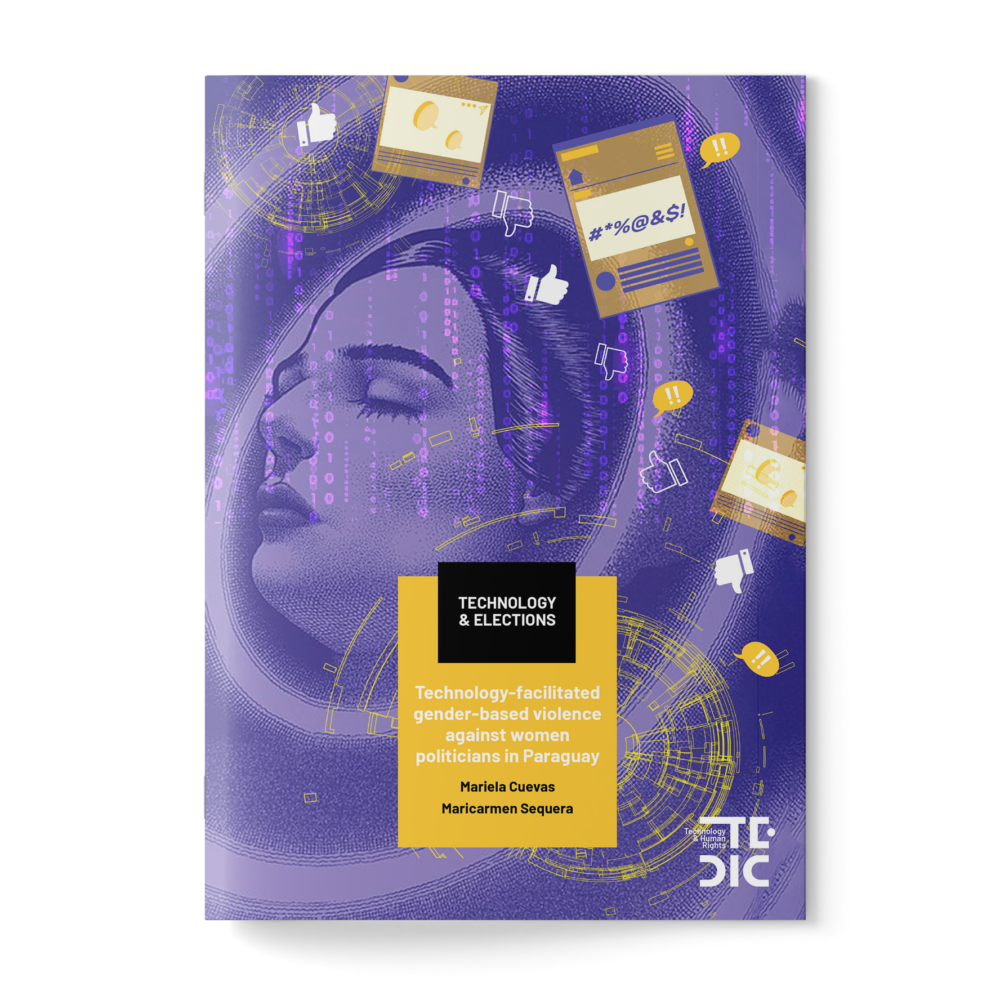 [Research] Technology-facilitated gender-based violence against women politicians in Paraguay