


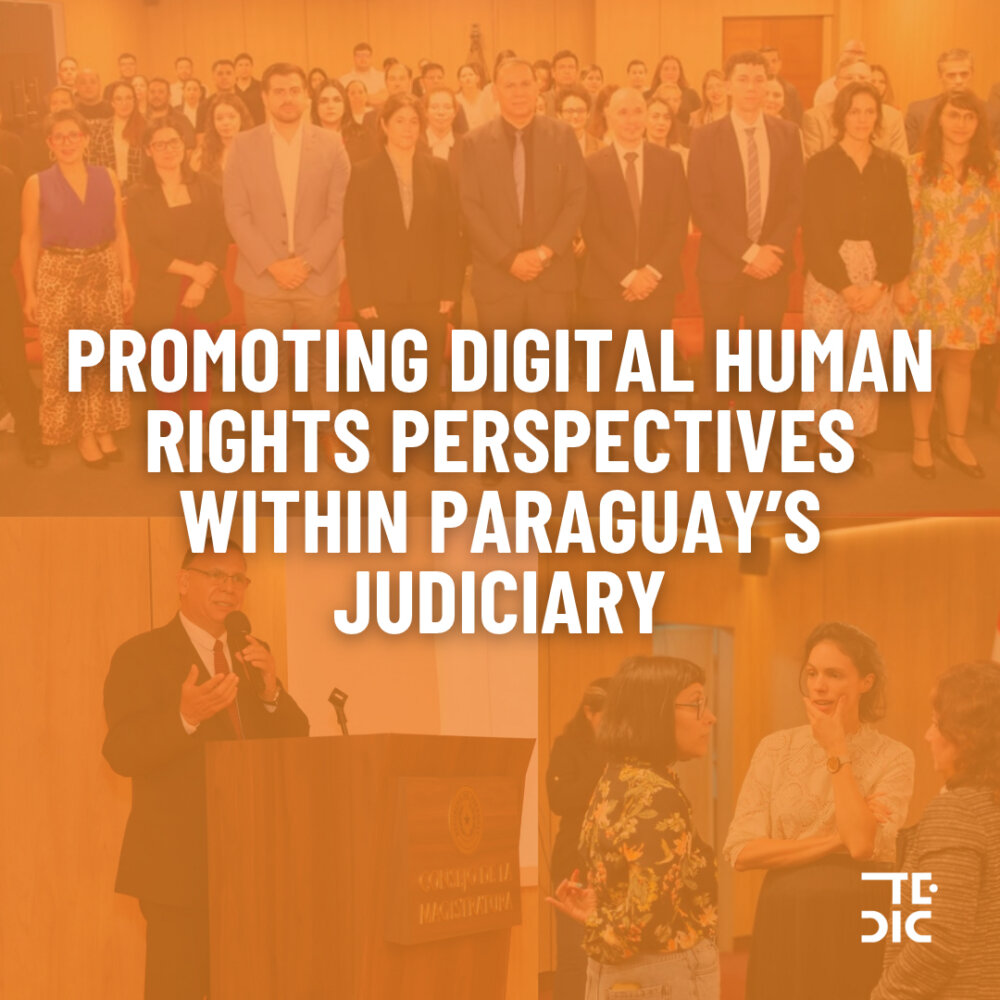
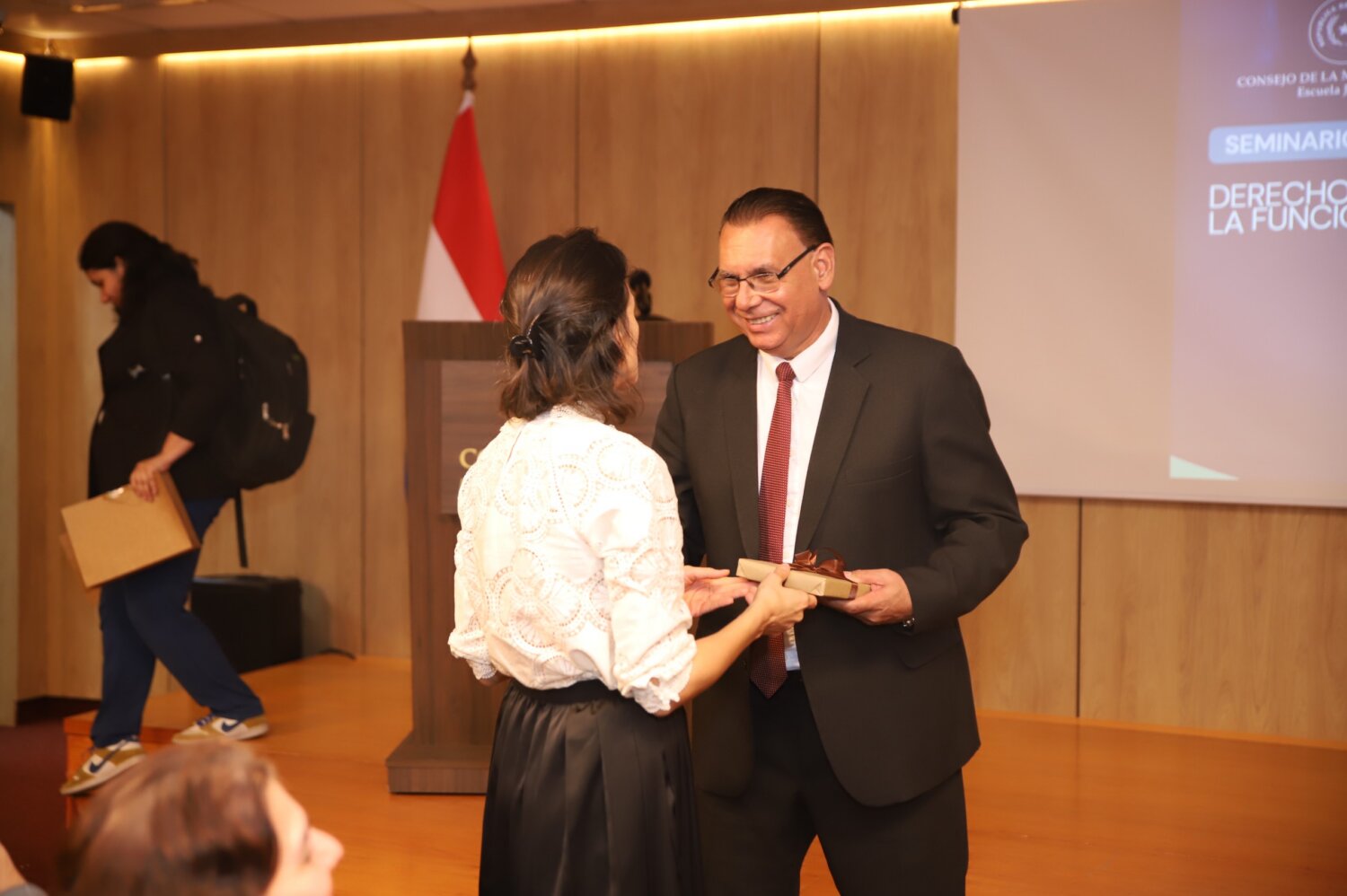
On September 2 and 3, TEDIC, the Judicial School, and the Council of Magistracy carried out the training “Human Rights in the Judicial Function: Privacy, Data Protection, and Surveillance in Security Activities,” a space designed to support members of the Judiciary in a context where the State’s surveillance capabilities are advancing much faster than legal safeguards and accountability mechanisms.
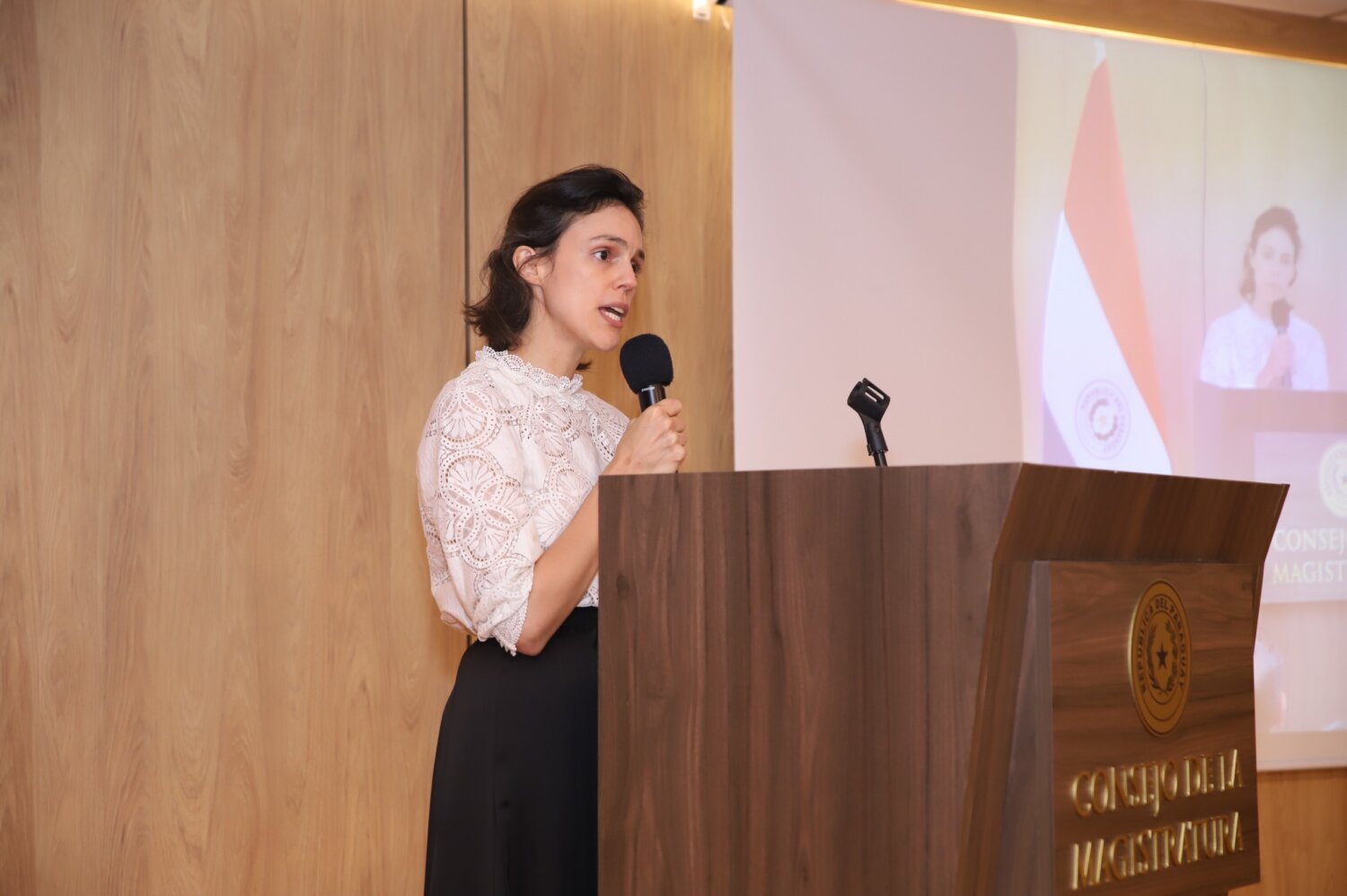
The activity reaffirmed and deepened the strategic alliance between the three institutions, consolidating a joint effort aimed at sustainably embedding a digital human rights perspective within the ongoing training of Paraguay’s judicial function.
A turnout that exceeded expectations
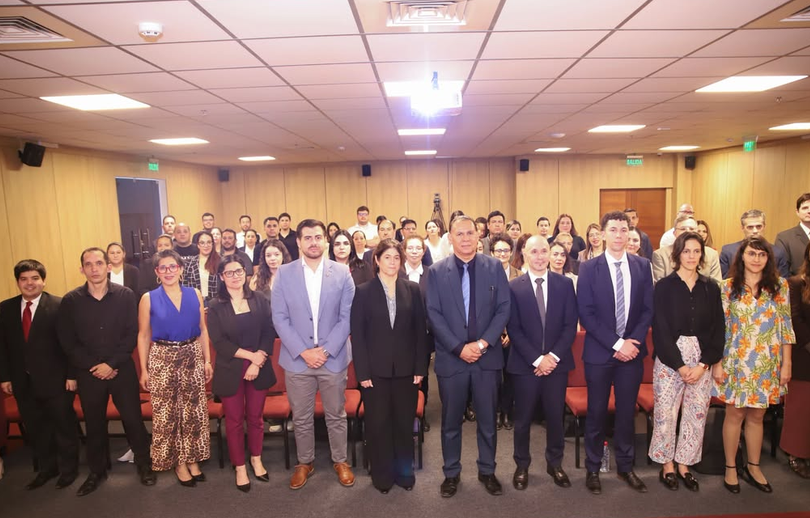
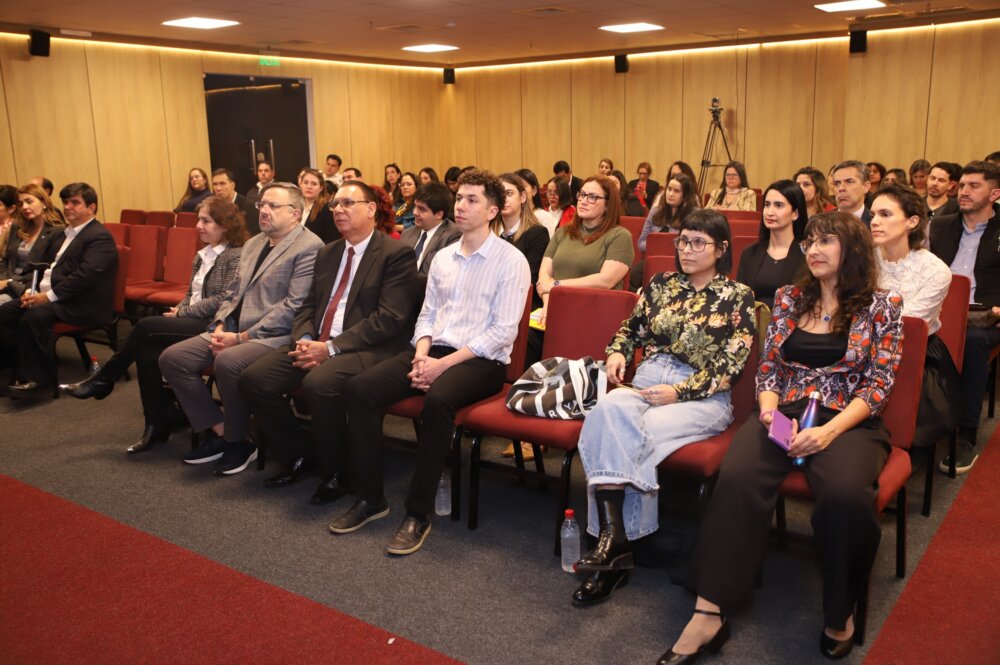
The training reached an audience that confirmed the judicial sector’s growing interest in these topics: more than 50 people attended in person, while the virtual format brought together 315 people on the first day and 430 on the second, figures that reflected the commitment of judges, court officials, and judicial staff to updating their knowledge on inter-American human rights standards applied to the digital age.
Keynote presentations that shaped the agenda
Over the two days, national and international specialists shared their expertise on surveillance, data protection, and artificial intelligence:
- Atty. Paloma Lara Castro opened the series with a regional overview of the use of surveillance technologies in Latin America.
- Dr. Veridiana Alimonti examined inter-American human rights standards applied to law enforcement authorities, privacy, data protection, and the public sector’s use of artificial intelligence.
- Judge Ezequiel Scafati discussed the right to informational self-determination in light of the ruling in the CAJAR v. Colombia case.
- Judges Maricarmen Sequera and Cecilia Abente closed the training with an analysis of the state of personal data protection and surveillance in Paraguay.
However, the presentation that captured the audience’s full attention was that of Dr. Diego Moreno Rodríguez, who addressed the CAJAR case, conventionality control, and the right to defend human rights defenders. His presentation offered a masterful reading, drawn from his own judicial experience, of how inter-American standards, particularly the precedent set by the Inter-American Court of Human Rights in the case of the Lawyers’ Collective “José Alvear Restrepo” (CAJAR) v. Colombia, must be incorporated into everyday judicial reasoning when addressing state surveillance and personal data protection.
His talk proved especially valuable because it built a bridge between human rights theory and concrete judicial practice, showing that conventionality control is not an abstract exercise but a tool that Paraguayan judges can and should apply in their daily decisions.
Day 1 of the seminar
Day 2 of the seminar
An alliance that continues to grow
This training strengthened the coordinated work between TEDIC, the Judicial School, and the Council of Magistracy, an alliance built with the goal of permanently embedding the digital rights agenda within judicial training spaces. Since 2012, TEDIC has driven key advances in Paraguay, such as the passage of the Personal Data Protection Law, enacted in 2025, and this institutional collaboration marked a further step toward building a judicial function with stronger tools to guarantee those rights.
The activity also had the backing of allied organizations with regional and international standing: the Electronic Frontier Foundation (EFF), Derechos Digitales, and the Center for Justice and International Law (CEJIL), whose work in strategic litigation, advocacy, and judicial training on privacy and surveillance issues brought an essential comparative perspective to the analysis of Paraguay’s case.
What the training left behind
With content ranging from the regional surveillance landscape to the concrete challenges Paraguay faces in data protection, the training left a solid foundation of knowledge among those who administer justice in the country. The strong turnout, both in person and virtual, confirmed that Paraguay’s judicial function is increasingly attentive to the need to update its tools in the face of the challenges posed by surveillance technologies and the state’s use of artificial intelligence.
At TEDIC, we remain committed to this kind of alliance, convinced that strengthening judicial training in digital human rights is an essential path to ensuring that privacy and personal data protection are effectively respected in Paraguay.