


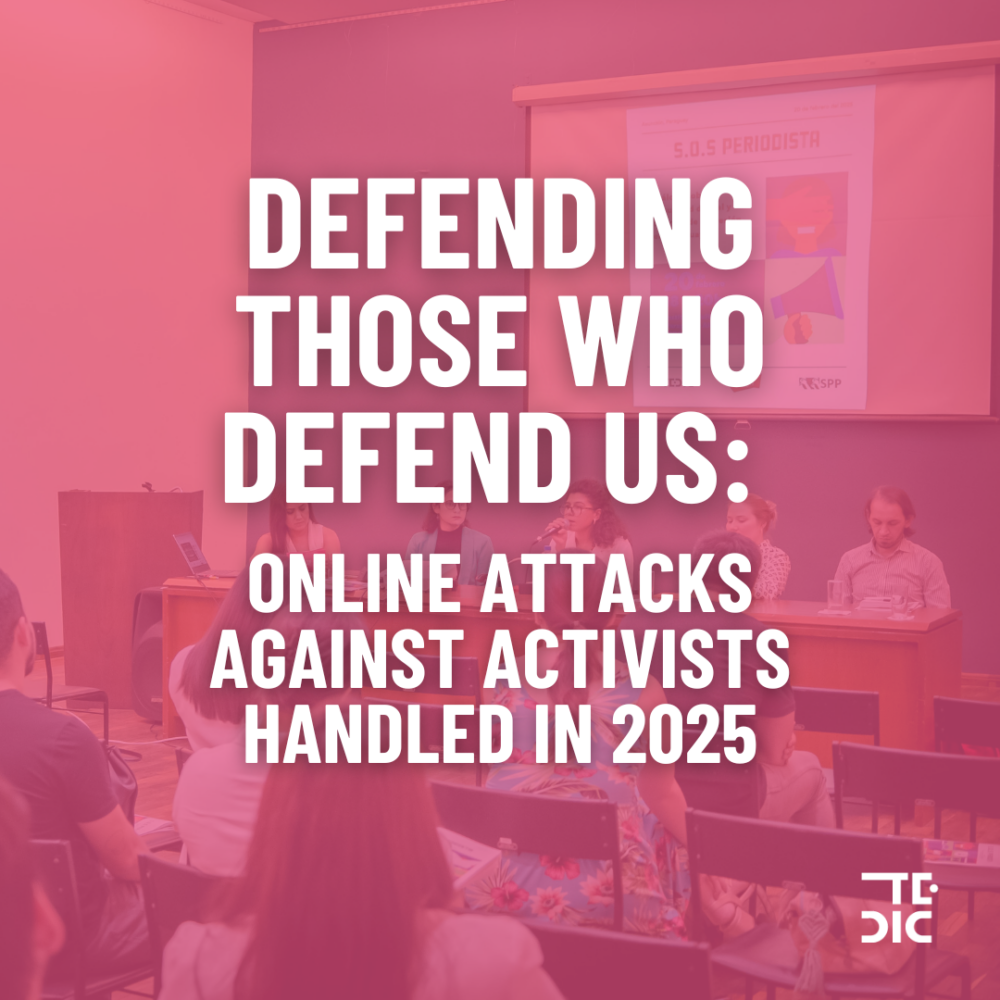
In Paraguay, digital platforms remain fundamental spaces for public participation, reporting abuses, investigative journalism, and collective organizing. For activists, human rights defenders, and journalists, social media networks are not just communication channels: they are work tools, memory archives, spaces for advocacy, and builders of legitimacy.
However, these same spaces have become stages for systematic attacks. Hacking, identity theft, arbitrary content removal, smear campaigns, and digital violence seek to silence critical voices, halt reporting processes, and weaken public participation. Defending those who defend us implies, now more than ever, protecting their presence and security in digital environments.
In 2025, TEDIC supported 18 cases ranging from digital violence to attacks on the accounts of human rights defenders, activists, and journalists. Of these, 6 involved Facebook, 5 Instagram, 2 TikTok, and 5 were inquiries related to digital security and reporting pathways. In this blog, we reflect on this work and what it means to defend the digital presence of those who raise their voices against social injustices.
Sustaining Strategic Alliances for an Effective Response
During 2025, TEDIC maintained and strengthened its role as a recognized Trusted Partner of Meta (Facebook, Instagram, and WhatsApp) and TikTok. This role allows the organization to maintain direct communication channels with these platforms, which are essential for responding quickly to high-risk situations that affect the digital security and public participation of activists, journalists, and human rights defenders.
Having this recognition is crucial in a context where standard reporting mechanisms are often slow or ineffective for those facing coordinated attacks, digital censorship, or serious threats to their security. The ability to escalate critical cases, provide ongoing follow-up, and demand timely responses makes a tangible difference in the protection of rights.
In particular, TEDIC’s ongoing partnership with Meta and its role as a Trusted Partner of TikTok made it possible to prioritize the reporting of digital violence, hate speech, and disinformation; support complex hacked-account recovery processes; contribute to content moderation on Facebook, Instagram, and TikTok; and provide guidance on digital security and risk prevention for activists and journalists.
Support to Ensure Voices Are Not Silenced
During 2025, TEDIC’s support focused on cases where digital attacks sought to stop reporting processes, journalistic investigations, or collective organizing. Far from being isolated incidents, the reasons for seeking assistance followed clear patterns of aggression.
The main reasons for support included: Hacking and takeover of personal, collective, and media accounts. Content removal or sabotage for the purpose of censorship or retaliation. Identity theft and malicious use of public profiles. Gender-based digital violence, including the non-consensual dissemination of intimate images. Use of Artificial Intelligence to manipulate images, voices, or videos for smear campaigns, scams, or disinformation.
Those supported were primarily activists, human rights defenders, journalists, and social organizations whose actions were aimed at denouncing human rights violations, corruption, and other issues of high public interest.
Technology-Facilitated Gender Violence: A Persistent Pattern
A cross-cutting element in the cases handled during 2025 is gender-based digital violence. The majority of reports received involve women, who face various forms of online aggression aimed at restricting their public participation.
Among these forms of violence, the non-consensual dissemination of intimate images remains a primary method of attack. This is compounded by threats, systematic harassment, hate campaigns, and the use of AI to alter images or audio to discredit, humiliate, or silence.
When these aggressions target activists or journalists, the impact is not just individual: it affects their credibility, safety, and ability to continue their advocacy and reporting work.
Attacking Accounts is Attacking Causes
Many of the cases supported during 2025 reveal a clear strategy: targeting digital accounts to disrupt processes of organizing, investigation, or reporting. Hacking a profile, deleting its content, or impersonating an identity forces people to start from scratch, lose audiences built over years, and weakens the public voice of those who challenge power.
One of the most representative cases was the recovery of an Instagram account belonging to a women’s collective that advocated for improvements in reporting processes for domestic violence and exposed cases of judicial corruption. The account was hacked with the aim of deleting its publication history and sabotaging its work. Thanks to coordination with Meta, access was restored, allowing the collective to resume its advocacy efforts.
Another significant case involved supporting a news outlet whose Facebook account was hacked following the publication of sensitive investigations into corruption. The process included submitting the report, providing ongoing follow-up, and ensuring the secure recovery of the account.
TEDIC also intervened in a case involving the use of artificial intelligence to create a manipulated video that altered a journalist’s image and voice, which was used to carry out scams targeting older adults. The removal of the content helped mitigate reputational harm and prevent further victims.
Finally, TEDIC supported a case involving the non-consensual distribution of a woman’s intimate images by her former partner. The intervention prioritized the survivor’s protection and the removal of the content through the platform’s reporting channels.
Defending Participation in Digital Environments
The support provided in these cases confirms that digital attacks are part of a pattern to silence critical voices. In this scenario, protecting accounts and content is a concrete way to defend democratic participation.
Sustaining alliances with platforms and demanding effective responses is essential to ensure that defenders and journalists can work without fear of being erased or discredited. Defending those who defend us is also defending the right to autonomy, freedom of expression, and privacy in the digital space.
 WICE – WOMEN’S IN CYBERSECURITY EMPOWERMENT
  Not with my face: The Paraguayan State deploys facial recognition without transparency or oversight