

For several years now, civil society organizations, experts, and international bodies have been raising the same concern: the forms of violence that have historically affected women and gender-diverse people did not disappear with the advent of the Internet. Instead, they have transformed and found new ways to be amplified in digital environments.
In Latin America and the Caribbean, this gap began to be discussed more forcefully within the Inter-American human rights system, particularly in the framework of the Convention of Belém do Pará, the main regional treaty that obliges States to prevent, punish, and eradicate violence against women. Although the Convention was adopted in 1994, its scope has expanded over time to respond to new realities, including gender-based digital violence.
What is the Convention of Belém do Pará and why do these spaces matter?
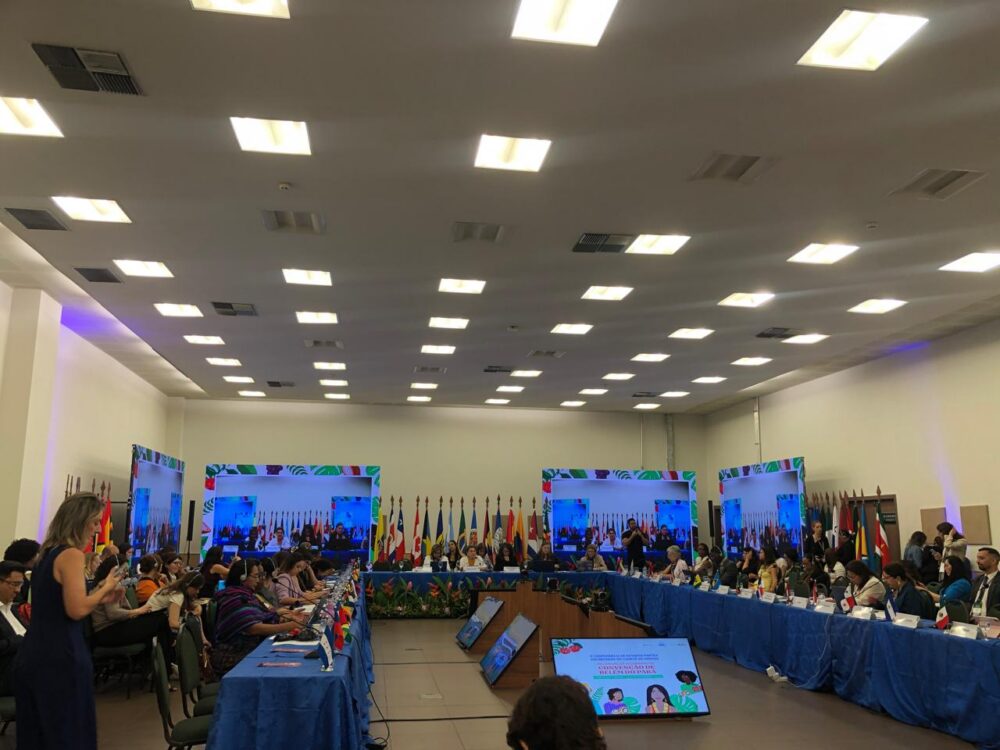
The Inter-American Convention on the Prevention, Punishment and Eradication of Violence against Women, known as the Convention of Belém do Pará, is the main regional human rights treaty addressing violence against women, adopted by the Organization of American States (OAS) in 1994. The Convention recognizes violence against women as a human rights violation and obliges States Parties not only to punish such violence, but also to prevent it, provide assistance to victims, repair the harm caused, and adopt public policies and legal frameworks aimed at transforming the social patterns that sustain it.
Paraguay ratified the Convention through Law No. 605/95 on June 21, 1995, thereby committing to implement its obligations through domestic legislation and public policies. Specifically, as a State Party, Paraguay assumes duties such as acting with due diligence to prevent, investigate, and punish acts of violence against women, and adopting legal, administrative, and educational measures to eliminate such violence in all spheres, both public and private.
To assess whether States are fulfilling these commitments, the Follow-up Mechanism to the Convention of Belém do Pará (MESECVI) was created in 2004. This is a technical–political body that coordinates periodic evaluations, issues recommendations, and promotes dialogue processes between governments and civil society. Within this system, the Conference of States Parties serves as the political forum where governments discuss priorities and agree on lines of action; the Committee of Experts of MESECVI develops technical analyses on States’ compliance with their obligations; and the Civil Society Forum allows organizations to contribute evidence, alerts, and proposals grounded in local realities.
It was within this institutional framework that the idea of an Inter-American Model Law on digital violence against women began to take shape, conceived as a common guide to support States in updating or developing legal frameworks better suited to the new technological challenges.
From regional discussion to the Inter-American Model Law
The Inter-American Model Law did not emerge from a single event or a swift agreement. Its development reflects several years of regional debate. Since 2017, the MESECVI Committee of Experts has positioned technology-facilitated gender-based violence as a regional priority, and in 2022 it formally launched a process to draft the Model Law. This process included multiple rounds of in-person and virtual consultations in countries such as Argentina, Colombia, Panama, and Brazil, with the participation of more than 150 specialists from diverse fields.
The final text, published on December 10, 2025, is grounded in the recognition that digital violence is not a marginal phenomenon, but a specific form of gender-based violence that requires comprehensive responses. The Model Law proposes broad definitions, human rights–based principles, and State obligations related to prevention, care, investigation, punishment, and reparation. It also acknowledges that these forms of violence can occur in both public and private spaces, and that their impact is intensified when intersecting with inequalities such as poverty, racism, or political exclusion.
During the review process, organizations such as Hiperderecho and Derechos Digitales warned that while recognizing digital violence as a form of gender-based violence represents a significant step forward, some of the wording in the text could lead to broad or ambiguous interpretations in practice. In particular, they pointed out that certain definitions, by failing to clearly delimit punishable conduct, could enable disproportionate State responses or inconsistent application across countries, undermining legal certainty for both victims and other Internet users.
One of the central concerns related to the role assigned to digital platforms and other Internet intermediaries. While the acknowledgment of their responsibility in preventing and mitigating digital violence was welcomed, organizations warned about the risk of assigning them quasi-judicial functions, encouraging rapid content removal without adequate review mechanisms, due process, or transparency. Such approaches, they cautioned, could lead to practices of private censorship, particularly affecting uncomfortable, critical, or denunciatory speech—forms of expression often used by women, activists, and human rights defenders.
Concerns were also raised about the insufficient development of safeguards to protect rights such as freedom of expression, privacy, and anonymity, which are especially relevant in contexts of gender-based violence. From a digital rights perspective, these tools are not only integral to the exercise of fundamental freedoms, but often serve as mechanisms of self-protection against harassment, persecution, or retaliation. The absence of clear safeguards could therefore produce adverse effects for those already in vulnerable situations. While several of these observations were taken into account during the regional debate, not all were fully reflected in the final text of the Model Law.
Ultimately, the Inter-American Model Law does not replace national legislation nor does it impose automatic obligations on States. Like any normative instrument, it is also the product of power relations, political disputes, and specific social contexts. In a regional landscape marked by setbacks in gender equality, and with worrying signals in Paraguay as well—such as restrictions on gender perspectives in education—laws should not be understood as closed or definitive solutions, but as human tools and therefore subject to improvement. In this sense, the Model Law offers a minimum floor of Inter-American standards that can serve as a basis for developing comprehensive public policies centered on the rights of survivors of technology-facilitated violence, provided that its adoption and implementation are carried out with a critical, contextual, and human rights–based approach.
Our participation from TEDIC
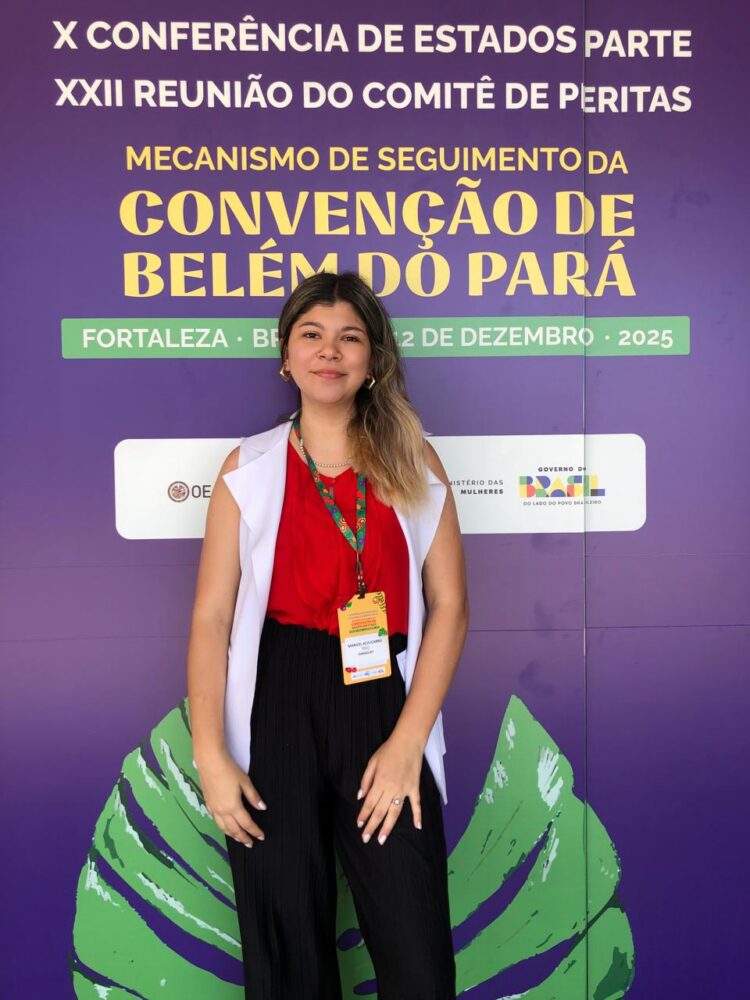
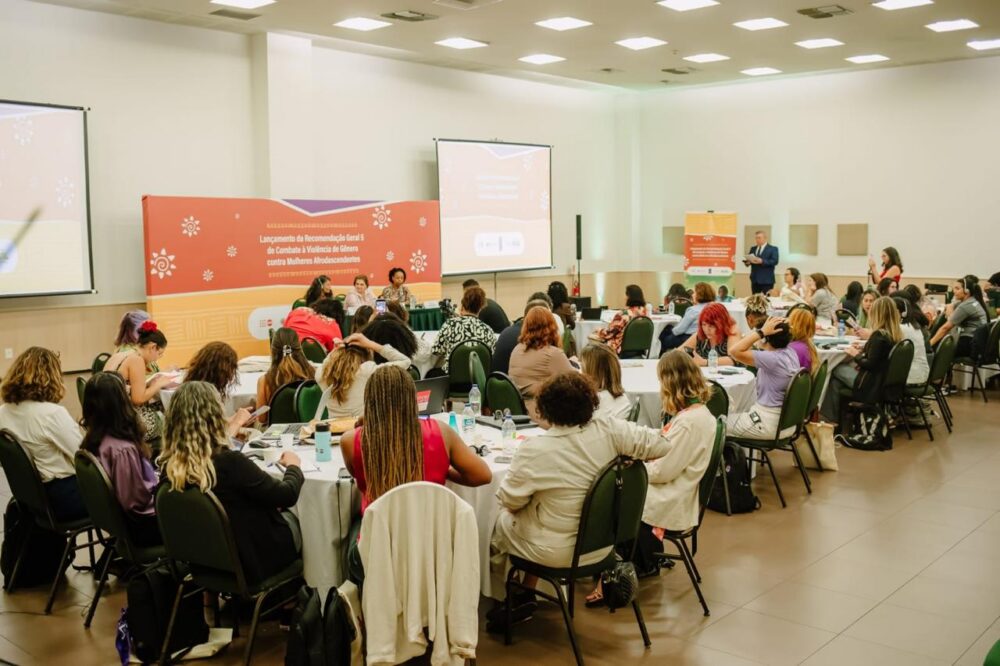
In this context, TEDIC participated in the regional meeting held from December 9 to 12 in Fortaleza, Brazil, which included the Tenth Conference of States Parties to the Convention of Belém do Pará, the 22nd Meeting of the MESECVI Committee of Experts, and the Civil Society Forum. Our participation took place as part of the Belém do Pará Articulation, a network of organizations that accompanies these processes from a critical and situated perspective.
During these spaces, particular attention was given to analyzing the content of the Model Law, its scope, and the challenges posed by its potential implementation across different countries in the region. From TEDIC, we contributed our experience in researching and documenting digital violence, as well as reflections on the risks of responses that may undermine freedom of expression, and on the need for comprehensive public policies that include prevention, education, access to justice, and effective reparation.
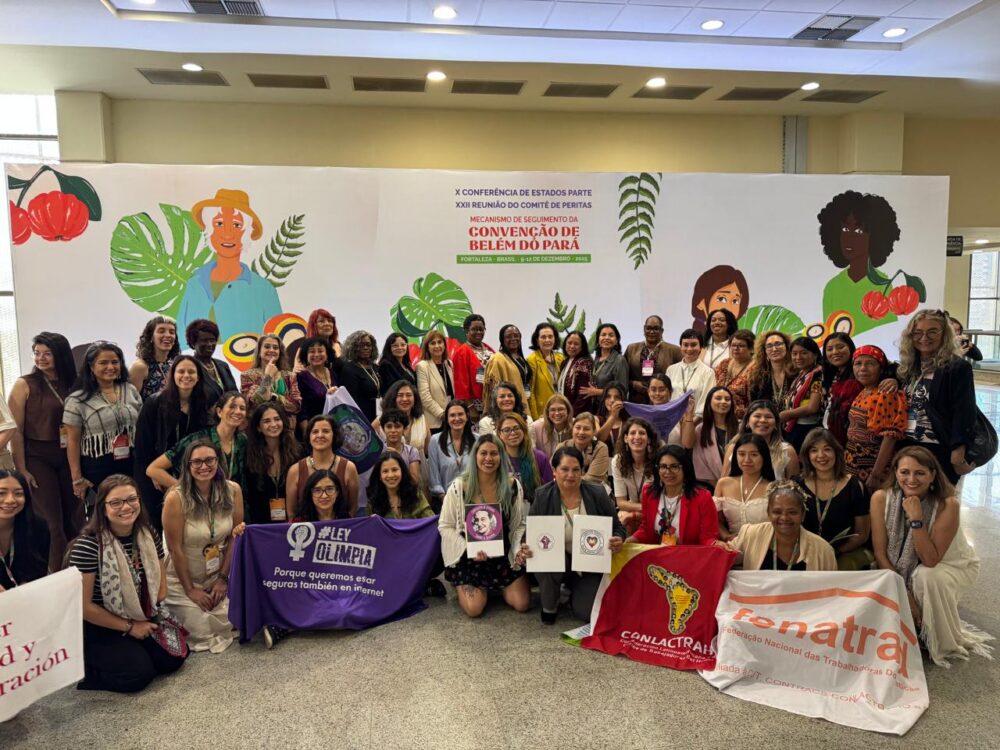
Our presence in these spaces reaffirms the role of civil society in the construction of regional standards and in the monitoring of State commitments, especially in areas where technology advances faster than the law.
Paraguay and the Model Law: an open scenario
In Paraguay, Law No. 5777/16 on the Comprehensive Protection of Women against All Forms of Violence recognizes telematic violence as a form of gender-based violence, primarily defined around the dissemination or publication of messages, photographs, audio recordings, or videos that affect women’s dignity or privacy. While this definition allows for addressing cases such as the non-consensual dissemination of intimate images, it does not comprehensively cover other forms of digital violence, such as online harassment, the use of technology for sustained stalking, or attacks targeting women journalists or political leaders. This limitation restricts institutional responses and access to justice for victims.
In 2023, in an attempt to broaden the normative approach to these issues, a Bill on Online Harassment was introduced in the National Congress. TEDIC accompanied the public debate around this initiative, pointing out that while it reflected the need to update the legal framework, the text presented significant shortcomings, including the lack of clear definitions of digital violence and its various manifestations, as well as risks of discretionary interpretations or disproportionate responses that could affect fundamental rights, particularly freedom of expression.
The adoption of the Inter-American Model Law opens a space for debate on whether Paraguay’s current legal framework needs to be updated, complemented, or strengthened. This process is neither automatic nor mandatory and will depend on political decisions, institutional priorities, and dialogue between the State and civil society.
From TEDIC, we will continue to accompany this process with a technical and constructive approach, contributing to public and legislative debates so that any future adaptation of these standards incorporates a human rights–based approach, a gender perspective, and local realities, thereby strengthening responses to digital violence in Paraguay.
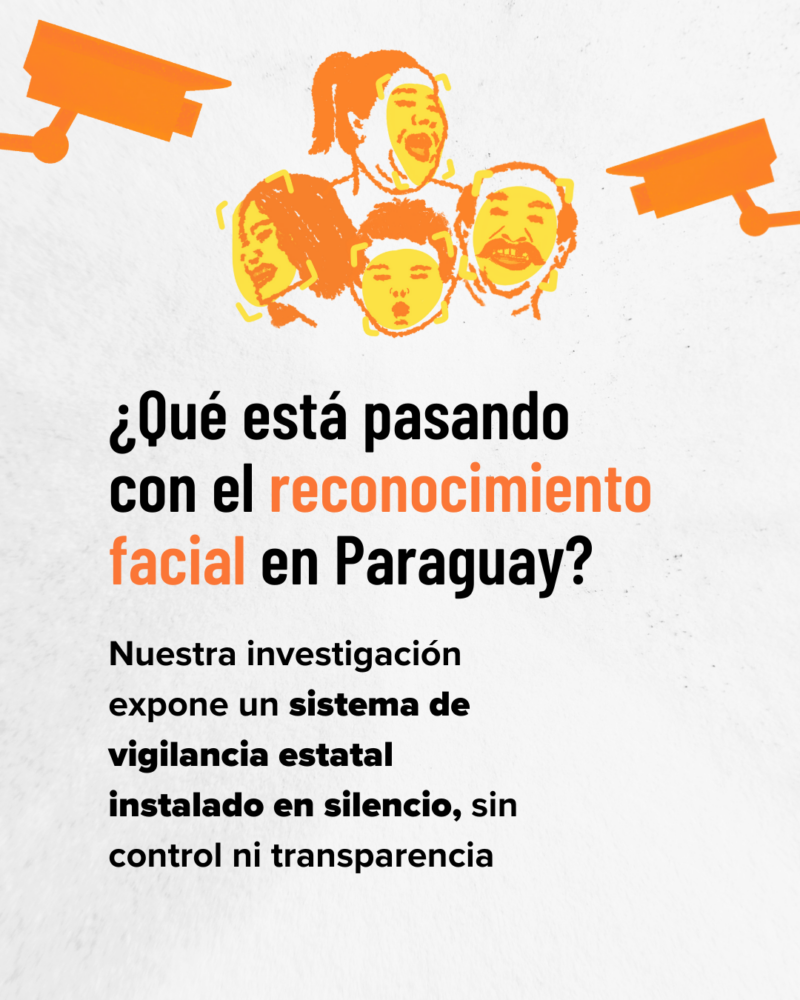 Not with my face: The Paraguayan State deploys facial recognition without transparency or oversight
 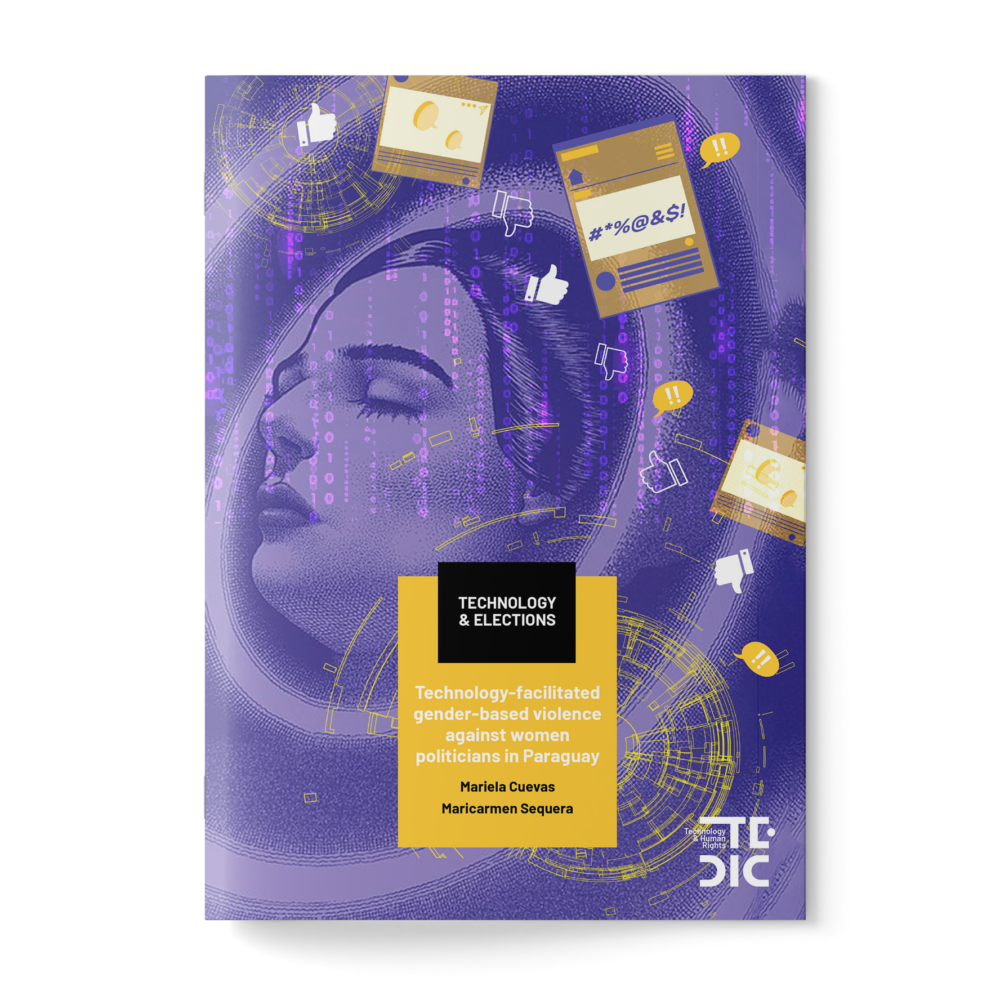 [Research] Technology-facilitated gender-based violence against women politicians in Paraguay