

On November 28, the official presentation and launch of the RAM Paraguay report took place, prepared within the framework of UNESCO’s Readiness Assessment Methodology (RAM). This report represents a fundamental step toward understanding the country’s level of preparedness for the ethical and responsible adoption of artificial intelligence (AI).
The report was made possible thanks to a joint effort between UNESCO, the Ministry of Information and Communication Technologies (MITIC), and the National Council for Science and Technology (CONACYT). More than 50 individuals and organizations from different sectors actively participated in this process, contributing their experience and knowledge on issues related to the development, governance, and application of AI from multiple perspectives.
Work process
The RAM Paraguay report is the result of technical support requested by MITIC and CONACYT from UNESCO in 2024, with the aim of assessing the country’s readiness to implement artificial intelligence policies and technologies in an ethical, inclusive, and sustainable manner. The coordination of this assessment made it possible to align national efforts with the UNESCO Recommendation on the Ethics of Artificial Intelligence, adopted in 2021.
During the process, a multi-stakeholder roundtable was formed, comprising representatives from government, civil society, the business sector, and academia, who reviewed and validated each stage of the work. Notable members included Giuliana Galli, Diego Pedro Pinto, Gloria Ortega, José Luis Vázquez, Julio Paciello, Rafael Palau, and Vanessa Cañete, who contributed from different fields to ensure a pluralistic and inclusive vision.
The coordination and research team, led by Maricarmen Sequera, included Mariela Cuevas, Antonia Bogado, and Diana García, whose commitment was key to the implementation of the RAM methodology in Paraguay. The collaboration of Gisselle Burbano, Natalia González Alarcón, and the UNESCO AI Ethics Unit team was also recognized, as they provided technical support and constant feedback.
The national diagnosis identified significant progress in various dimensions of Paraguay’s AI ecosystem, such as digital infrastructure, cybersecurity, data governance, and the digital economy. Among the most recent milestones are the approval of the National Cybersecurity Strategy 2025–2028 (ENC-PY), the implementation of the Nube Py government platform, and the enactment of Law No. 7021/2022 promoting the use of open data in public procurement. However, the report also highlights remaining challenges in the areas of personal data protection, AI training, and updating statistical information on access to and use of technologies.
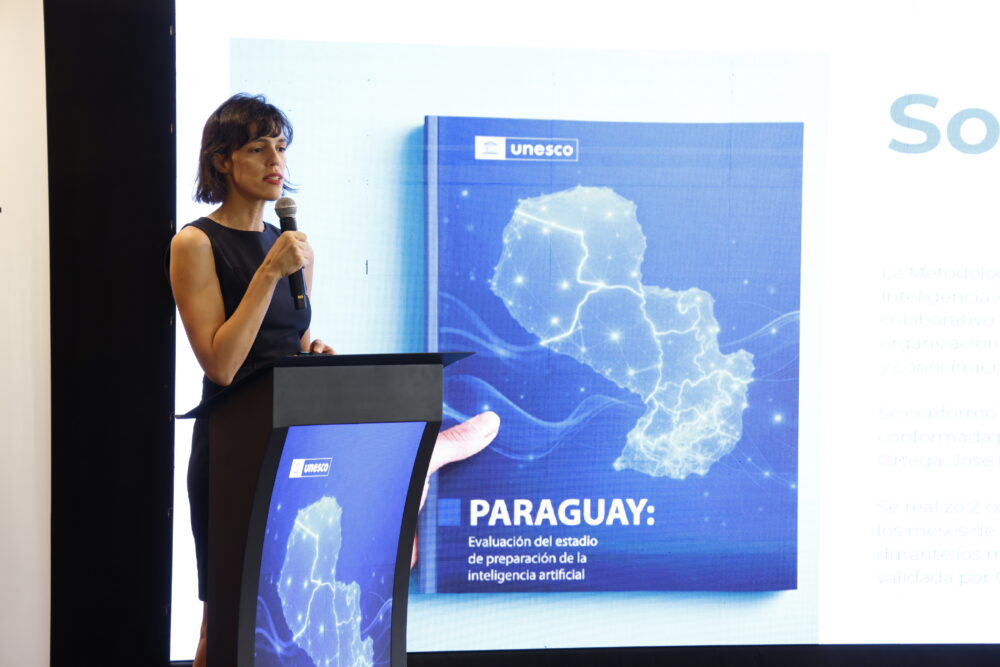
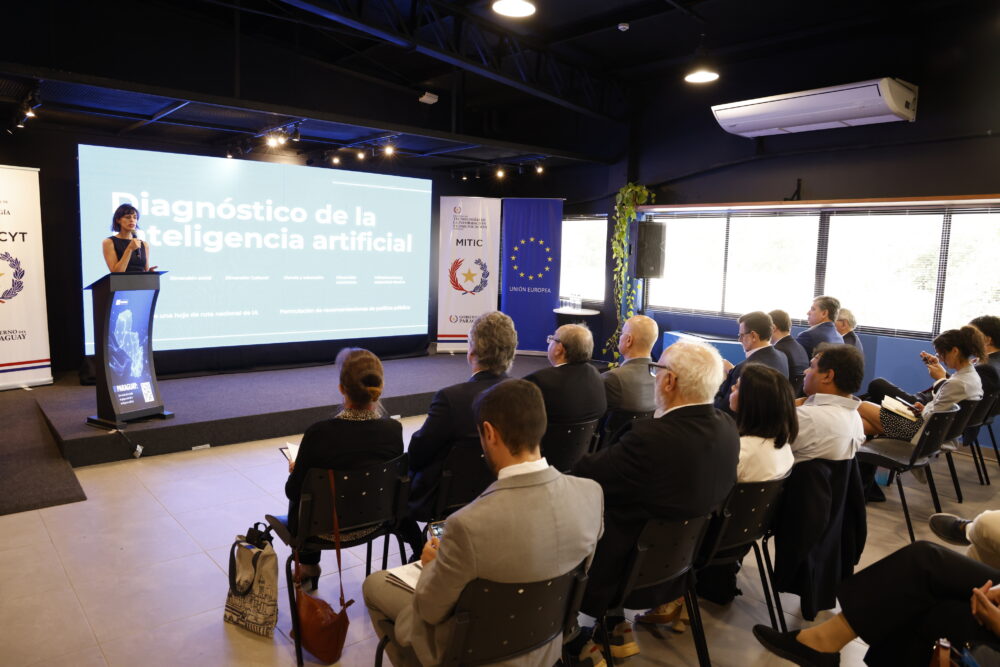
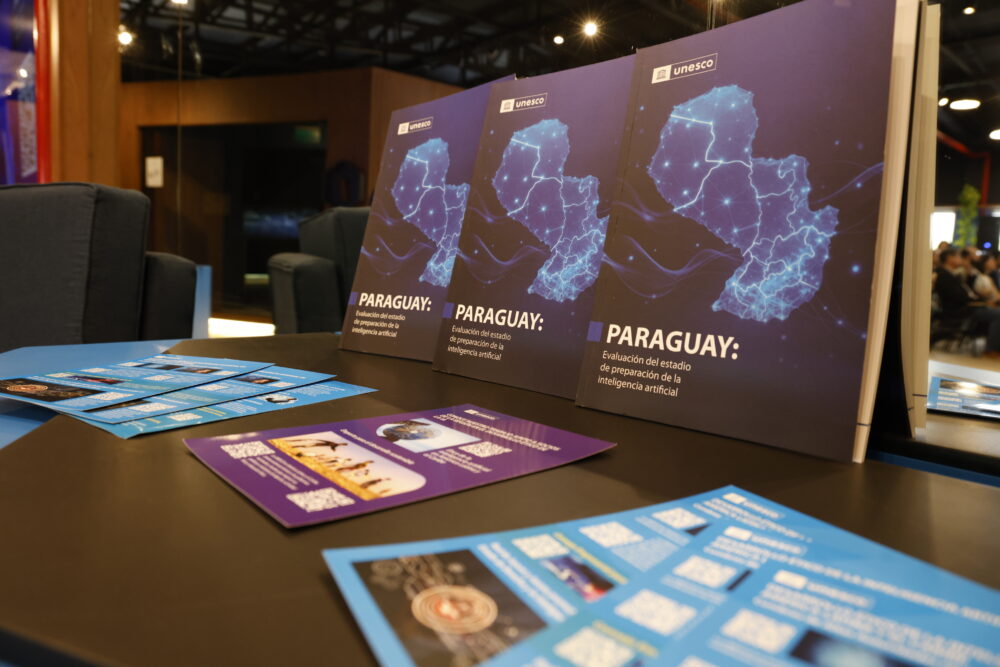
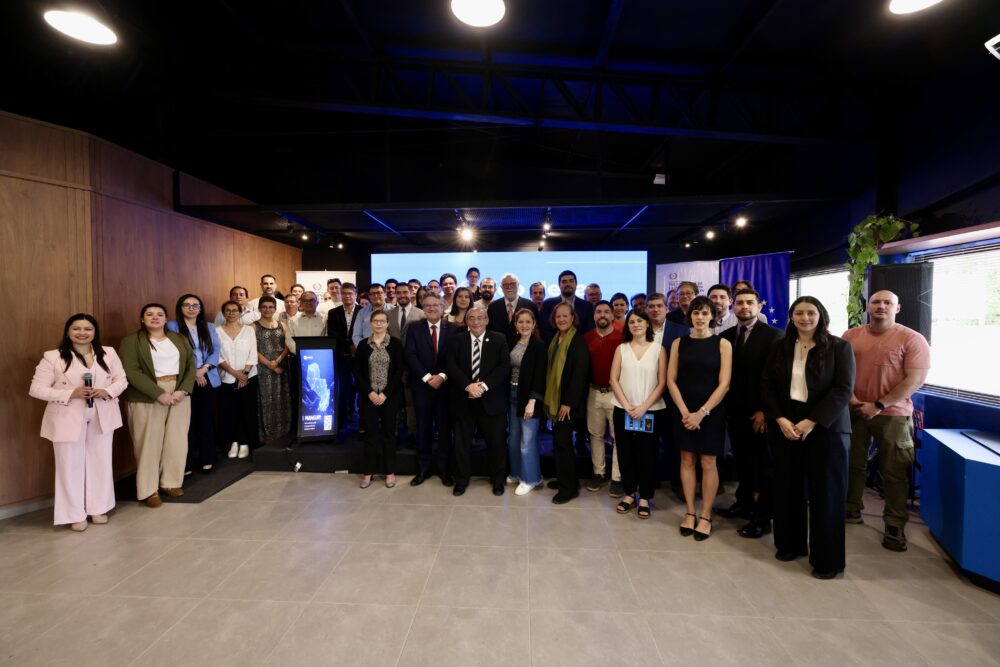
The evaluation process, which took place between August and November 2024, included public consultations, working groups, and dialogue forums involving 88 stakeholders from the public and private sectors, academia, and civil society. These discussions resulted in ten public policy recommendations aimed at strengthening data governance, privacy protection, digital infrastructure, education, technological inclusion, and international cooperation.
At the time of completion of this investigation, two legislative proposals on AI, presented by legislators, were under discussion in the Paraguayan Congress. These proposals reflect a major legislative effort to ensure that AI systems are used in a safe, transparent, and traceable manner.
However, these legislative efforts face the major challenge of continuing to engage in debate with multiple stakeholders and connecting with other specific regulatory challenges identified in this report, such as the need to pass a personal data protection law, regulatory updates on transparency, and assessments of potential impacts on employment and surveillance, among others.
Like other countries in the region, Paraguay faces significant challenges in achieving ethical and sustainable AI development. However, the government has demonstrated its commitment to this agenda by actively participating in international forums and formalizing its interest through the adoption in 2021 of the UNESCO Recommendation on AI. The presentation of this analysis, based on the RAM methodology specific to the Recommendation, is a crucial step in this direction, contributing to the consolidation of a national strategy that guarantees inclusive, ethical AI focused on social welfare.
Conclusions and proposals
Overall, this research presents a fundamentally optimistic view that we share at UNESCO: that ethical governance and responsible regulation of AI are entirely compatible with innovation and economic growth, and are essential to ensuring a technological ecosystem that benefits the public good. With the data in this report, Paraguay has the elements for a roadmap in that direction.
Along the same lines, among the main recommendations at the conclusion of this investigation in August 2025, the following stand out: the need for a comprehensive personal data protection law, which was approved this November in Congress; a national artificial intelligence strategy with a multi-stakeholder approach; and policies that promote digital inclusion in rural and indigenous communities, incorporating the Guaraní language. In addition, it proposes to promote research, technical training, and curriculum updates for the development of digital skills at all levels.
The official presentation of the RAM Paraguay report marks a milestone in the construction of a national roadmap for the development of artificial intelligence, based on principles of ethics, inclusion, and sustainability. This document is a strategic tool to guide the country’s public policies on technology, innovation, and digital rights, reaffirming Paraguay’s commitment to a more just and responsible digital future. This experience also strengthens TEDIC as a leading organization in conducting this research and its work on these issues since 2021 in the country.
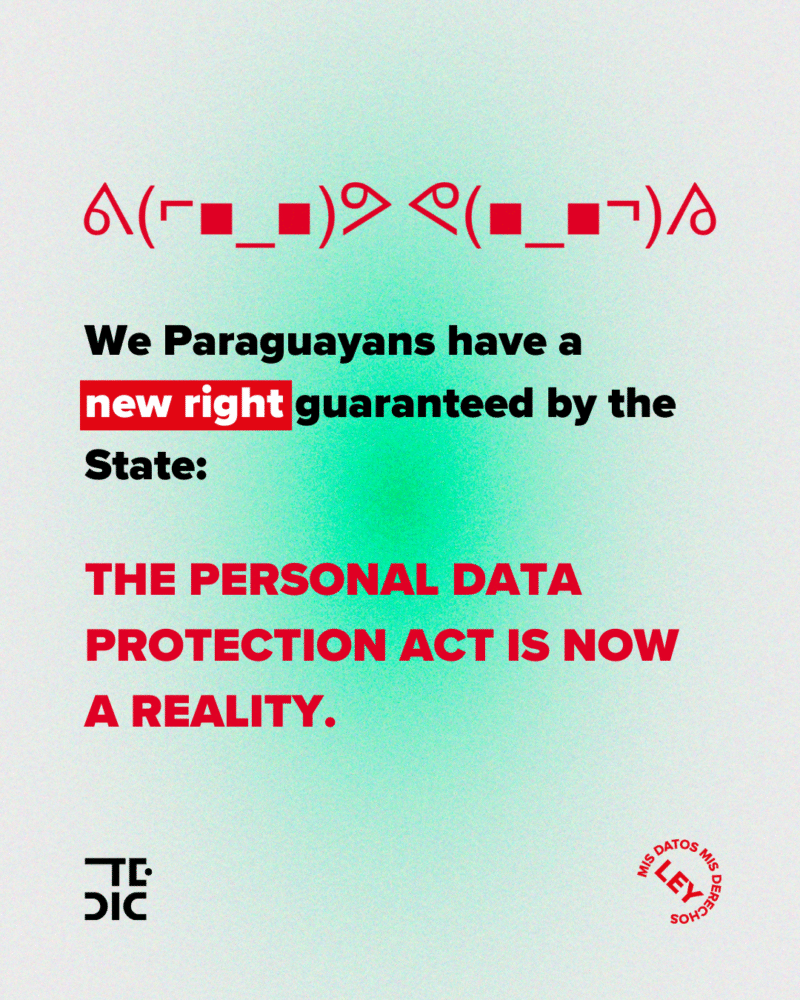 The law on the protection of personal data in Paraguay: a collective achievement based on evidence and plural participation
  Access to justice in the digital Age: Our contributions to the IACHR