


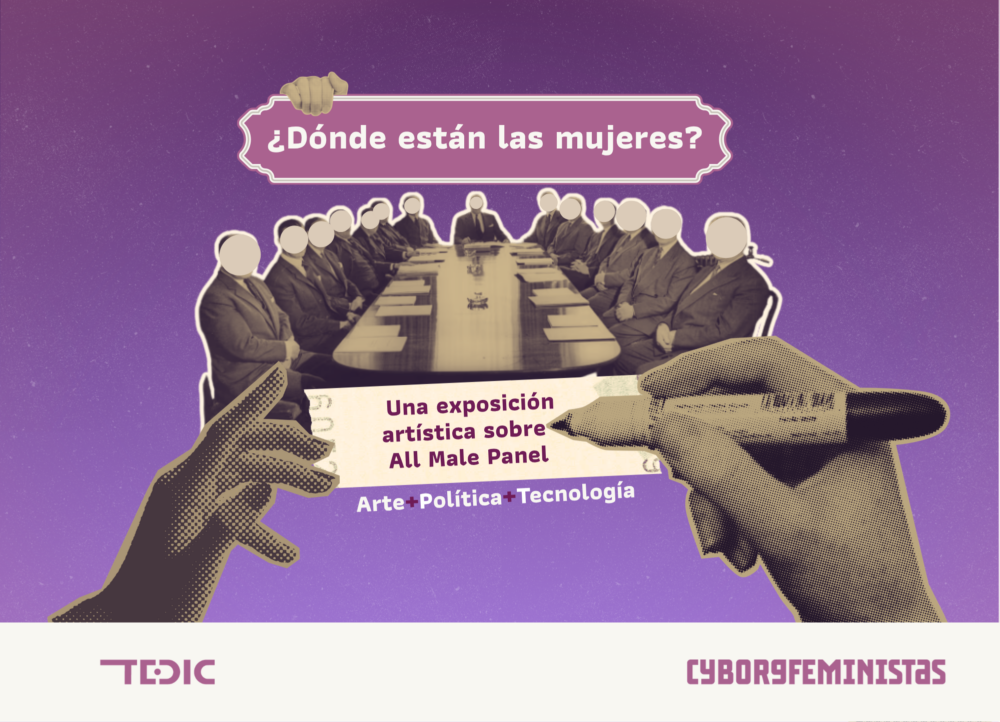
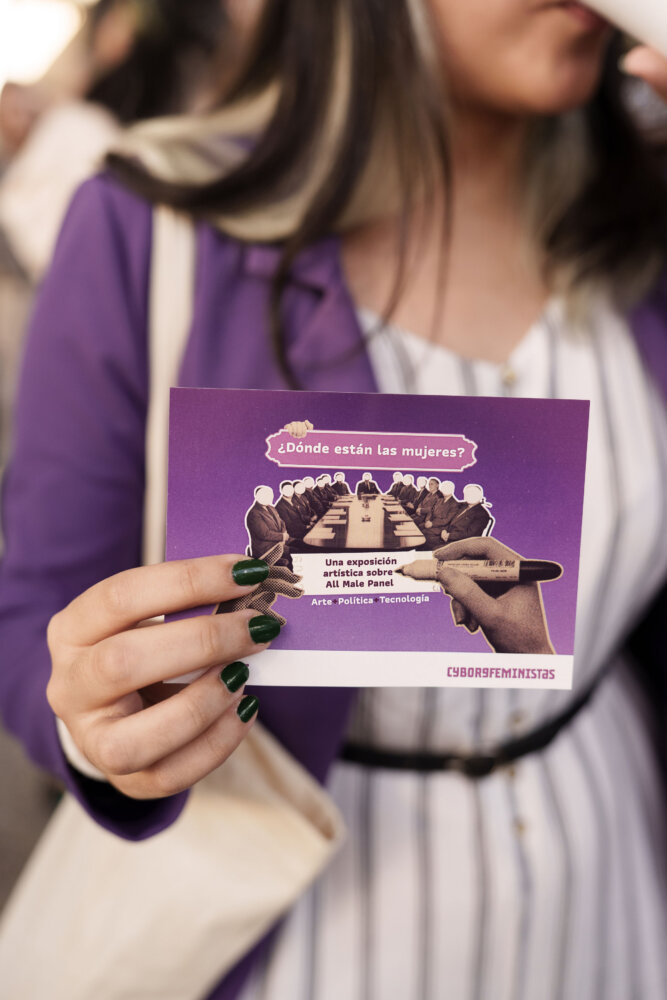
Inspired by the original All Male Panel project, TEDIC and CyborgFeminista developed the Paraguayan chapter, in which we document events—in both the public and private spheres—that include only male experts, highlighting the exclusion of female experts on the subject. With a touch of humor and sarcasm, every Friday, through our X account, we share panels made up exclusively of men, as a form of protest.
The exhibition Where Are the Women?, which stems from the project, consists of three works in different formats and presentations, created by Paz Moreno Re, Betania Ruttia, and Riccardo Castellani through a lengthy process of research, exchange, conceptualization, and creation spanning more than six months, guided by artist Claudia Casarino and curated by Jazmín Ruiz Díaz.
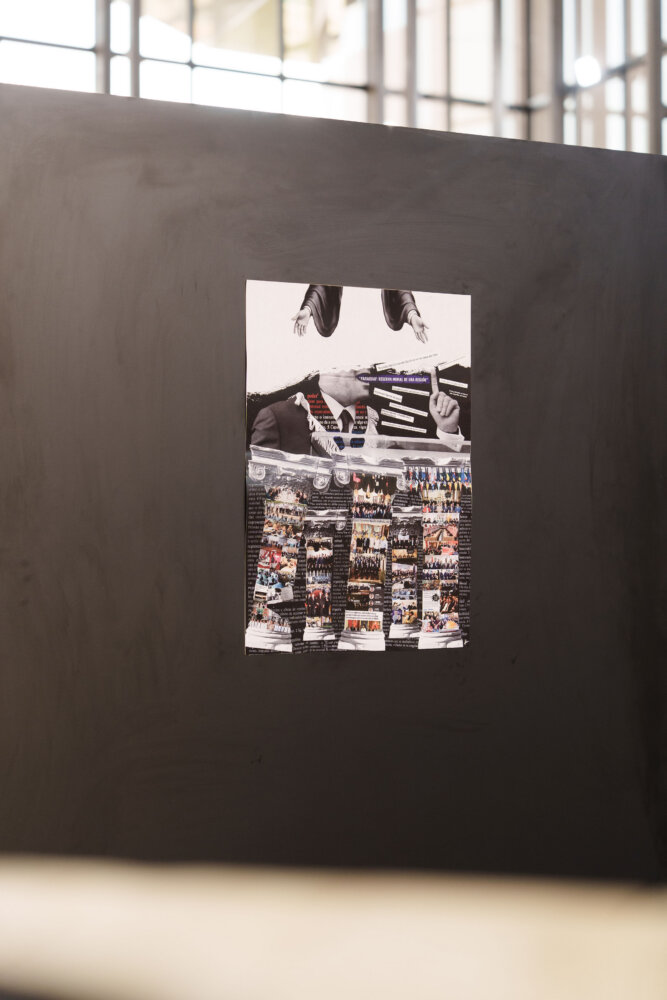
Also on display is a large-scale collage created by artist Karen Vera, with art direction by Romina Aquino González, composed of a selection of photos drawn from the repository. Through a collective minga, in which more than 20 activists and representatives of social, artistic, educational, and political organizations participated, criteria for relevance were defined and conversations were generated about power, representation, and the absences that persist in spaces where the country’s public, cultural, and technological agenda is defined.
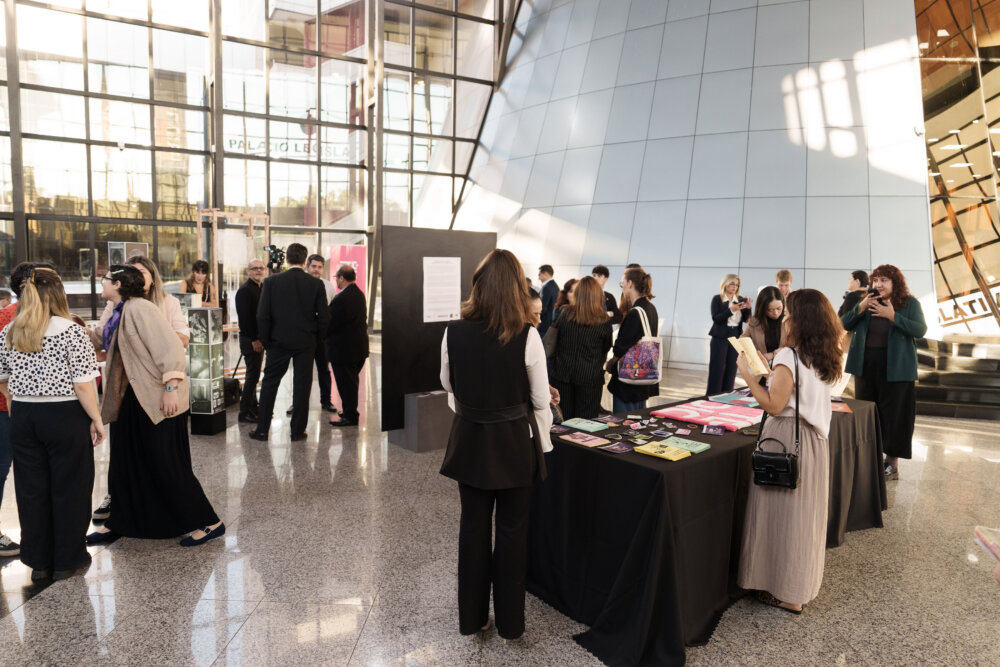
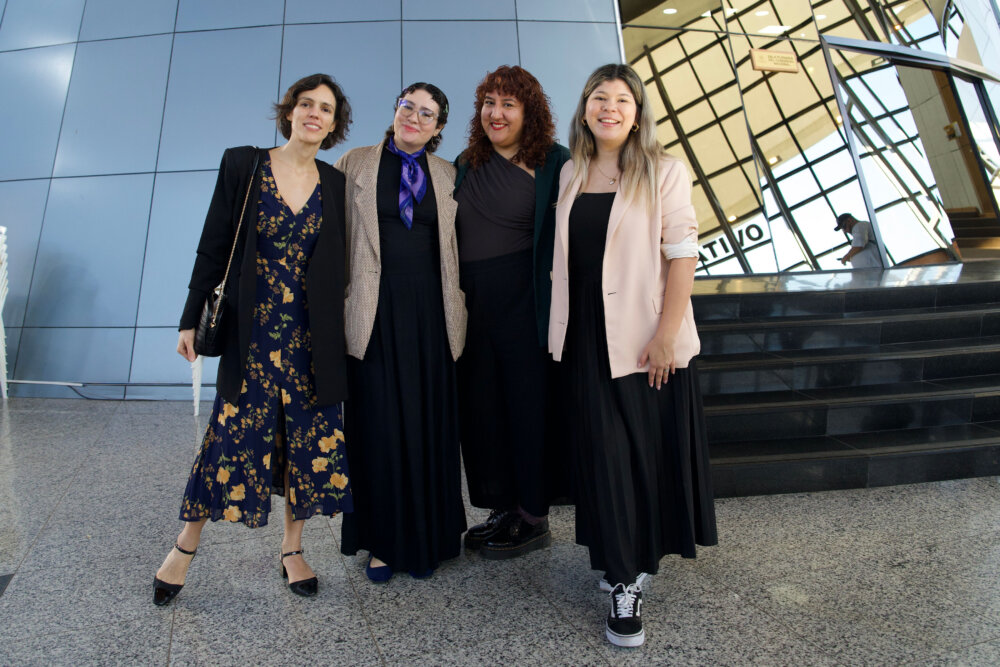
About the Works: Absences and Exclusions
Why is an all-male panel problematic? Who makes the decisions, and who is left out? What are the alternatives? These are some of the questions raised by the works of artists Paz Moreno Re, Betania Ruttia, and Riccardo Castellani. Among them, we will find a textile installation, a light-and-photography exhibition, and even a video game, which critically and pedagogically reflect on the structures that are reproduced, the decisions that are made, and the lives that are prioritized based solely on the thoughts and opinions of half the population.
Weaving Absence – Paz Moreno Re – Textile Installation
To address the question, “How can we make visible that which structurally sustains a system while remaining absent from its representation?” I propose an installation that uses ñanduti—Paraguayan lace of colonial origin—as a medium, metaphor, and critical materiality.
This textile technique represents one of the most labor-intensive weaving technologies, historically produced by women but systematically rendered invisible. Herein lies one of the many productive paradoxes for analysis: ñanduti is a Paraguayan national symbol, while the hands that produce it remain in symbolic marginality. This contradiction is not accidental but structural, and constitutes the conceptual core of the project.
Lace is, by its very nature, a void supported by a structure. This physical characteristic serves as a metaphor for “all-male panels”: institutional structures that sustain absences, gaps where women’s voices should be heard. This project explores the material-conceptual analogy: if the all-male panel is a structure that sustains the absence of women, ñanduti lace literally embodies that process.
Through their reproductive and symbolic labor, women sustain the spaces of power from which they are systematically excluded. Weaving as a practice and lace as a result make this paradox visible: what sustains the structure is precisely what the structure denies.
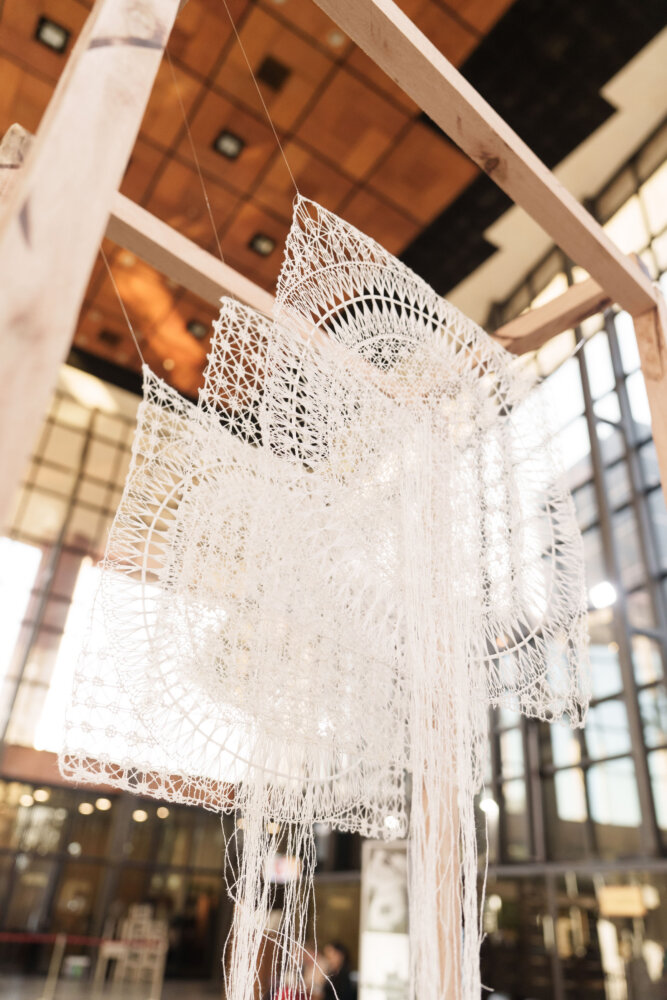
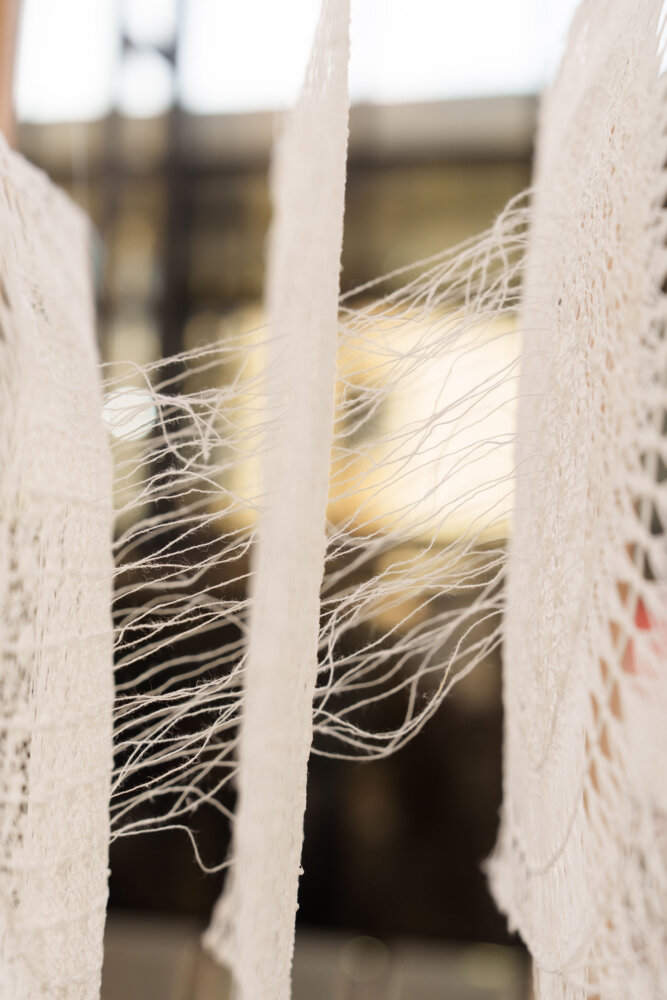
The installation thus seeks to embody the central metaphor: lace as a structure that supports a void. If the “All Male Panel” is an institutional structure that sustains the absence of women, the layers of ñanduti literally weave that absence, making visible what is missing. The fabric operates poetically through the sophisticated knowledge of its creator while simultaneously representing its systemic invisibility.
Weaving absence articulates a material-conceptual critique of the regimes of visibility that organize the legitimacy of expert knowledge. Through the superimposition of layers of ñanduti that surround and support the void of a vulva, the installation proposes lace as a method of thought: that which structurally sustains the system—women’s labor, social reproduction, bodily and manual knowledge—is precisely what the system renders absent from its representation.
The ñanduti thus articulates the composition: a way of making invisibility itself visible, of critically weaving the absences that structure our spaces of knowledge and power.
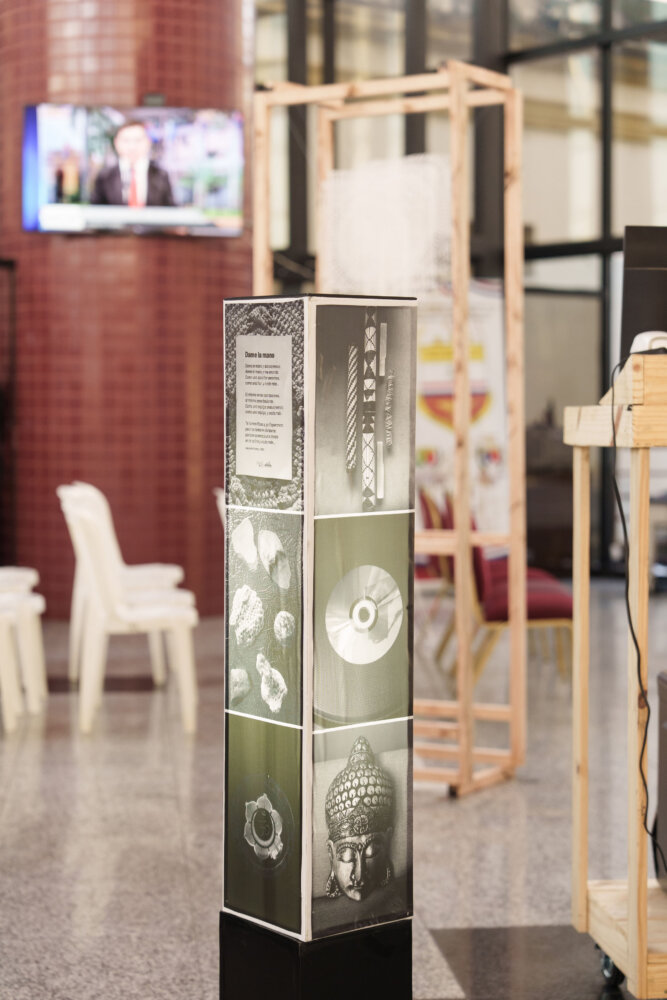
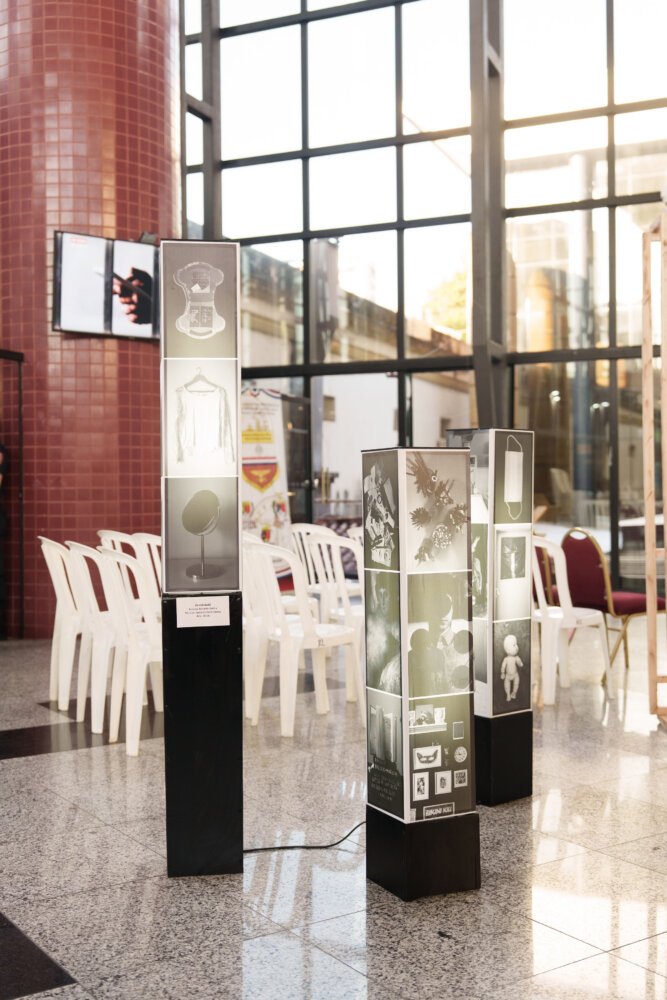
In-visibles – Betania Ruttia – Light Installation
Through this theoretical and artistic exploration, I will treat absence as an expressive strategy to evoke memory, loss, and emptiness, creating a space of resonance where what is missing invites reflection.
The absence of women in professional or social spheres means that our voices are silenced; not only are they uninterested in our potential opinions, but they do not even allow for them to be heard. In the advocacy through the All Male Panel art project, absence has the opportunity to become a visual language that connects individual experience with collective memory, allowing the absent to speak from the silence and the space it occupies.
The aim of my practice is to address these exclusions of power through art, utilizing the possibilities of photographing, intervening, cutting, pasting, recomposing, documenting, and creating.
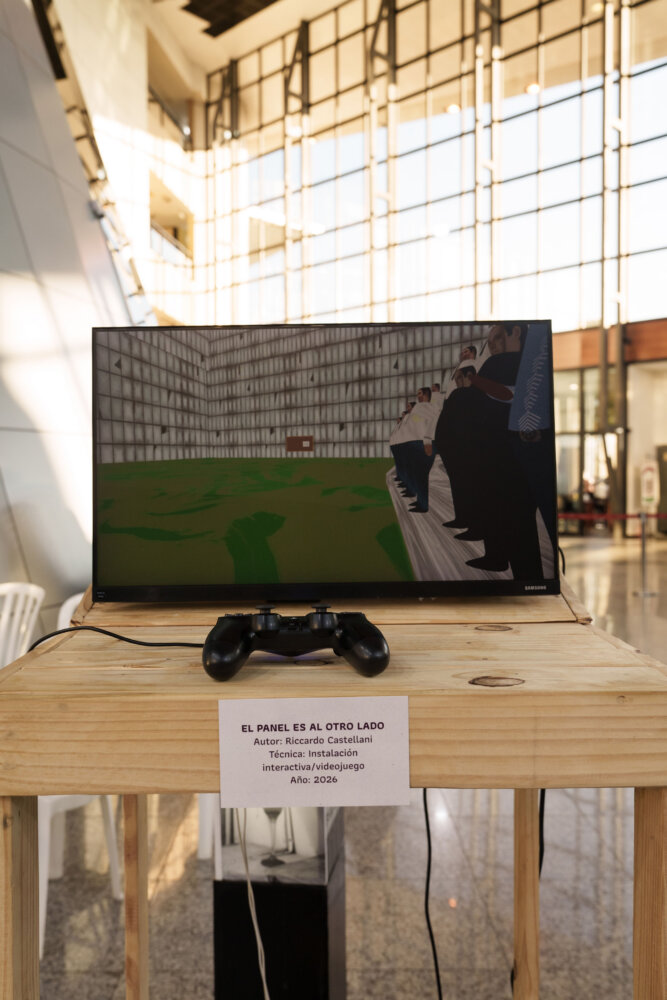
The Panel Is on the Other Side – Riccardo Castellani – Interactive Installation / Video Game
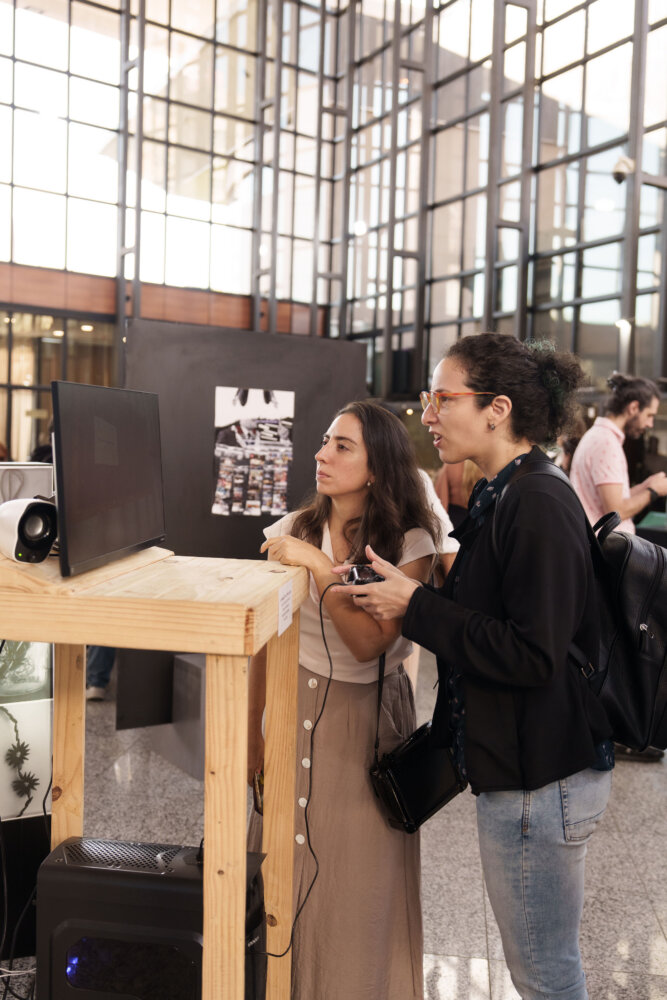
The video game The Panel Is on the Other Side allows players to navigate through all-male panels in a labyrinth laid out like the levels of a Paraguayan backroom. It is also a circular labyrinth, which serves a dual purpose: on the one hand, to evoke the unease of having no set ending; on the other, this layout allows participants to take control at any point and leave it at any other point for the next person. The gameplay rewards exploration, requiring the player to virtually navigate the issues revealed by the All Male Panel as they traverse the archive within this virtual labyrinth.
The panel, on the other hand, seeks to present the compilation of the All Male Panel archive, in its Paraguayan chapter, as an interactive map that comes to life through cybernetic use. Like any act of encounter, the results are unexpected, but the context of the installation suggests that many of the performances that take place within it will be cyborg-feminist.
The installation transforms the All Male Panel gallery into a navigable—and, above all, questionable—virtual environment. The gameplay requires an exploration that offers no answers, leaving them up to the player, who can leave written messages on the physical medium of the piece—the Post-it notes—whether they be comments or clues for those who play later.
This proposes a shift from the static archive to the interactive experience, from passive observation to active participation, from the closed dialogue of the panel to the open dialogue of the people who add their words to the installation. A labyrinth is not a puzzle to be solved, but a journey for reflection.
A Tribute to Those Who Have Contributed to Building Fairer and More Equal Societies
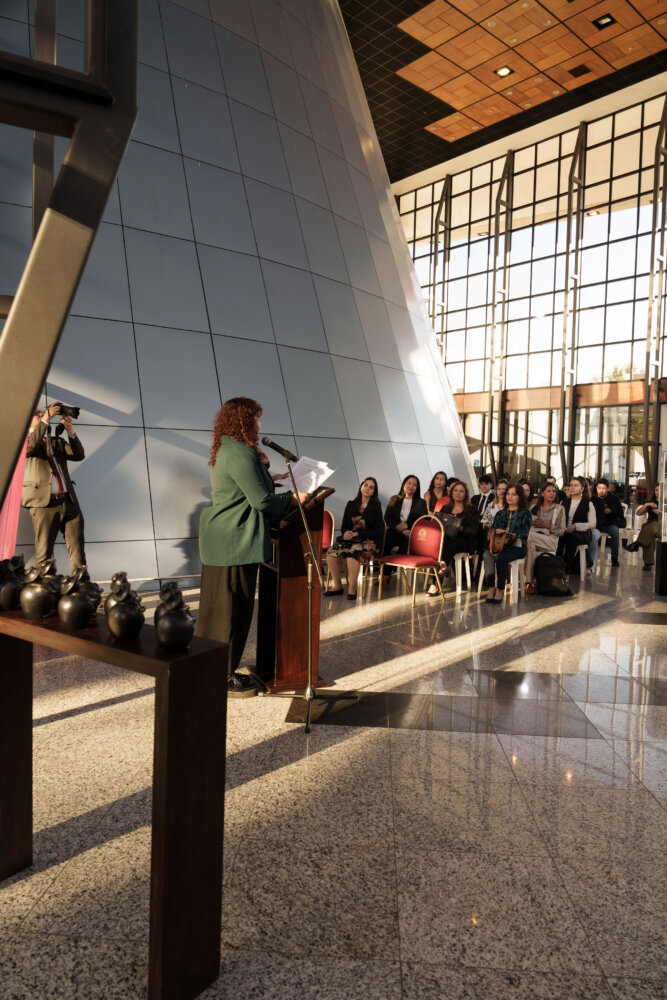
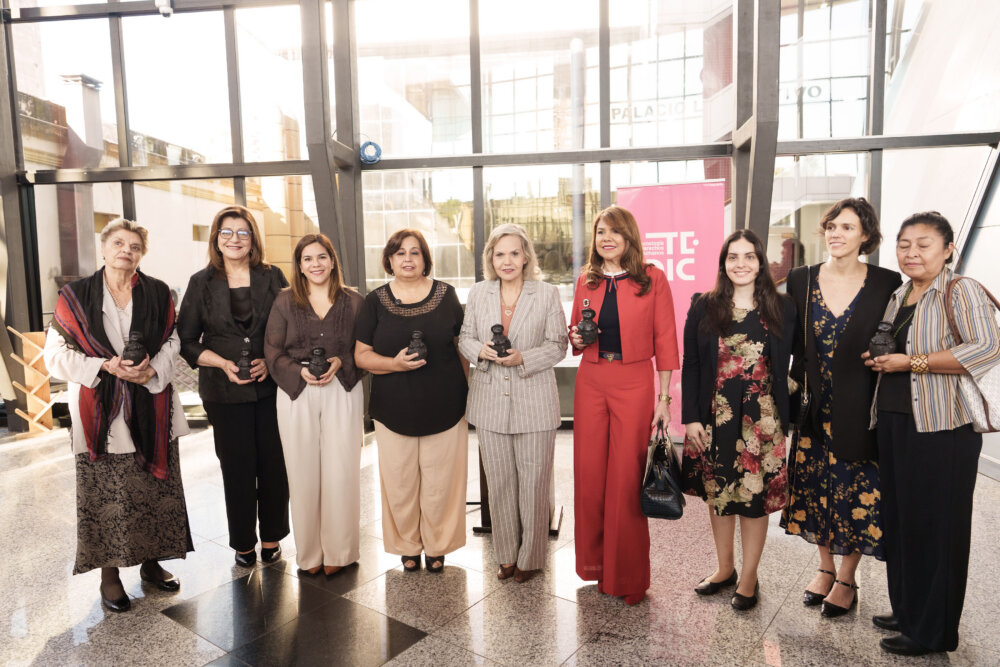
As another way to respond to these panels, TEDIC has invited ten leading women from the fields of politics, civil society, academia, and science to receive a tribute for their work toward fairer and more equal societies, as well as to recognize their careers in predominantly male-dominated environments. Among those honored are: Blanca Ovelar, Esperanza Martínez, Johanna Ortega, Lilian Samaniego, Celeste Amarilla, Desirée Masi, Milda Rivarola, Tina Alvarenga, Vanessa Cañete, and Antonieta Rojas. They will be recognized with a handcrafted pin made by the Kambuchi Apo collective.
Additionally, the honorees signed a manifesto in favor of equality and against all-male panels. They committed to not legitimizing such spaces and to actively promoting the inclusion of women’s voices and diverse perspectives in political, academic, and social decision-making forums. They also demand that the government debate and pass legislative bills such as those aimed at preventing and eradicating gender-based political violence and, furthermore, cyberbullying.
The event took place in the Central Hall of the National Congress (Av. Stella Maris near Río Ypané), organized by TEDIC with the support of the Equity and Gender Commission, on Wednesday, April 22, from 8:00 a.m. to 10:00 a.m. The exhibition will be open until Wednesday, April 29.
Credits
Artists:
María Paz Moreno Re
Riccardo Castellani
Betania Ruttia
Tutor: Claudia Casarino
Curator: Jazmín Ruiz Díaz
Collage: Karen Vera
Artistic direction of the collage: Romina Aquino González
Participants in the collective minga:
Montserrat Valladares, Raquel Samudio, Jazmín Sánchez, Verónica Bernal, Thania Saucedo, Jessica Pereira, Mirta Moragas, Mauren Coronel, Gelga Guainer, Ruth Ojeda, Mavi Martínez, Lía Barrios, Jazmín Troche, María Molinas, Camila Corvalán, Karen Vera, Amine Zmuda, Maikah Otaño, Angie Prieto, Diana Rivarola, Emily Corvalán, Jazmín Duarte, Marlene Orué, and Jazmín Cebé.
General Director: Maricarmen Sequera
Project Coordinator: Jazmín Ruiz Díaz
General Assistant: Maricel Achucarro
Communications: Romina Aquino González
Production: Ann Morínigo
 Our summary: national advocacy actions from January to April 2026