

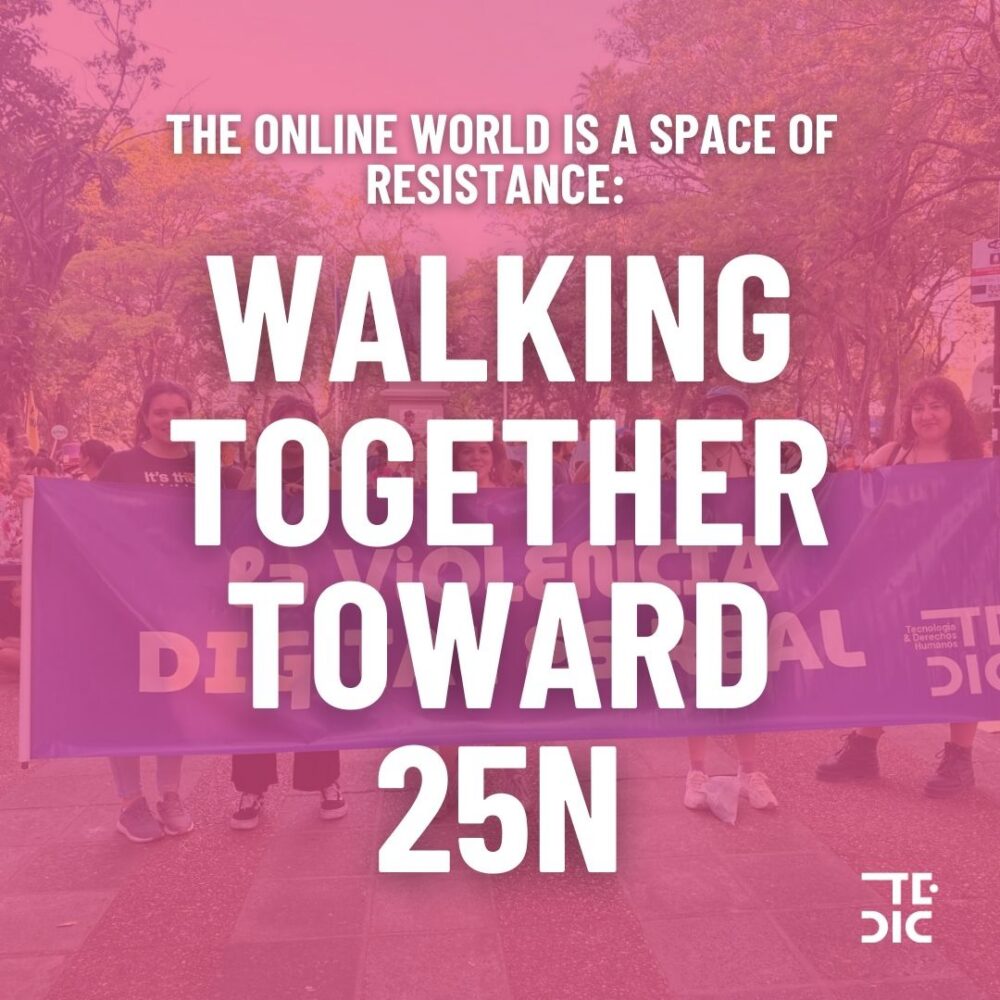
Every November 25th, we join a day that reminds us that the fight against all forms of violence against women remains urgent. In a context where certain discourses seek to minimize or roll back fundamental achievements, feminist, women’s, and diversity organizations continue weaving networks, resisting, and demanding a more just present. At TEDIC, we support these voices and walk together to defend the rights of all women, both online and offline.
For us, building a more just and equal society is a collective effort that takes place on multiple fronts. That’s why this year we took part in several collective initiatives: discussion forums, the annual march in Asunción, and campaigns on social media and in public spaces that focus especially on making digital violence visible as a concrete and everyday form of gender-based violence.
Public campaign: “Digital violence is real”
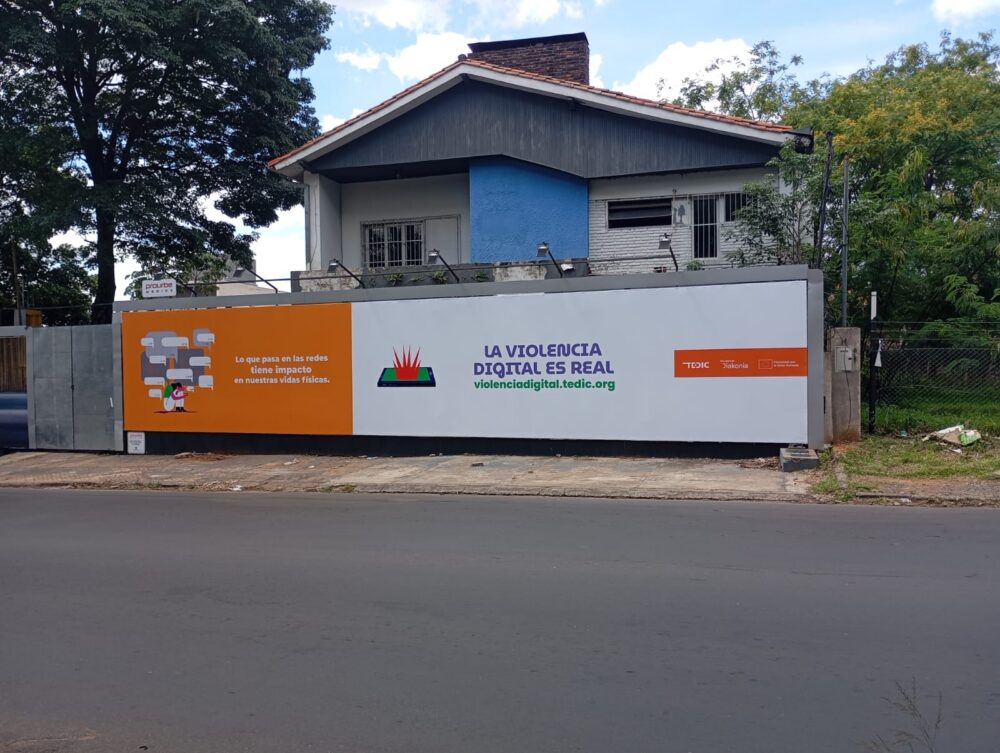
We brought our messages to the streets with the campaign “Digital violence is real,” displayed throughout the month of November in five strategic locations: two physical spaces with static billboards and three digital ones through LED screens. With the phrase “What happens online impacts our physical lives,” we sought to highlight that harassment, stalking, and threats faced by many women in digital environments have consequences on their mental and physical health. We also encouraged people to visit our website violenciadigital.tedic.org, where we not only explain the different types of violence but also offer tools to confront them.
Stepping outside the social media framework allowed us to reach audiences who don’t always access information through digital platforms and to incorporate communication strategies beyond those that benefit only large tech companies. Throughout the month, the campaign reached more than 600,000 people, bringing the conversation about digital violence into public and collective spaces.
Video on digital violence + 16 Days of Activism
Along with the actions in public spaces, we joined 25N and the 16 Days of Activism against Gender-Based Violence with various materials that highlight the different areas and actions through which we work to eradicate this violence.
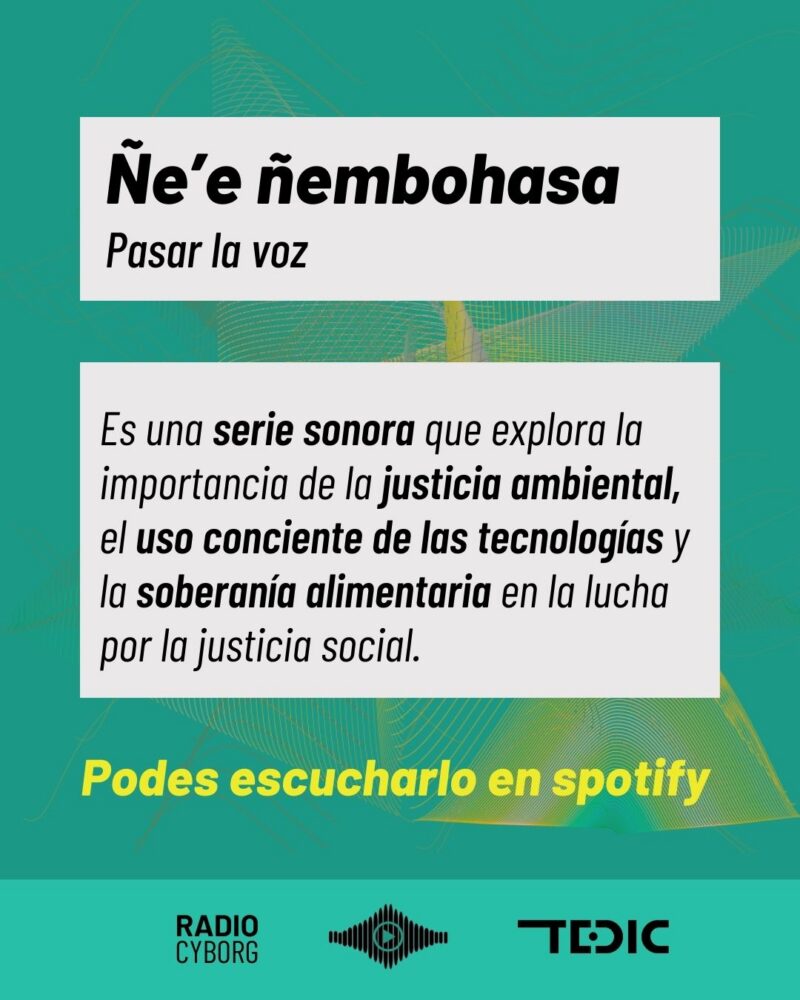
We produced communication materials, such as this video, where we talk specifically about digital violence, which intensifies when it affects women influencers, journalists, or politicians. We also invited people to read our research Feminism and Technology, which sheds light on gender biases and gaps in the use of technology in Paraguay through regional perspectives. Additionally, we shared our podcast Ñe’e Ñembohasa (“Passing the voice”), in which, together with rural women, we explore alternatives for digital transition through the preservation of their identity.
As part of the Women’s Rights Online network, we aim to highlight concrete cases, raise awareness of the issue, and remind the public that online violence restricts participation, freedom, and safety for those who experience it. We demand lives free of violence and also seek to celebrate resistance and new forms of organizing through the creation and dissemination of tools and knowledge to empower women and gender-diverse people.
We amplify voices in the public debate on digital violence
Within the framework of 25NPy, we also took part in the National Forum “Women without barriers: participation free of political and digital violence,” organized by the Ministry of Women. The event brought together state authorities, civil society representatives, and international cooperation actors to reflect on the obstacles women face in political participation and in digital spaces.

The forum featured two panels. The first addressed political violence against women from the perspective of justice system authorities and elected representatives. The second panel focused on violence in digital environments, where our colleague Jazmín Ruiz Díaz, TEDIC’s Project and Gender Coordinator, shared analysis and insights on the risks women and gender-diverse people face online, as well as the challenges in guaranteeing safer digital environments free from violence.
TEDIC’s participation in this space reaffirms the importance of incorporating a digital perspective into public discussions about women’s rights, especially in a context where technology-facilitated violence grows exponentially alongside technological development.
25NPy march: making digital violence visible in the streets
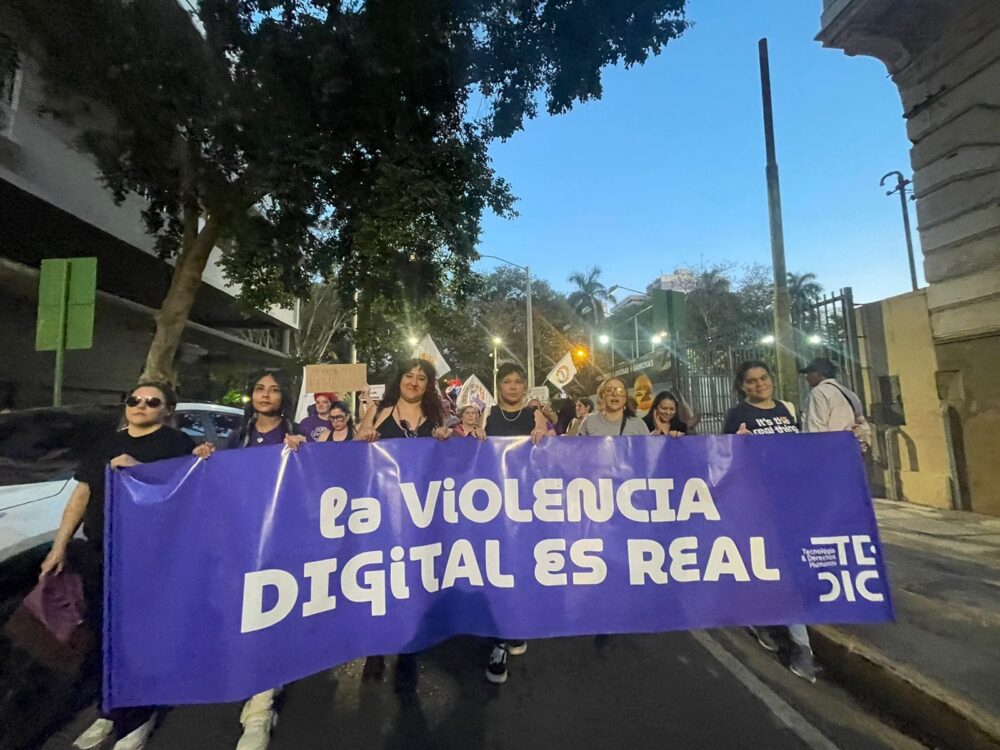
We once again joined the 25NPy March in Asunción, under the collective call “For our rights and against all violence.” As part of the Feminist Articulation of Paraguay, we participated in the preparatory plenaries, where organizations and collectives came together to collectively define the route, key messages, and manifesto that framed the day.
Before the march, we released a video inviting people to join the mobilization, sharing digital safety tips, recommendations to protect oneself from facial recognition cameras, and other guidelines to take care of each other before, during, and after the protest.
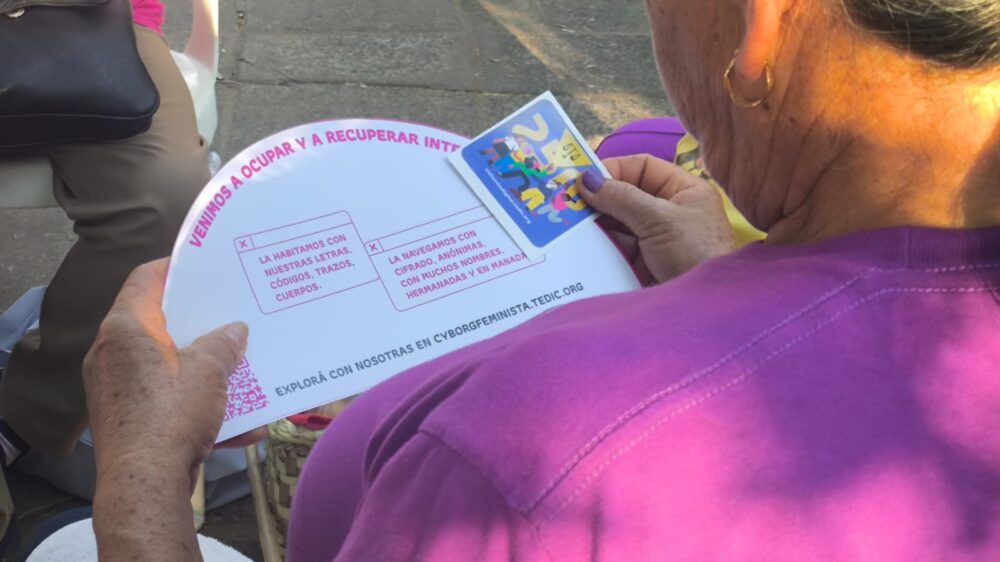
The gathering began at 5 p.m. in Plaza Uruguaya, where we handed out materials to raise awareness that Digital violence is real. We distributed fans to support everyday resistance and to ease the heat, along with stickers and posters from our campaigns, which include a link to our website where people can find resources and digital safety guides.
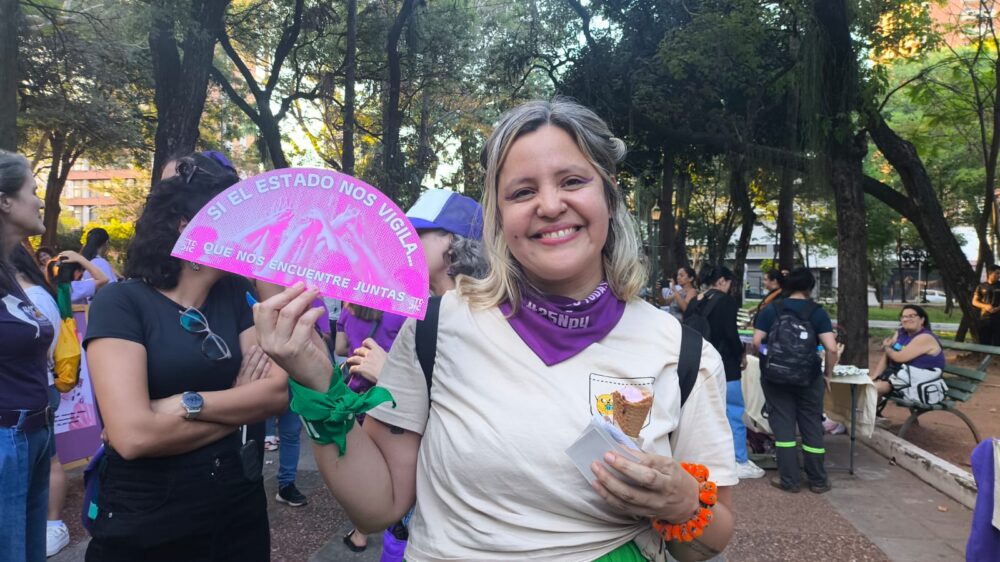
Afterward, TEDIC members and volunteers marched with our banner “Digital violence is real” to Plaza de la Democracia, where the 25NPy manifesto was read. The text reflected the realities of women and gender-diverse people in Paraguay and demanded that the State implement strong policies to guarantee lives free of violence. From TEDIC, we contributed to this text by reaffirming the need for the State to promote safe digital environments with measures for prevention, care, and reparation in cases of digital gender-based violence.
For an Internet and public spaces free from violence
The actions we carried out this 25N reaffirm something central to us: what happens online is not separate from our lives beyond the screen. Aggressions, harassment, surveillance, and disinformation affect our political participation, freedom of expression, and sense of safety. That is why, as an organization that works to defend human rights in digital environments, we understand that protecting the autonomy and dignity of women and gender-diverse people also means challenging how digital spaces are built, governed, and inhabited.
At TEDIC, we remain committed to strengthening capacities, creating open resources, conducting research, supporting communities, and building alliances with other feminist collectives to move toward safer environments. This year we did so in the streets, in institutions, and on platforms—firm in our belief that collective organization is the most powerful tool we have. Because our voices, online and offline, matter, and we will keep working so that we can all exercise our rights freely.
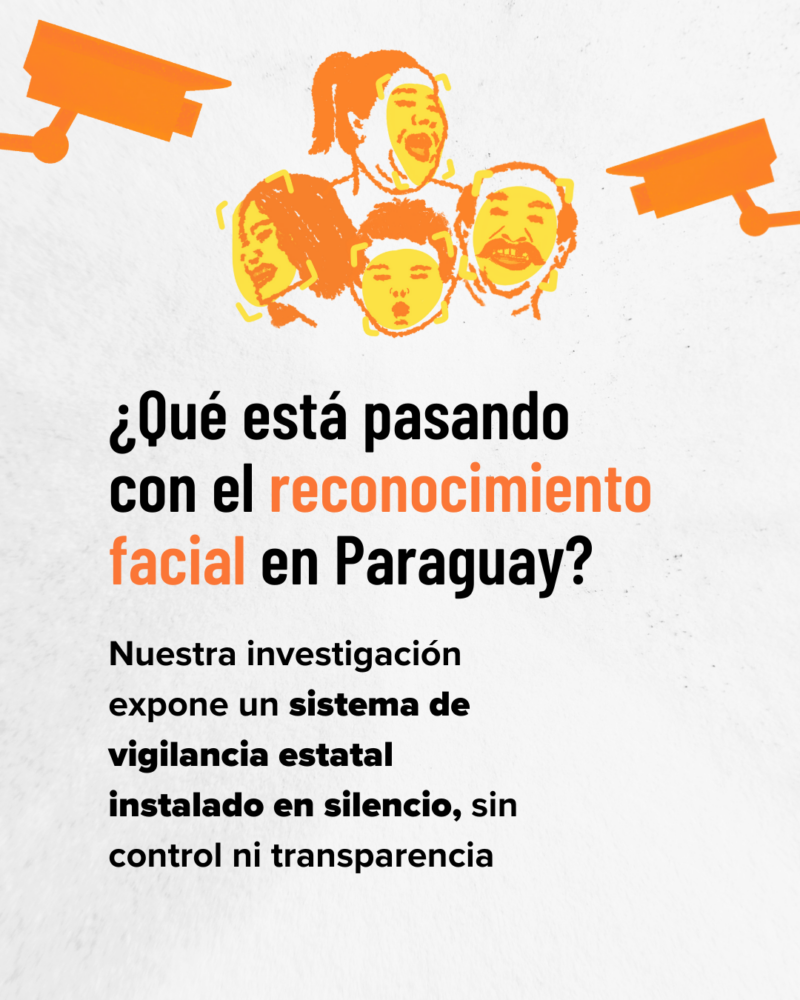 Not with my face: The Paraguayan State deploys facial recognition without transparency or oversight
  It’s time for a law on digital violence against women in Paraguay