


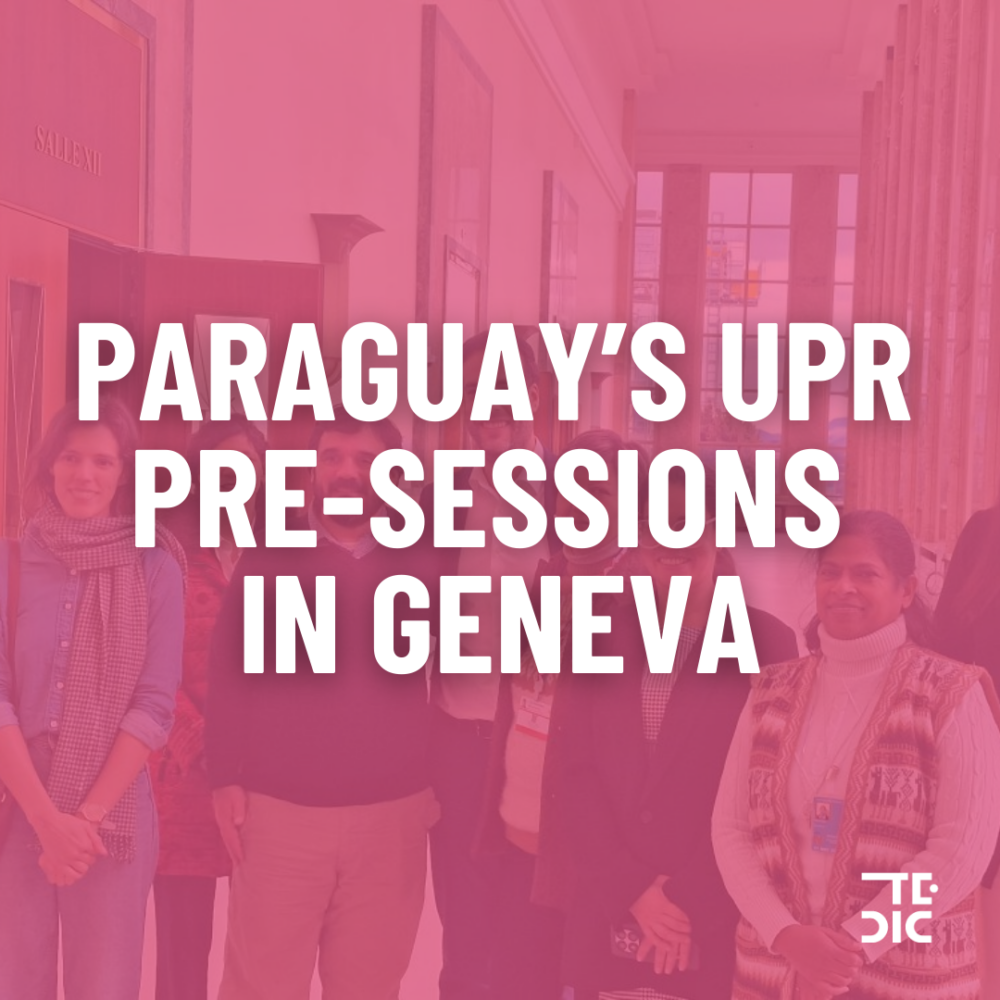
During the week of February 9, our Executive Director Maricarmen Sequera traveled to Geneva to participate in the pre-sessions of the Universal Periodic Review (UPR), a mechanism of the United Nations Human Rights Council that periodically evaluates States’ compliance with their human rights obligations. This participation was made possible thanks to the support of APC.
The UPR pre-sessions are a key space for civil society organizations to present information, concerns, and recommendations directly to diplomatic missions of States, which will later formulate recommendations to the country under review. This space strengthens dialogue between organizations, States, and international bodies, enabling more direct advocacy within the process.
The road to Geneva
In October last year, TEDIC submitted three reports to Paraguay’s Universal Periodic Review, focused on digital rights. Later, in December, we applied to participate in the pre-sessions and were selected alongside other Paraguayan organizations, including Calle Escuela, CDIA, and CODEHUPY.
The objective of this participation was to meet with the missions of countries interested in making recommendations to Paraguay, share our findings, and provide concrete inputs to strengthen the protection of human rights in the country.
During January, we participated in weekly calls to collectively build our advocacy strategy and prepare the official presentations. This process was coordinated by the organization UPR Info, which led the coordination among the participating organizations.
Our intervention at the pre-session
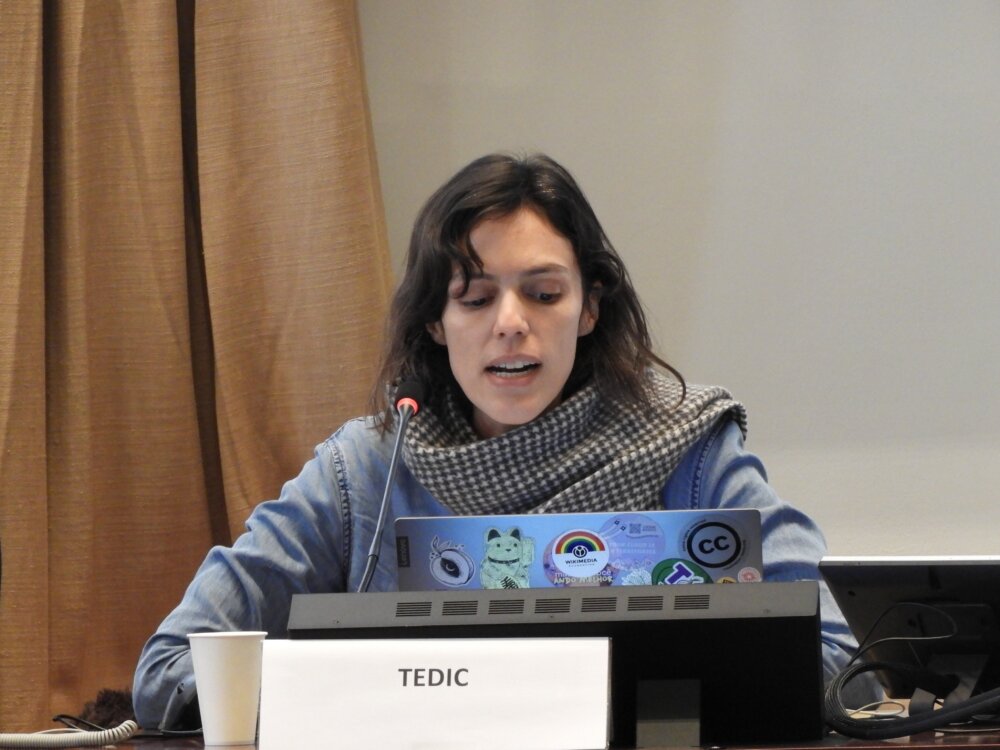
The main day of presentations took place on February 10, when each organization had five minutes to present priority issues and request specific recommendations from States.
Our intervention addressed four main issues:
- The restriction of civic space, including the impact of regulations and state practices that limit participation and the work of civil society.
- The expansion of state surveillance and the risks it poses to privacy, in a context of limited oversight and safeguards.
- Technology-facilitated gender-based violence, and the lack of comprehensive responses from the State.
- Freedom of expression, personal data protection, and the persistent digital divide, which deepens structural inequalities.
During the pre-session, Paraguay’s ambassador was present and presented the State’s progress report, while also listening directly to the concerns and requests for recommendations raised by the participating organizations.
Bilateral meetings and advocacy work
In addition to the official presentations, we held bilateral meetings with diplomatic missions from Canada, Spain, Germany, Mexico, Costa Rica, Portugal, Sweden, Switzerland, Italy, the Czech Republic, Sierra Leone, Belgium, Singapore, France, Kazakhstan, and Uruguay, as well as with representatives of the Office of the United Nations High Commissioner for Human Rights, including teams working on civic space and artificial intelligence, among other areas.
We complemented this work through email outreach and virtual meetings with human rights focal points from these missions. Finally, in-person meetings were also held in Paraguay with representatives of European Union countries, strengthening the continuity of this advocacy process.
What comes next
The formal sessions of Paraguay’s UPR will take place in May, when States will officially present all their recommendations. These recommendations will be key in defining the commitments Paraguay will be expected to undertake in the coming years.
Although we are aware that the current geopolitical context is marked by tensions and setbacks in the field of human rights, we firmly believe that documenting, systematizing, and making visible human rights violations is a non-negotiable commitment for us as an organization.
These efforts not only aim to influence international processes, but also serve as a foundation for building a future grounded in truth and memory, rather than silence.
 Access to justice in the digital Age: Our contributions to the IACHR
  Defending those who defend us