


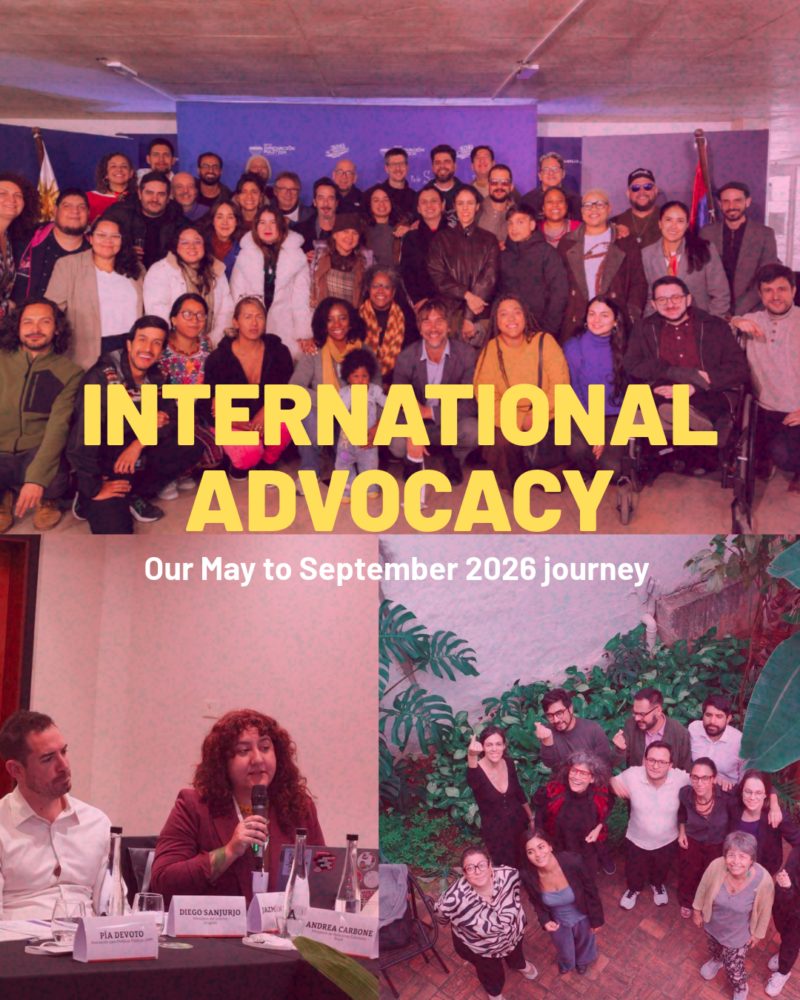
As we do every year, TEDIC is sharing a five-month roundup of our international advocacy work, in keeping with our internal transparency policy, which we have followed since 2015. In this second installment of 2026, our agenda focused on AI governance, technology-facilitated gender-based violence, surveillance, and platform work. Here are some of the activities we carried out internationally between May and September.
May
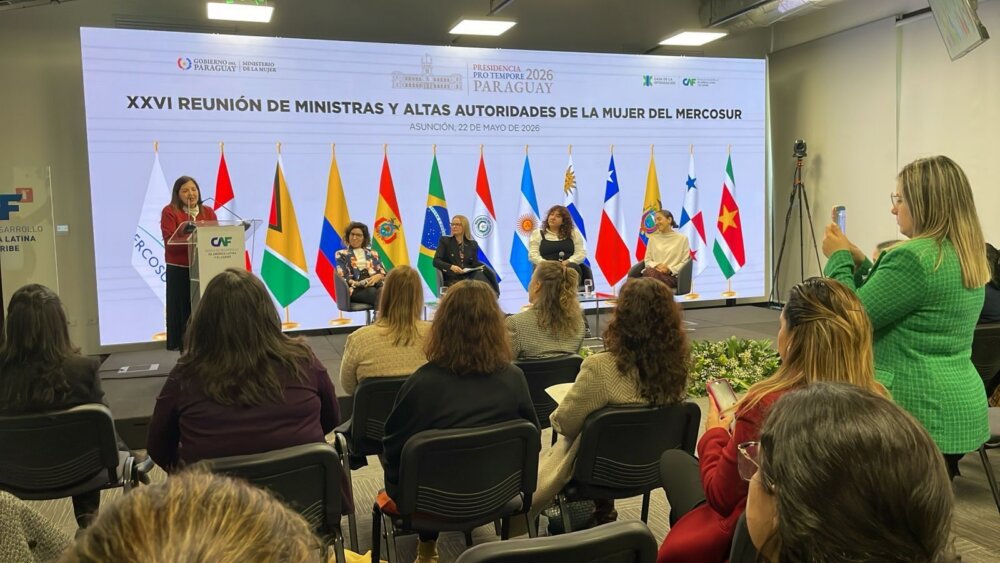
On May 22, Jazmín Ruiz Díaz, TEDIC’s project coordinator, took part in a panel on technology-facilitated gender-based violence organized by CAF (Development Bank of Latin America and the Caribbean), as part of the XXVI Meeting of Women Ministers and High-Level Authorities of MERCOSUR (RMAAM). Addressing officials responsible for gender policies in the member countries, we shared evidence from our work in Paraguay: digital violence is not a separate phenomenon, but a continuation of the aggression women, adolescents, and girls already face offline—now amplified through platforms and messaging services. We emphasized the need for legal frameworks that recognize all forms of this violence, institutional capacity to investigate it, and responses that protect victims without infringing on freedom of expression or privacy. Bringing this agenda to a regional decision-making forum is essential to ensuring that gender-based digital violence is given a central place in MERCOSUR policies.
June
The four-month period began with substantive work on global AI governance. As part of the MAP.IA coalition—an initiative led by the Centre for Communication Governance (CCG) at National Law University Delhi and the Global Network Initiative (GNI), of which we are members—we contributed detailed recommendations to the United Nations consultation process for the first Global Dialogue on AI Governance. We also contributed to these discussions through the Global South Alliance and the Global Coalition for Tech Justice, both of which we are part of.
This work, which we formally resumed through our participation in the AI Impact Summit in New Delhi in February, resulted in an agenda of demands from the Global South. We identified four structural tensions in the debate: the legitimacy of multistakeholder processes, in which civil society participation remains minimal and tokenistic; the concentration of agenda-setting power in a handful of frontier AI companies; the gap between stated principles and their implementation, in the absence of any binding treaty; and the fundamental question of what AI is being built for, and for whom.
Among our proposals, we highlighted the need to adapt regulatory frameworks to local realities rather than uncritically importing models such as the European AI Act; to scrutinize regulatory sandboxes; to ensure cultural and linguistic diversity—including our Guaraní language and the more than 400 Indigenous languages of the region—and to require human rights impact assessments and independent audits before high-risk systems are deployed. Read the full analysis on our blog: Towards Building AI Governance from a Global South Perspective.
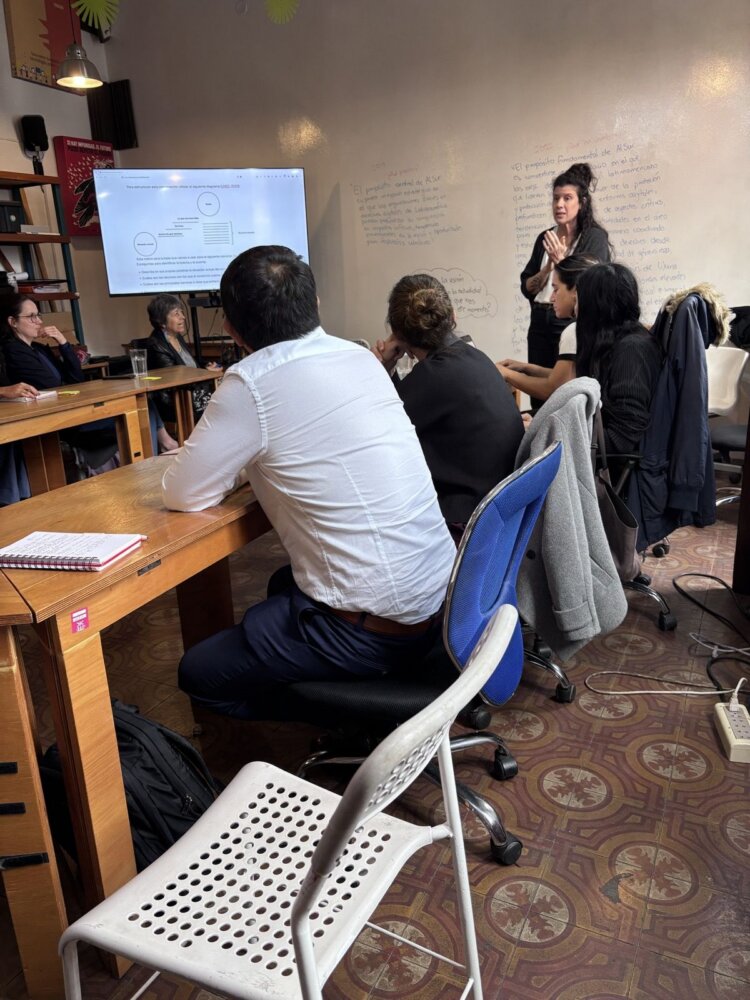
Also in June, we hosted Al Sur’s annual meeting in Asunción from June 17 to 19. The 11 organizations in the consortium traveled to Paraguay to discuss the digital rights agenda in Latin America and set Al Sur’s priorities and strategies for the coming period. Hosting the meeting in Paraguay allowed us to strengthen our collective work with regional partners and discuss the challenges facing our countries.
On June 19, together with the Electronic Frontier Foundation (EFF) and the Center for Justice and International Law (CEJIL), we filed a petition with the Inter-American Commission on Human Rights against the Paraguayan State for arbitrarily denying access to information about the use. The case dates back to 2019, when the Ministry of the Interior and the National Police installed cameras using this technology in Asunción. Our executive director, Maricarmen Sequera, requested information about the protocols governing its use, impact assessments, and the handling of personal data. The State denied access to most of the information, citing security-related confidentiality, and local courts upheld the restriction.
The petition asks the IACHR to recognize violations of the rights to access information, privacy, and informational self-determination, and to require the State to disclose the information. It also calls for permanent mechanisms for proactive transparency regarding the procurement and use of surveillance technologies, as well as mandatory human rights impact assessments before biometric or artificial intelligence systems are acquired. This case could set an important precedent for the region.
July
July began with news that filled us with pride: Maricarmen Sequera, our executive director and co-founder, was named to the Tech Diplomacy Global 50® 2026, the annual list compiled by the Tech Diplomacy Global Institute recognizing the 50 most influential people worldwide in responsible technology policy, digital governance, and international cooperation. The list brings together ministers, ambassadors, United Nations officials, and civil society leaders from all five continents, with equal representation of 25 women and 25 men. The announcement was made at the Tech Diplomacy Global Forum on July 2 at UNESCO headquarters in Paris.
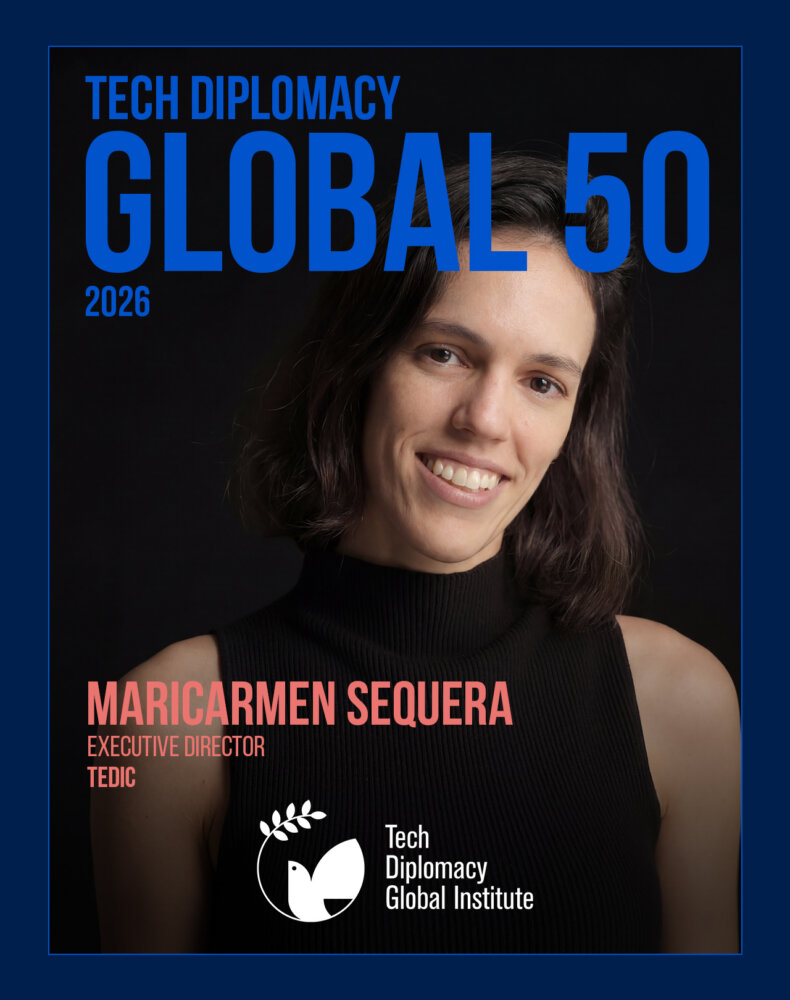
The inclusion of a digital rights organization founded in Paraguay on a list originally conceived for government diplomacy shows that civil society is no longer merely observing decisions about technology; it is helping shape and contest them. For Maricarmen, the recognition is not the central achievement of her career, but rather a platform that affirms her work and reminds her that the road ahead is uncertain. Read more in A Paraguayan voice among the 50 most influential people in technology worldwide.
A few days later, on July 6 and 7, we were in Geneva, Switzerland, for the first session of the United Nations Global Dialogue on AI Governance. Mandated by the Global Digital Compact and established by the General Assembly through resolution A/RES/79/325, this forum brings governments and other stakeholders together to discuss international cooperation on AI. For the first time, every country has a seat at the table. Our executive director represented TEDIC at the meeting.
The session was co-chaired by Egriselda López, Permanent Representative of El Salvador to the United Nations, and Rein Tammsaar, Permanent Representative of Estonia. It took place alongside the International Telecommunication Union’s AI for Good Global Summit. The agenda focused on four themes: AI’s social, economic, cultural, and linguistic opportunities and implications; closing gaps in capacity and access; safe and trustworthy AI through interoperable approaches; and respect for human rights through transparency, accountability, and human oversight.
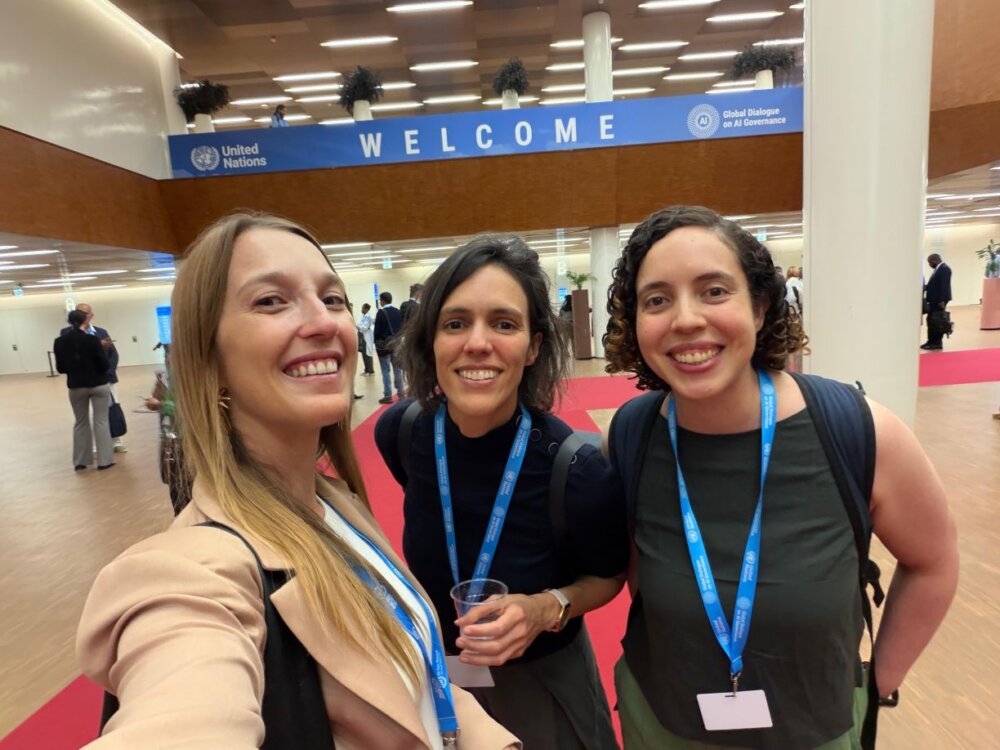
In Geneva, we presented recommendations developed with the MAP.IA coalition and our Global South partners: meaningful, rather than merely symbolic, civil society participation; international human rights law as the primary framework for assessment; and concrete accountability mechanisms for developers, states, and companies. The Co-Chairs’ summary is now available, and the Dialogue’s second session will take place in New York on May 3 and 4, 2027.
August
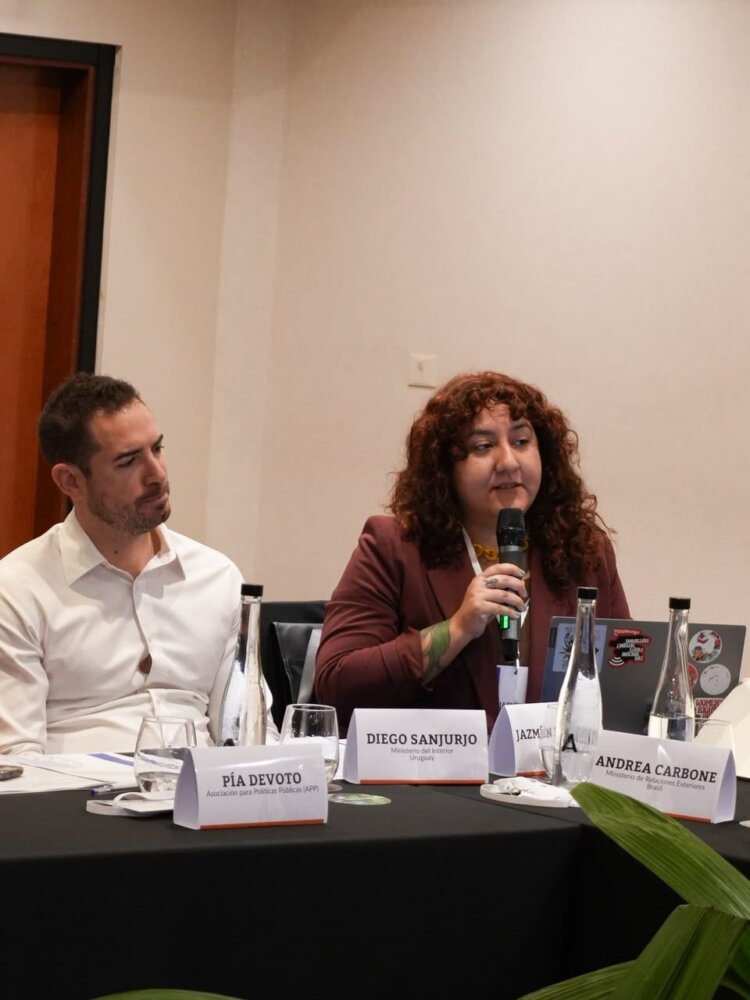
August was the busiest month of the four-month period. We began on August 6 and 7 in Puerto Iguazú, Argentina, at the subregional seminar “The Global Framework for Ammunition: An Agenda for MERCOSUR,” organized by the Public Policy Association (APP) with support from UNSCAR. Jazmín Ruiz Díaz, Gender and Technology Project Coordinator, represented TEDIC at the event, which brought together government officials, parliamentary representatives, specialists, and civil society. Discussions focused on regional implementation of the Global Framework for Through-Life Conventional Ammunition Management, international safety standards, preventing illicit trafficking, supply-chain transparency, and potential legislative initiatives for the bloc.
The following week, we traveled to Rio de Janeiro, Brazil, to take part in CPDP LatAm 2026, Latin America’s leading conference on data governance, privacy, and technology. Hosted at the Getulio Vargas Foundation (FGV-RJ) under the theme “Data Governance for Digital Sovereignty, Cooperation, and Interoperability,” our participation focused on two panels.
On August 12, we joined the panel “Technology-Facilitated Gender-Based Violence in Latin America: AI, Data Governance and Regulatory Responses,” co-organized by Derechos Digitales and Instituto DOT. The panel also featured Fernanda Gomes (Instituto DOT), Alithu Bazan Talavera (Hiperderecho), Eliana Grandier (Gentic), and Elizabeth Avendaño (Luchadoras), and was moderated by Marina Meira (Derechos Digitales) and our coordinator, Jazmín Ruiz Díaz. Drawing on our work supporting women, journalists, activists, and human rights defenders in Paraguay, we emphasized that digital violence is part of a continuum with offline violence and can lead to self-censorship, lost opportunities, and withdrawal from public participation. We also noted that even with advances such as the Inter-American Model Law on Digital Violence Against Women, responses focused solely on criminalization are insufficient without safeguards for freedom of expression, privacy, and due process.
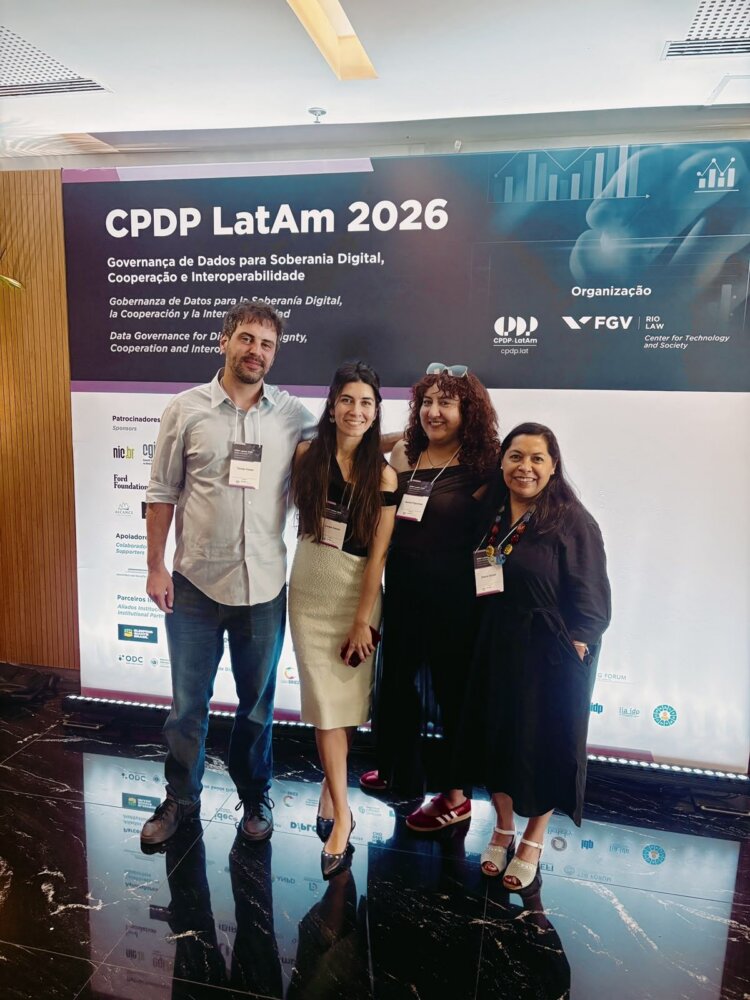
On August 13, Jazmín Ruiz Díaz took part in a second panel, “Surveillance and Technological Dependency from a Latin American Perspective,” alongside Eliana Quiroz (Fundación Internet Bolivia), Patricia Díaz Charquero (Datysoc), and Tomás Pomar (ODIA). Journalist Emilse Garzón moderated the discussion. We argued that security is a political construct, not merely a technical issue, and that security narratives can legitimize the expansion of surveillance infrastructure without evidence of its effectiveness. We also raised concerns about the lack of transparency in contracts between governments and providers, and about technological dependency that extends beyond procurement: maintenance, data, and infrastructure remain in foreign hands. We stressed that technological sovereignty requires public-sector capacity, transparent procurement, human rights impact assessments, and independent oversight.
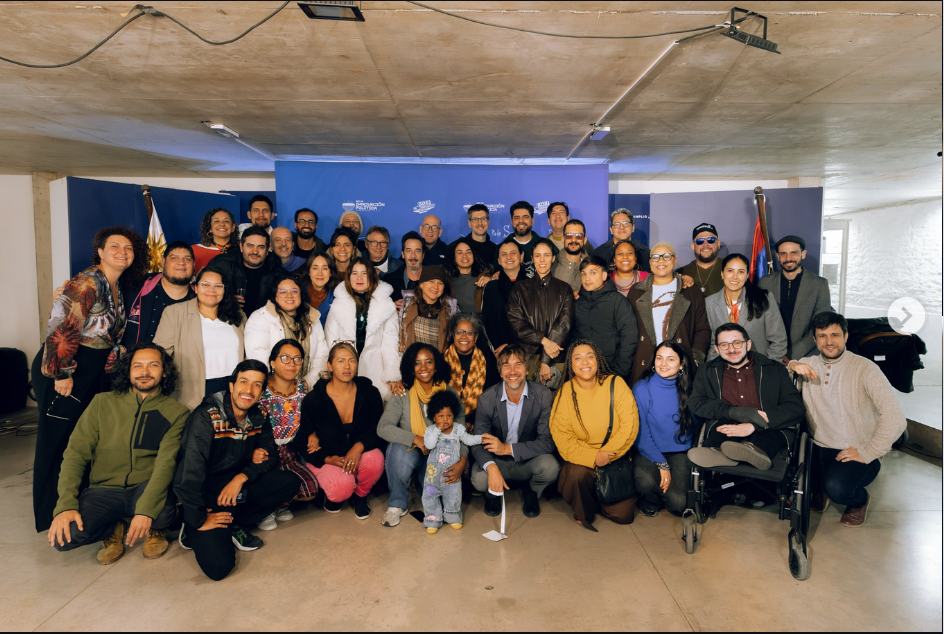
From August 17 to 22, Maricarmen Sequera was in Montevideo, Uruguay, for “SOS Democracia: From Innovating Politics to Reimagining Democracy,” an event marking the 10th anniversary of the Political Innovation Network (RINP), a community connecting experiences, knowledge, and new approaches to politics across Latin America. A member of the network for eight years, Maricarmen took part in the preparatory meetings on August 17 and 18, as well as the main gathering—a space to celebrate what has been achieved, consider current challenges, and look ahead to a new decade of collective work.
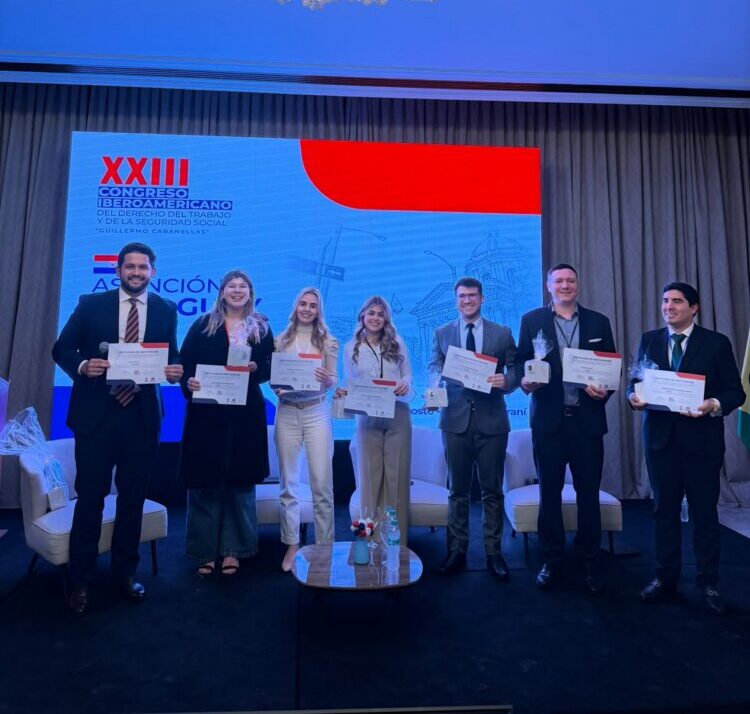
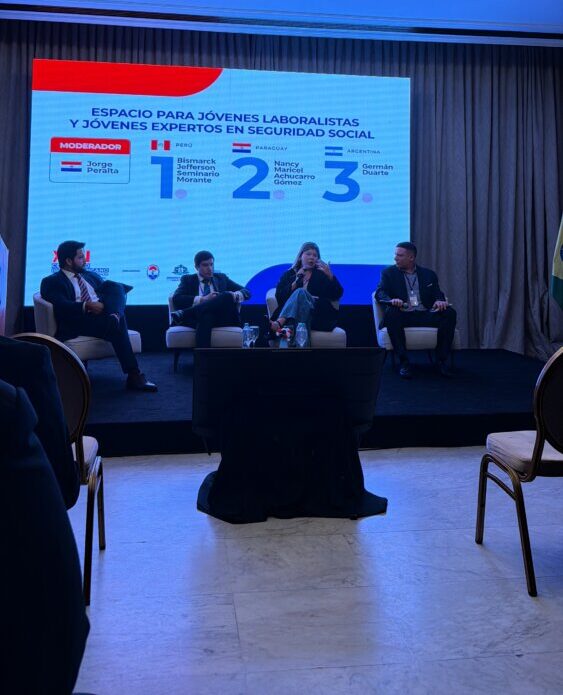
Meanwhile, from August 19 to 21, Asunción hosted the XXIII Ibero-American Congress on Labour Law and Social Security. On August 20, we shared findings from our research on the platform economy in two panels. Jazmín Ruiz Díaz joined Panel III, “Digital Informality in Ibero-America: Platforms, Forced Self-Employment and Lack of Social Protection,” which examined new forms of informality created by platforms and the challenges of extending social protection to platform workers. Maricel Achucarro, Project Assistant, took part in the Youth Panel, “Digital Work and Social Security in the Algorithmic Era—Humanizing Innovation,” which addressed the effects of platforms and AI on labour rights and possible regulatory responses.
September
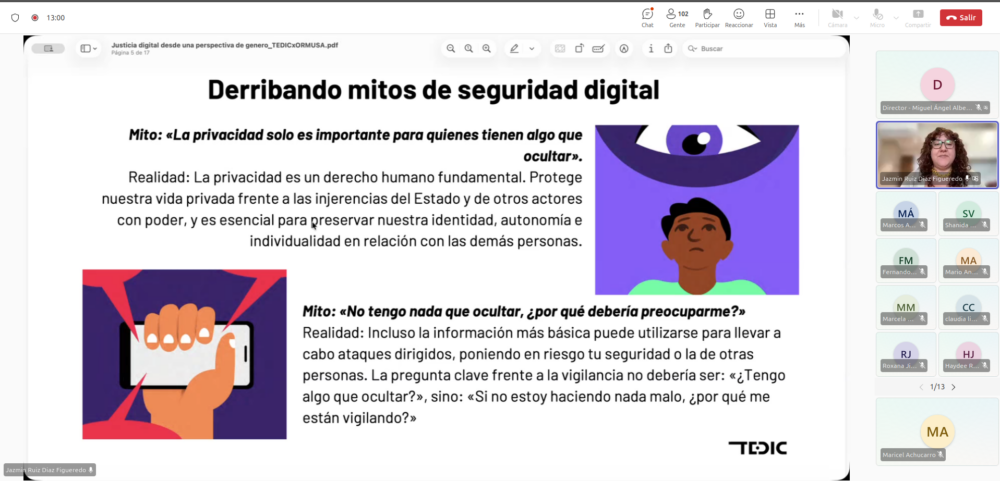
On September 2, Jazmín Ruiz Díaz presented at the webinar series “Digital Justice and the Protection of Rights: Legal Challenges and Responses to Digital Violence,” organized by ORMUSA, a feminist organization in El Salvador. As part of this regional initiative to strengthen the capacity of the justice and security sectors through inter-institutional cooperation, TEDIC represented Paraguay. Her presentation addressed digital rights protections and standards for preventing digital violence, as well as challenges in victim support, protective measures, and comprehensive reparation from a human rights perspective.
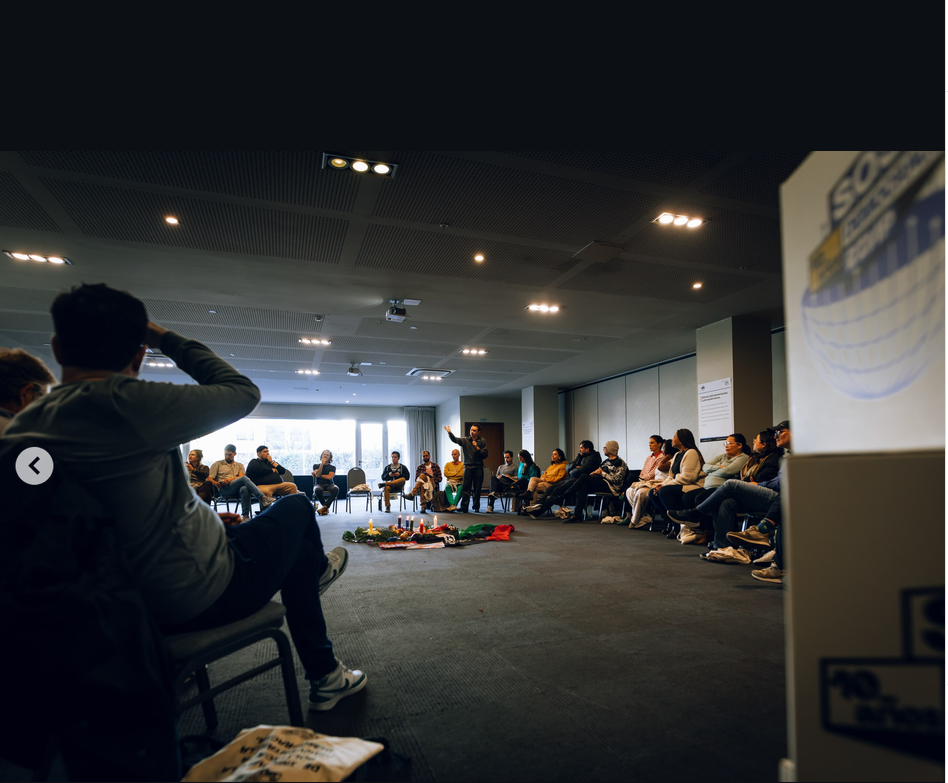
From September 4 to 6, we once again took part in Global Gathering 2026 in Estoril, Portugal, an international gathering of organizations, activists, and communities working on digital rights and free culture. Through networking sessions, discussion circles, regional and thematic meetings, and community-led activities, Global Gathering gave us an opportunity to strengthen ties and share experiences with organizations working toward technology that is freer, more open, and respectful of human rights. This year, our colleague Maricel Achucarro represented TEDIC at the global community gathering.

In mid-September, together with the Paraguayan Human Rights Coordinator (CODEHUPY), we submitted an alternative report to the United Nations Committee on the Elimination of Discrimination against Women (CEDAW) on technology-facilitated gender-based violence in Paraguay. The report was prepared ahead of the Committee’s 93rd session, taking place from October 5 to 30, 2026, and is based entirely on more than a decade of our research.
The report finds that the offence of “telematic violence” under Law 5777/16 is limited almost entirely to the non-consensual distribution of intimate images, leaving out online harassment, threats, identity theft, and doxxing. It documents violence against women in politics and journalists—78% of 107 women communicators surveyed had experienced it in the previous five years, and 98% had not reported it—as well as the use of platforms for human trafficking, problems with electronic monitoring anklets, the gender-related risks of biometric surveillance, and impunity in the justice system. Our recommendations include reforming the law to provide a comprehensive definition of digital violence; preventing precautionary measures from being used as prior censorship against the press; creating a unified statistical registry; and requiring human rights and gender impact assessments before surveillance technologies are deployed.
September also marked the conclusion of Paraguay’s Universal Periodic Review (UPR) cycle: at its 63rd session, the UN Human Rights Council formally adopted the outcome of the review. This concluded a process in which we had participated since October 2025, submitting reports with APC, Derechos Digitales, and Artigo 19, followed by the February pre-sessions in Geneva. Our APC colleagues delivered a statement on TEDIC’s behalf during the adoption.
Of the 266 recommendations Paraguay received, only a handful addressed technology and human rights. Paraguay accepted Estonia’s recommendation to review its legislation to comprehensively address digital violence against women, as well as Algeria’s recommendation on the sexual exploitation of children online. It merely noted Germany’s recommendation linking the NGO control law to personal data protection. State surveillance, digital identity, artificial intelligence, and online freedom of expression were left off the agenda. We analyzed the outcome in The UPR Recommendations Paraguay Received—and What Was Left Out.
We closed the four-month period on September 29 and 30 in Santo Domingo, Dominican Republic, where Maricarmen Sequera represented TEDIC at the 2026 Regional Forum on Digital Public Infrastructure (DPI).
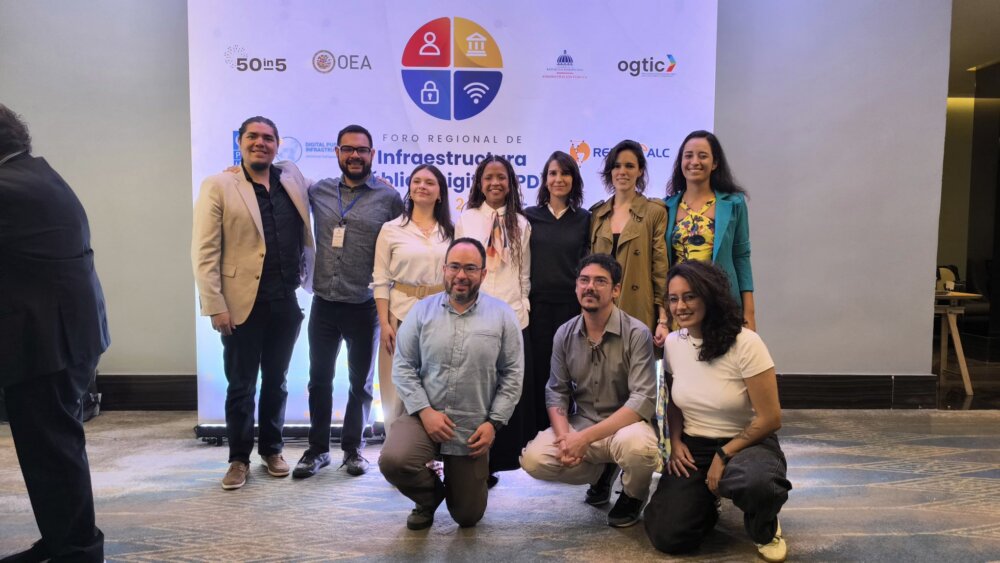
The first day, focused on the region, addressed the three pillars of shared DPI governance—identity, payments, and data exchange—with multilateral organizations and developers of digital public goods. The second day presented the Dominican Republic’s experience, including its interoperability architecture, proactive services, and the launch of the Citizen Folder with verifiable credentials. The forum builds on our ongoing work on DPI in the region, including the meeting in Bogotá in April, and contributes a critical perspective grounded in digital rights, data protection, and interoperability.
 Defending those who defend us