


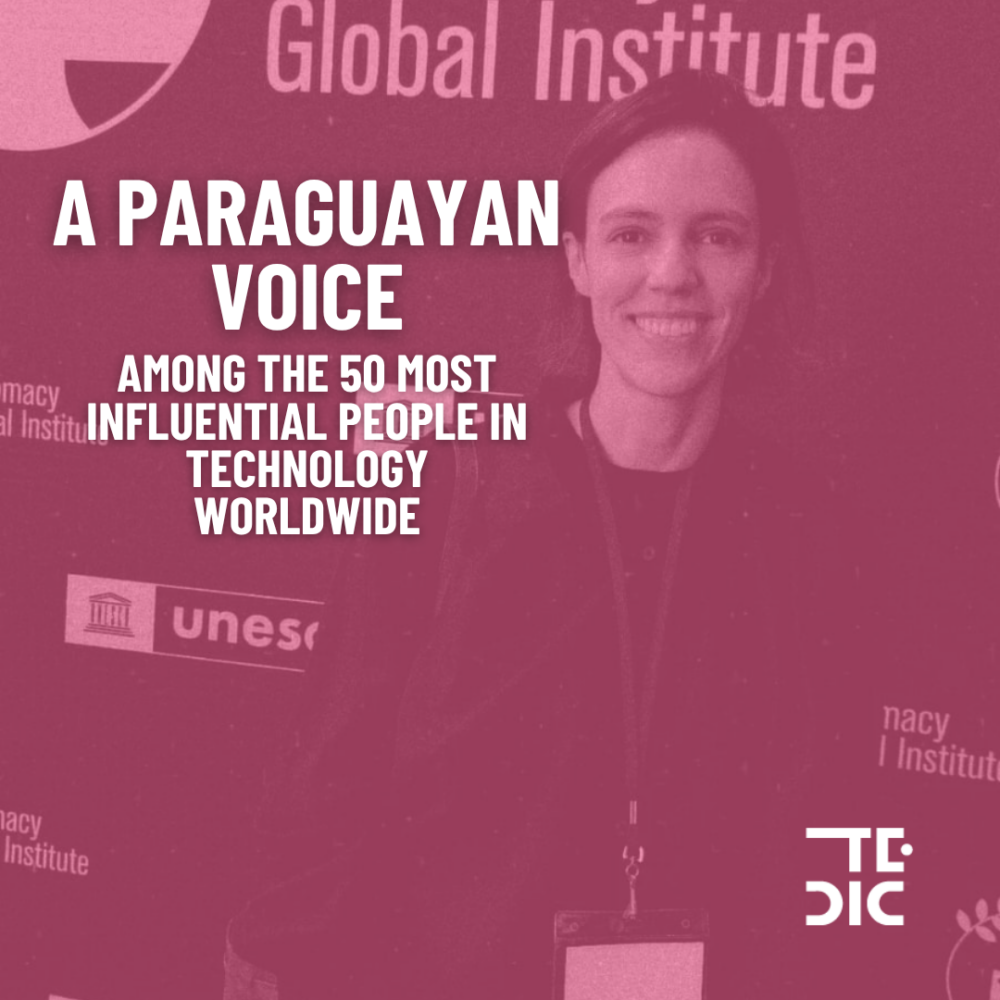
Some recognitions arrive as an ending, while others arrive as an invitation to keep the conversation going. This is one of the latter.
Maricarmen Sequera, our Executive Director and co-founder of TEDIC, was included in the Tech Diplomacy Global 50® 2026, the annual list created by the Tech Diplomacy Global Institute to recognize the 50 most influential people in the world in the fields of responsible technology policy, digital governance, and international cooperation in the era of artificial intelligence, cybersecurity, and digital transformation.
The list brings together ministers, ambassadors, United Nations officials, and civil society leaders from all five continents, with a composition that seeks gender parity: 25 women and 25 men. The announcement was made as part of the Institute’s activities, based in Paris, where the Tech Diplomacy Global Forum will also take place on July 2 at UNESCO headquarters.
Why does this matter for Paraguay and the region?
The fact that a digital rights organization, born and based in Paraguay, appears on a list originally conceived for state diplomacy says something about how this field is changing. Civil society is no longer only observing decisions about technology: it is part of the actors who challenge them, question them, and sometimes help build them from the ground up.
For us at TEDIC, this recognition is not a closing chapter. Above all, it is an opportunity to open more conversations: about what kind of digital governance we want in Latin America, about how international frameworks translate into very concrete realities (such as state surveillance, technology-facilitated gender-based violence, or internet access in rural and Indigenous communities), and about who gets to sit at the tables where these decisions are made.
Maricarmen’s words
We asked Maricarmen to share what this recognition means to her, and she offered this reflection:
“For me, places like TEDIC are more than spaces for producing knowledge and reflection: they are built through relationships and care, where I have also grown professionally and learned from many people. That accumulation of experience —between care, experience, and reflection— is what becomes truly powerful.
This award is not only a recognition for me, nor is it the central element of my career. It represents an effort, a space that validates my path and reminds me that the journey is uncertain.”
There is something in these words that we want to highlight: the idea that knowledge is not produced in isolation, but through relationships with other people, places, and forms of care. It is a way of understanding digital rights work that moves away from institutional formality and closer to community-based practice.
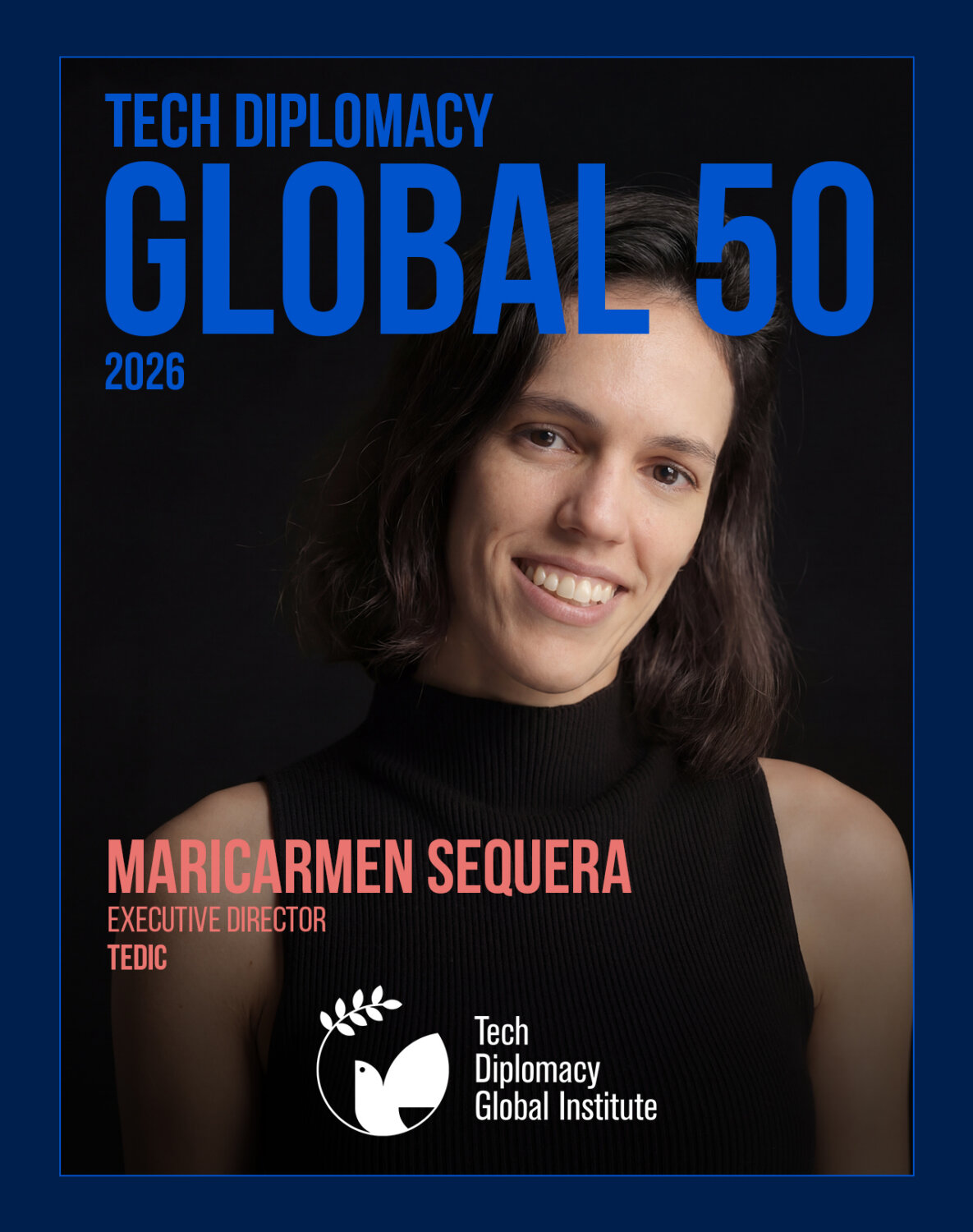
Bringing Paraguay’s voice into global conversations about technology matters because it also means challenging where knowledge is produced and whose voices are recognized as valid when imagining the digital future. For a long time, discussions around technology, artificial intelligence, governance, and digital rights have been concentrated in major centers of power in the Global North. The fact that an experience born in Paraguay has a place in these spaces means bringing a perspective built from the Global South, where we understand that technology never arrives in empty territories, but rather in communities with histories, inequalities, struggles, and their own forms of knowledge. From here, we contribute different questions and perspectives on privacy, surveillance, internet access, digital violence, and technological justice, connecting global debates with the concrete realities of our region.
This recognition also speaks to the trajectory, sustainability, and resilience of our Director’s work over nearly 15 years of walking this path together. Maricarmen’s work through TEDIC does not arrive at this moment as an isolated initiative, but as the result of a collective accumulation of knowledge built alongside communities, organizations, activists, researchers, and so many people who helped us get here. We are shaped by our environments, our contexts, and the relationships we have built; by shared learning and by a way of practicing politics and technology grounded in proximity and the defense of human rights.
A conversation that remains open
This space aims to be exactly that: a starting point, not a destination. If you work in public policy, digital activism, research, or are simply interested in how decisions about technology are being made around the world, we invite you to reflect with us on some questions:
- What role does Latin American civil society currently play in global digital governance spaces?
- How are technology leaders built from the Global South, with fewer resources but long-standing trajectories of territorial work?
- What does “technology diplomacy” mean when viewed from Asunción rather than Brussels or Washington?
We do not have definitive answers to any of these questions, and that is precisely the point: that they circulate, that they are discussed, and that each person or collective can take them and bring them into their own context.
 Defending those who defend us