


Defending the rights of the TLGBIQ+ community also means promoting safe spaces, strengthening care networks, and challenging the structures that perpetuate exclusion and discrimination.
At TEDIC, we took part in a range of activities that, through connection, reflection, and collective action, invite us to keep building a fairer and more inclusive society.
Mapping safe spaces: recognizing where we can be free
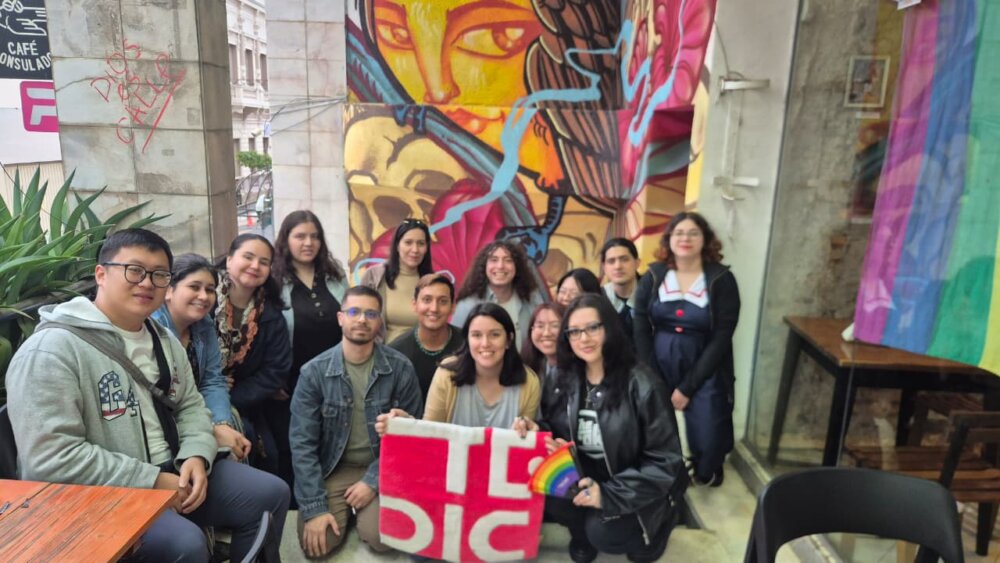
As part of our ongoing work, we held another collaborative mapping session of safe spaces at Consulado Café. During the first mapping session, we identified safe spaces for the TLGBIQ+ community. This time, we wanted to go beyond identifying them and also recognize places that celebrate diversity. Through this initiative, we aim to bring experiences together, identify spaces, and help create an interactive map that highlights places where the community is not only welcome, but celebrated.
All-Male Panel: challenging absences and recognizing struggles
The art exhibition ¿Dónde están las mujeres? (Where Are the Women?), organized by TEDIC, was held at the Juan de Salazar Spanish Cultural Center. Through art, the exhibition seeks to challenge the absence of women from cultural and political spaces in society. Drawing on a collaborative archive of more than 1,500 records of public panels and events in Paraguay featuring men exclusively since 2017, the exhibition invites us to ask who occupies these spaces, whose voices are left out, and which stories deserve to be recognized.
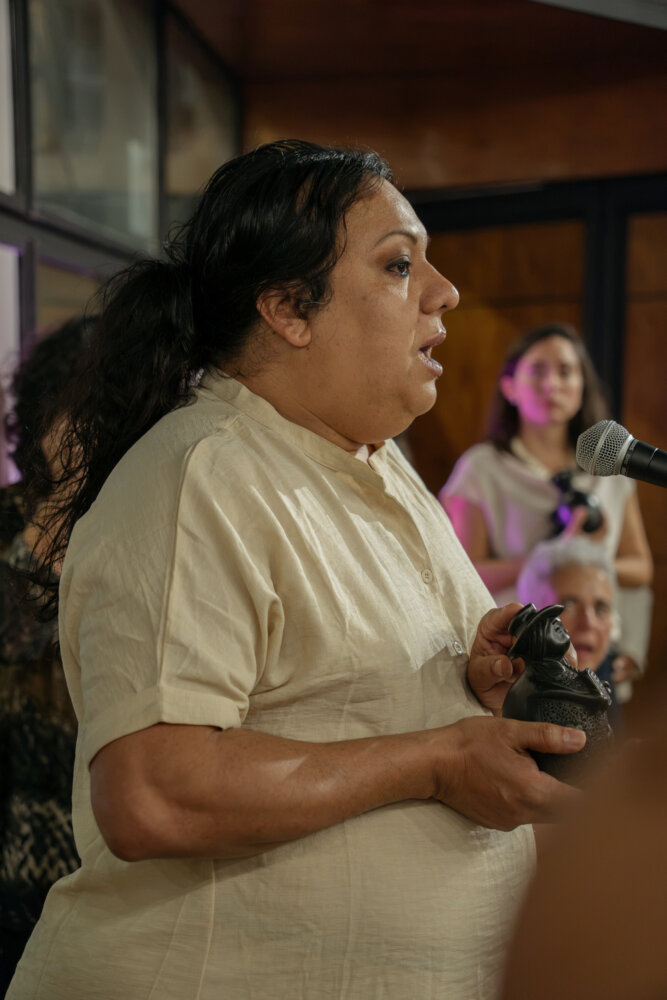
As part of this event, Yren Rotela was one of ten women honored for her work as an activist and defender of the human rights of trans people and the TLGBIQ+ community in Paraguay. A co-founder of Panambí, the Association of Travestis, Transsexuals, and Transgender People, Yren has spent years denouncing violence, discrimination, and abuses against trans people while promoting collective organizing and defending their rights. She is also the director of Casa Diversa, a residence for TLGBIQ+ people who have experienced violence. In 2017, she secured a historic court ruling that allowed her to legally change her name, making her a leading figure in the fight for recognition of gender identity in the country.
Recognizing Yren means recognizing those who, through their own experiences and collective organizing, have paved the way for others to live with greater freedom, dignity, and rights. It is also an invitation to keep challenging the inequalities that shape cultural, political, and social spaces, so that diversity is not merely acknowledged, but has a real presence, voice, and opportunity to participate.
Research on digital violence against TLGBIQA+ people in Paraguay
Technology-facilitated violence also affects the experiences of TLGBIQA+ people, reproducing in digital environments the inequalities, discrimination, and violence that undermine their freedom and rights. In her research, Technology-Facilitated Gender-Based Violence Against TLGBIQA+ People in Paraguay, Airym Sarta explores this issue through the community’s experiences, helping to make their realities and the ongoing challenges surrounding digital safety and rights more visible. The research invites us to recognize that digital violence has tangible consequences in people’s lives, and that creating freer and safer digital spaces requires listening to their experiences, strengthening support networks, and fostering a digital culture grounded in respect and diversity.
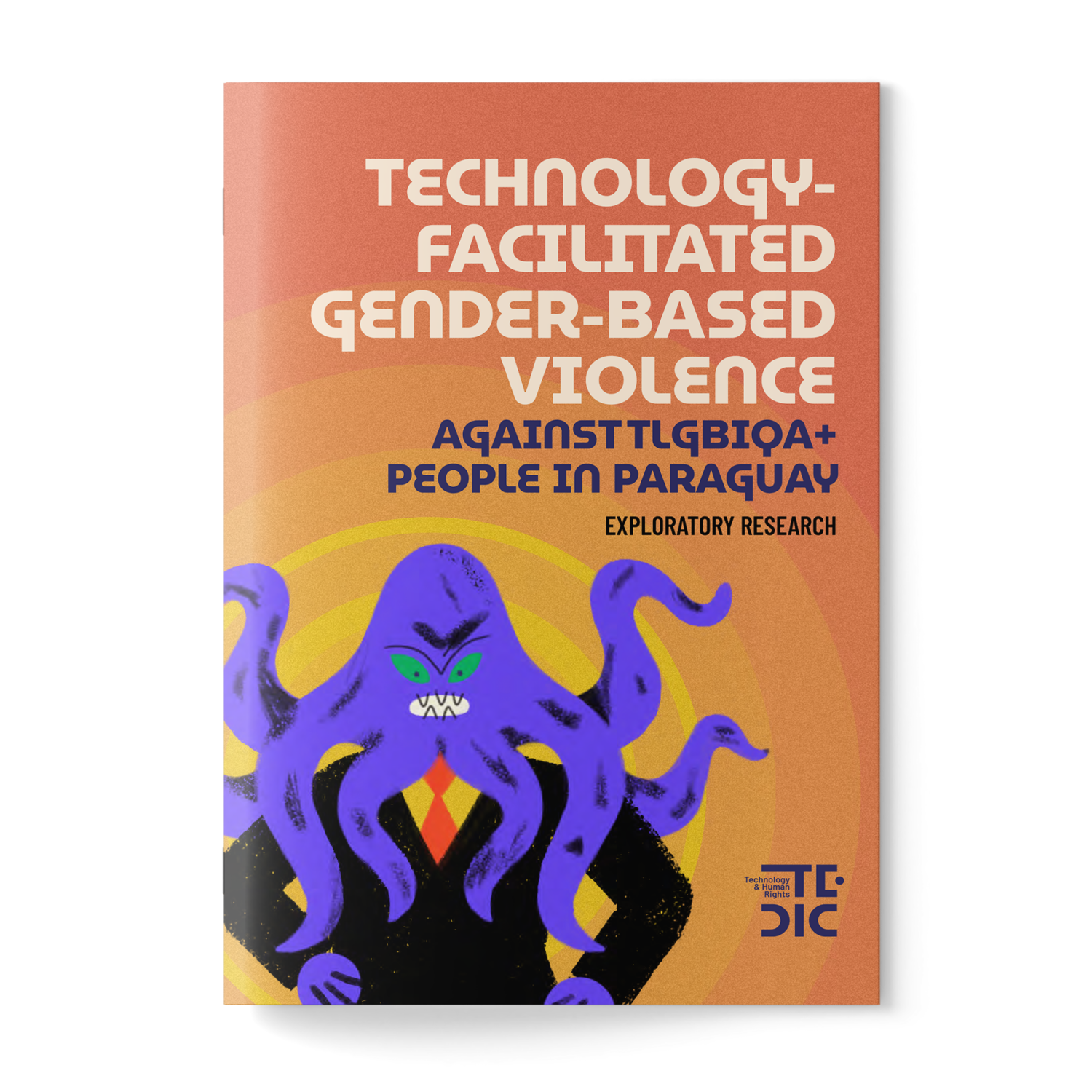
As part of these efforts to raise awareness and share information, we posted about the research on our social media, introducing its key themes to a wider audience and inviting the community to reflect on the issue. You can learn more about the research on TEDIC’s website and Instagram.
23rd TLGBIQ+ March: taking to the streets and weaving networks of resistance
Every September, Paraguay commemorates TLGBIQ+ Memory Month, an important time to remember the violence the community endured during Alfredo Stroessner’s dictatorship. In 1959, following the murder of radio host Bernardo Aranda, a persecution of people of diverse sexual orientations and gender identities began. It involved arrests, torture, and other human rights violations, in an episode known as the 108 Case. In this context, the publication of Carta de un Amoral (Letter from an Immoral Person) became a landmark in the TLGBIQ+ community’s public visibility and advocacy. That is why, every September 30, the march transforms the memory of those who were persecuted into a collective expression of resistance, pride, and a demand for justice.
As part of this commemoration, the TEDIC team took part in the 23rd TLGBIQ+ March in Asunción, organized by the TLGBI+ Coalition of Paraguay, with participants gathering at the Antequera Steps. We joined activists, organizations, and community members for a day of advocacy and connection, alongside those who continue to defend the community’s rights. Taking to the streets is also a way to keep memory alive, make historic struggles visible, and demand a society free from discrimination and violence.
 It’s time for a law on digital violence against women in Paraguay