


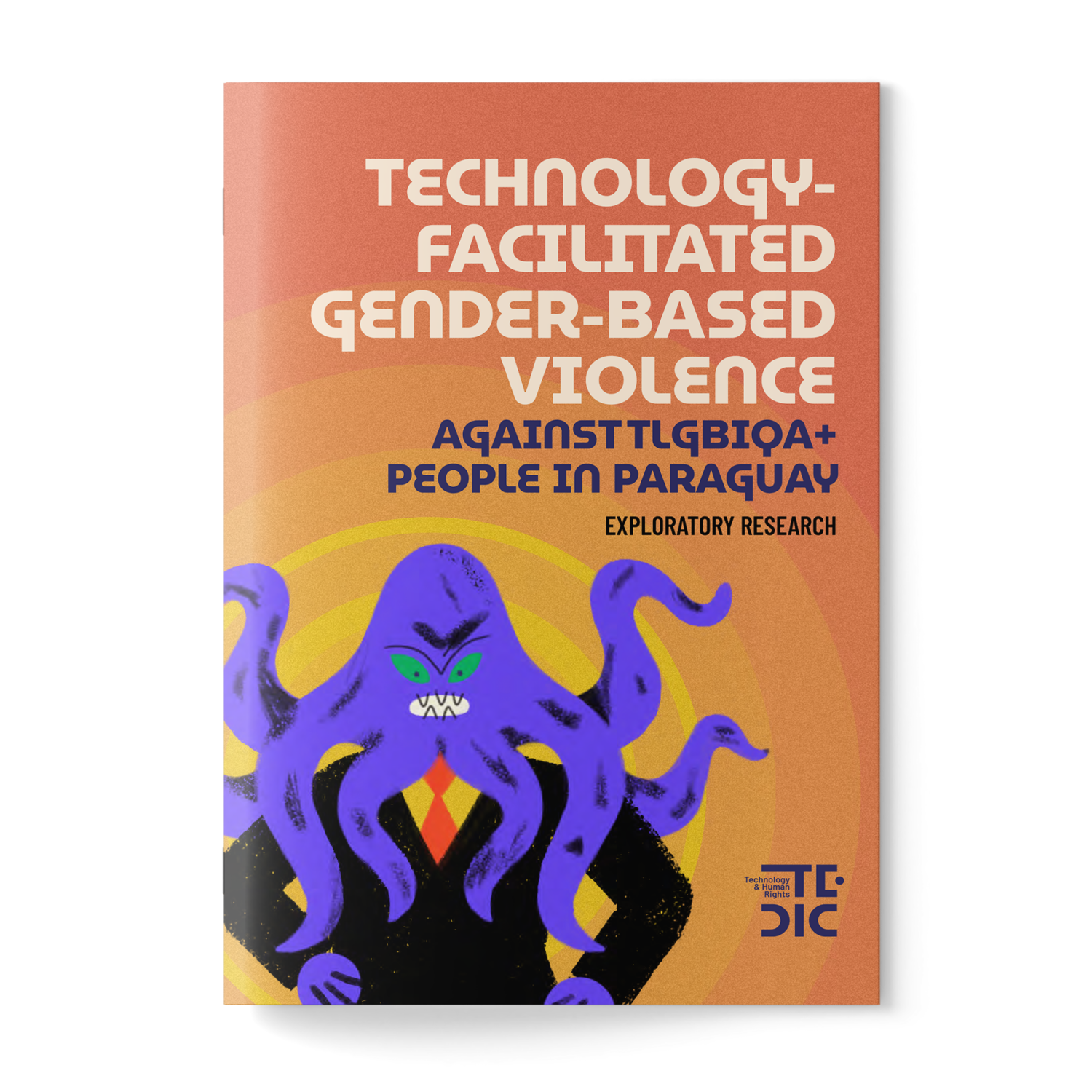
TEDIC presents a new study that brings visibility to the digital violence faced by the TLGBIQA+ community in Paraguay, along with the resistance and care strategies they have built in response.
With support from the “Informed and Resilient” project, funded by the European Union, TEDIC is launching this research carried out by Airym Sarta, exploring how Technology-Facilitated Gender-Based Violence (TFGBV) impacts trans, lesbian, gay, bisexual, intersex, queer, and asexual people in the country.
What is the research about?
Through in-depth interviews, focus groups, and surveys, the study reconstructs the everyday digital experiences of TLGBIQA+ people in Paraguay. The findings show intensive use of social media and messaging apps: Instagram, Facebook, TikTok, X, WhatsApp, Telegram, and Signal, with an average of 12 hours of connection per day, nearly the entire time people are awake.
That constant presence in digital spaces coexists with forms of violence that are often minimized for happening “online,” even though they have concrete effects on the lives of those who experience them. The exploratory research documents, for example, fabricated content aimed at publicly exposing well-known figures by implying their sexual orientation or gender identity for the purpose of reputational harm, as well as spikes in mocking and misogynistic content coinciding with symbolic dates such as the peaceful marches held in the country’s TLGBIQA+ memory calendar.
Beyond the harm: resistance and collective care
One of the study’s most valuable contributions is its focus on resistance strategies, both individual and collective:
- Living life freely and authentically, both online and offline, as a first act of resistance against hate.
- Rotating spokesperson roles within organizations, so the same people aren’t always exposed.
- Spaces for mutual listening and support.
- Building counter-narratives that don’t reproduce or revictimize.
- Critical digital literacy as a form of pedagogy of resistance, helping reduce the emotional impact of violence and prevent future attacks.
This study starts from a key premise: TLGBIQA+ people are not a homogeneous group, and their experiences of digital violence are shaped by multiple, intersecting inequalities. That’s why the research is framed as a starting point, with several open lines for further inquiry, rather than a conclusion.
 What we told the OAS and UN freedom of expression rapporteurs about Paraguay