

At TEDIC, during this second half of the year, we delve deeper into discussions and actions regarding the technological and social trends that are currently shaping our lives and rapidly transforming how we connect, engage in politics, and inhabit the world.
Today, we can no longer talk about privacy without talking about personal data protection, we can’t talk about democracies without talking about AI regulations, we can’t talk about freedom of expression without talking about information integrity… That’s why we insist on these conversations, from a perspective centered on people and their fundamental rights.
In this blog, we share the international initiatives in which we contributed and participated during the months of August to December of 2025.
Knowledge and Learning Exchange

We were present at the Global Gathering 2025, held from September 8-10 in Estoril, Portugal. Our Digital Security Officer, Fernanda Carlés, participated as part of the Media Democracy Fund’s TechExchange Fellowship 2025.
The Global Gathering (GG) brings together digital rights advocates from around the world for three days of collaboration, knowledge sharing, idea generation, and networking. The 2025 edition included participants from more than 144 countries, focusing on topics such as digital rights, online security for civil society, and other technological challenges with social impact.
GG participants address the most pressing challenges at the intersection of human rights, social justice, and technology. Fernanda Carlés actively participated in discussions on practical experiences in digital security, best practices in digital rights, and organizational security. She also co-led collaborative learning spaces and shared meetings and encounters with representatives of the Media Democracy Fund to strengthen ties and explore collaboration opportunities.
Current Challenges: The Impact of Technologies on Labor, Energy, and Environmental Systems
From September 10-12, in Nairobi, Kenya, we participated in the Global Convening on the Political Economy of AI and Digital Technologies, an international gathering that brings together trade unionists, civil society activists, and experts in artificial intelligence and political economy to analyze the impacts of the concentration of power in the technology sector and design agendas that respond to current challenges. The event was organized by the Global Fund for a New Economy.
Our Executive Director, Maricarmen Sequera, was present as a representative of our organization and other organizations in our region, and she actively participated in the discussions and proposals.
This year’s agenda focused on three critical areas: the creation of digital infrastructure and public service frameworks for the common good; the analysis of how AI and digital technologies are transforming work and data supply chains; and the assessment of the enormous environmental and energy impact of these tools. With this approach, the meeting sought to articulate alternatives to corporate and authoritarian control of technology and to promote concrete solutions that guarantee rights, sovereignty, and social justice in the digital age.
The Intersection of Gender, Science, and Technology
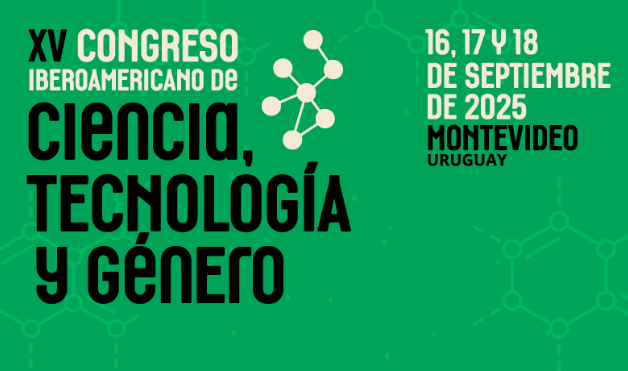
In mid-September, from the 16th to the 18th, we participated in the XV Ibero-American Congress on Science, Technology, and Gender, which took place in Montevideo, Uruguay, for the first time.
This congress, with over 20 years of history, is a forum dedicated to promoting research and practice on the relationships between gender and sex with science and technology, from an intersectional perspective.
Our executive director, Maricarmen Sequera, represented TEDIC at this event and presented the research project “Rethinking and Redesigning a Safe and Inclusive Metaverse,” led by Araceli Ramírez. This exploratory, intersectional, and decolonial research, conducted in eight Latin American countries, seeks to understand how current legislation addresses these challenges in the digital sphere and examines the perceptions of affected communities regarding the use of digital technologies and the construction of identities in virtual spaces, specifically within the Metaverse of the company Meta.
Although the metaverse is no longer at the center of technological discourse, it remains both a field of contention and an opportunity. With this research and its dissemination in open forums, we hope to open discussions on alternative ways of thinking about technological development: one that stems from plurality, care, and the right to be and to inhabit worlds where no one has to ask permission to exist.
Dialogue and Cooperation among Civil Society
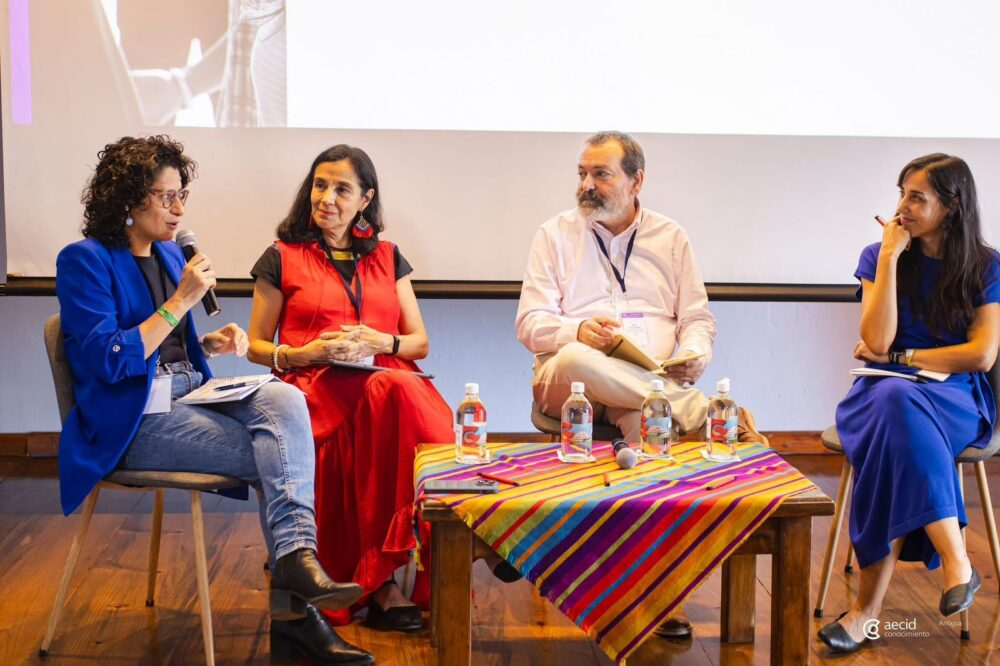
We participated in the EU-LAC Digital Partnership Week, an event co-organized by the Digital Partnership, the D4D Hub, and the Spanish Agency for International Development Cooperation (AECID), which took place from September 22 to 26 at the Spanish Cooperation Training Center in Antigua, Guatemala.
Our contribution to this event, led by Executive Manager Mariela Cuevas, was as part of a collaborative group of civil society organizations, along with organizations such as the Wikimedia Foundation, Hiperderecho, and IPANDETEC, among others. The week included activities such as the Copernicus Dialogue on Earth Observation, the 3rd EU-LAC Multi-Stakeholder Forum on Digital Investments, and the workshop “Connecting Futures: Digitalization and Education for an Inclusive Society in LAC.”
Mariela Cuevas was appointed by the civil society group to participate in the panel discussion on the fourth day. Given that social organizations had not had the opportunity to speak in the previous days, Cuevas emphasized the importance of promoting a people-centered cybersecurity policy with a human rights approach.
Finally, we contributed on the last day to the panel on “Challenges for Education and Inclusion Through Technology,” alongside representatives from the Spanish Agency for International Development Cooperation (AECID) and the Mexican organization Rhizomática.
In a regional context where civil society organizations are being persecuted and subjected to excessive controls, taking action and establishing positions in these types of forums is crucial. Our work will continue to strengthen an inclusive, sustainable, and people-centered digital policy.
Proposals to Address Concentration in Digital Markets
On October 8th and 9th, we were invited by Article 19 Brazil and South America to participate in the seminar “Addressing Economic Concentration in Digital Markets: Competition Law and Technological Solutions for the Protection of Human Rights,” which took place in São Paulo, Brazil.
Our Executive Director, Maricarmen Sequera, participated in the event as a panelist on convergence and the responsibility of intermediaries. The seminar aimed to bring together representatives from Article 19’s regional offices and their closest partners to discuss and develop regional and international strategies that can foster a more inclusive, diverse, pluralistic digital space aligned with human rights.
Global Future Councils and Cybersecurity
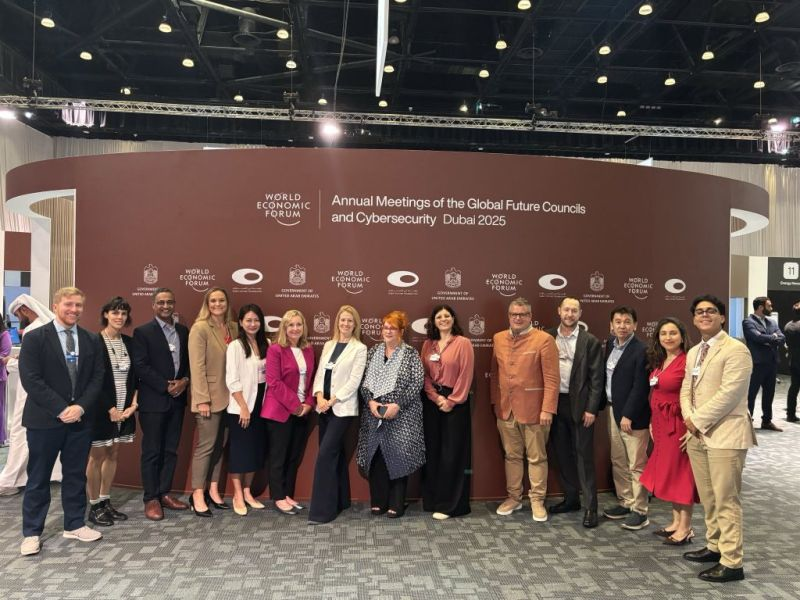
From October 4 to 16, 2025, we participated in the Global Future Councils Annual Meeting and the Annual Cybersecurity Meeting.
The World Economic Forum brought together more than 500 experts from the business, government, civil society, academic, and media sectors, along with 150 of the world’s leading cybersecurity experts, in a special joint session of the Global Future Councils Annual Meeting and the Annual Cybersecurity Meeting. Our executive director, Maricarmen Sequera, as a member of this World Economic Forum council, shared this space with other key international stakeholders and leaders.
Meetings on Digital Rights
From October 20th to 22nd, we participated in the Global Network Initiative (GNI), held in Buenos Aires, where a series of meetings and events took place with experts from all fields of human rights, technology governance, trust and security, AI, and corporate responsibility.
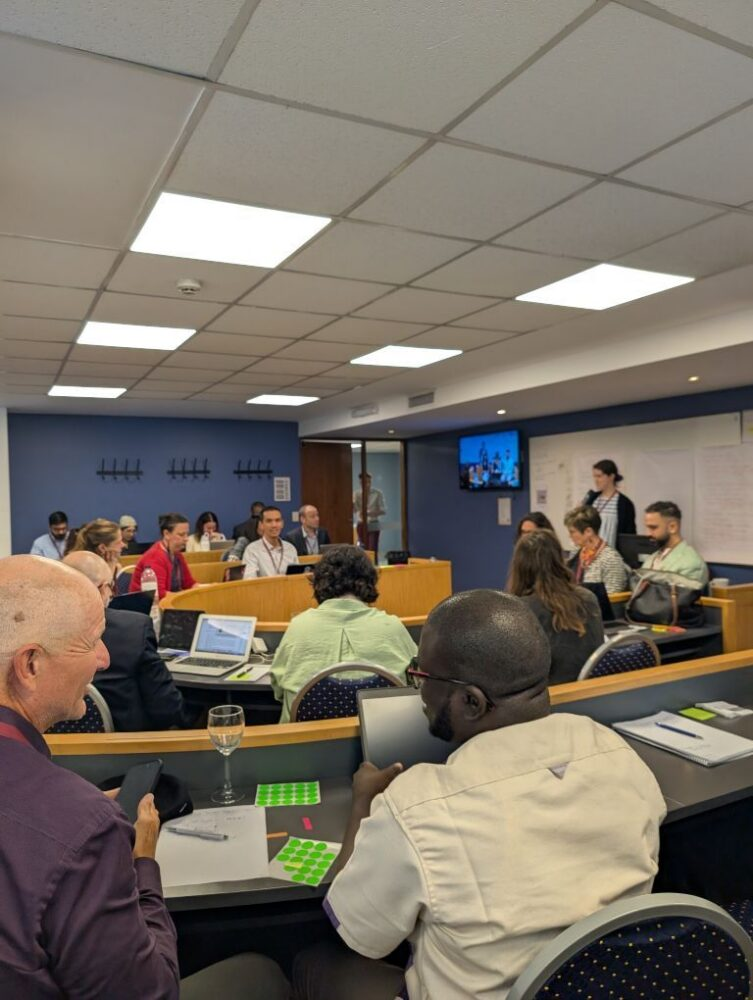
During these three days, our executive director, Maricarmen Sequera, actively participated in the meetings, as she is also a member of the GNI.
Building a Free Internet Together
We participated in the workshop “Towards a Free Internet,” held in Buenos Aires from October 22-24, organized by the Center for Freedom of Expression Studies at the University of Palermo. In this 13th edition, we discussed topics such as governance, regulation of intermediaries, the responsibility of these actors in the digital ecosystem, data integrity, and the implications of AI for government, among others.
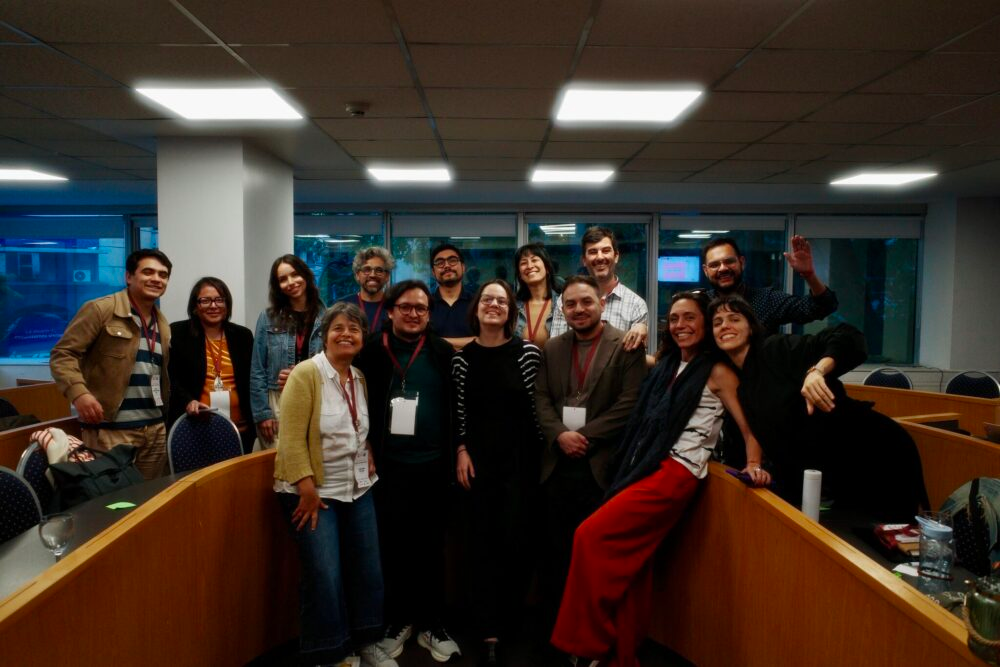
Our colleagues Maricarmen Sequera and Maricel Achucarro contributed our perspective from TEDIC on the trend of digital rights in Paraguay.
Meaningful Connectivity: Challenges and Lessons Learned in Equitable Access
In collaboration with Derechos Digitales, we participated in the International Telecommunication Union’s (ITU) global consultation on how to guarantee meaningful connectivity in landlocked developing countries (LDDCs), specifically in Paraguay and Bolivia.
Our contribution highlights the challenges and structural barriers to access, such as zero-rating, the gender digital divide, and internet outages in conflict zones. Furthermore, it offers key recommendations to ensure meaningful connectivity in a fair and inclusive manner, respecting the rights of all people.
Where does Paraguay stand in terms of human rights?
For the third time, we have submitted reports on Paraguay to the UN Universal Periodic Review (UPR). In partnership with APC, Derechos Digitales, and Article 19, we have prepared three reports addressing:
• the situation regarding surveillance and privacy;
• gender-based violence facilitated by technology;
• and freedom of expression and protest.
In these reports, we highlight a worrying pattern in the country: restrictions on civil society participation in democratic and legislative processes. This directly impacts the development of inclusive, human rights-based public policies.
With these documents, we are preparing to participate in the pre-sessions to be held in Geneva in February 2026.
Thinking about the future from the perspective of the social sciences
The VI Latin American and Caribbean Congress of Social Sciences of FLACSO took place in Buenos Aires from November 5th to 7th, and as TEDIC, we had the opportunity to contribute to the panel “Reflections on Gender Violence Facilitated by Technology Against Women in Brazil, Bolivia, and Paraguay.”
The congress addressed various topics such as the political, economic, and cultural transformations the region is undergoing, especially those related to digitalization, the crisis of democratic representation, and the increase in inequalities. In this context, our panel, coordinated by Mariela Cuevas, with the collaboration of Clarice Tavares (InternetLab) and Eliana Quiroz (Internet Foundation Bolivia), presented legislative proposals regarding gender-based violence facilitated by technology (GBV) that could address the problem and offer reparations measures.
Contributions to Digital Transformation
The CELAC-EU Civil Society Forum took place in Santa Marta, Colombia, from November 7-8, bringing together 200 civil society organizations. We were represented by our Project Coordinator, Jazmín Ruíz Díaz.
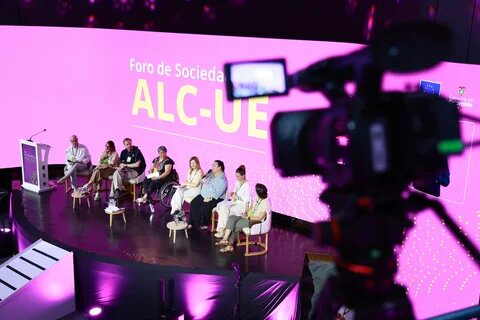
This forum served as a prelude to the IV CELAC-EU Summit and aimed to contribute perspectives and recommendations from Latin America, the Caribbean, and Europe on global challenges such as the climate crisis and digital transformation.
Through this forum, we endorsed the Joint Declaration of Civil Society, a document resulting from the forum, which includes a firm call for a digital transition that respects fundamental rights. With this contribution, we are working to strengthen civil society’s influence on rights-based digital policies, emphasizing the need to guarantee access, inclusion, security, and democratic governance in bi-regional digital initiatives.
Contributions on our civic participation and impact
The Our Voices, Our Futures consortium issued a call to map participatory practices of civil society with current governments, in diverse contexts and forms, in anticipation of the United Nations Commission on the Status of Women (CSW) calendar.
At TEDIC, we responded to the call, completing the survey and sharing our experiences and knowledge about our advocacy in various areas at the national level and the impacts on the local communities with which we work.
Visit of the UN Special Rapporteur
At the invitation of Artigo19, we met with the UN Special Rapporteur on the rights to freedom of peaceful assembly and association, Gina Romero, along with other organizations from the region, from December 1st to 5th in São Paulo, Brazil.
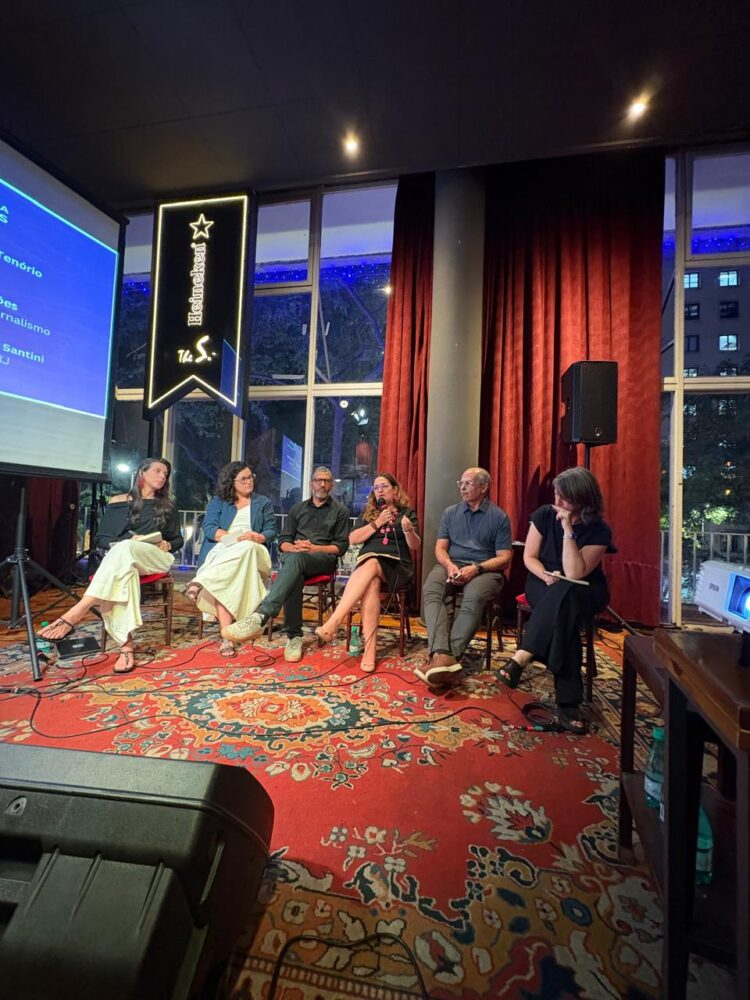
During this meeting, facilitated by our project coordinator, Jazmín Ruíz Díaz, we discussed the use of new surveillance technologies to repress protests and artistic demonstrations, as well as the excessive use of force by state agents to impede the right to assembly and demonstration.
We also took advantage of our colleagues’ invitation to attend the launch of the ARTIGO 19 Magazine and the Legal Abortion Map.
Discrimination and Violence: Barriers to Connectivity
The European Union and the Human Rights and Democracy Network invited our Executive Director, Maricarmen Sequera, to participate in the EU NGO Human Rights Forum, which took place in Brussels, Belgium.
TEDIC participated in the panel “Discrimination and Inequality in the Digital Sphere” on December 9, which analyzed the challenges to ensuring equitable access to digital technologies. The session addressed how discrimination and gender-based violence facilitated by technology disproportionately affect women, LGBTIQ+ people, rural communities, and low-income populations.
The panel sought to contribute concrete solutions and regulatory mechanisms that strengthen the protection of digital rights and promote technologies that foster the inclusion of all people.
How to build a feminist, intersectional, and decolonial AI?
The OAS held a public consultation with seven experts in digital rights, including our executive director Maricarmen Sequera, to reflect on the future and inclusion of AI and gender.
At TEDIC, we believe it is important to envision futures from inclusive and decolonial perspectives of the Global South, as these could offer opportunities for the representation and active participation of these communities. We believe that AI can be built from a feminist and intersectional perspective.
In this consultation, we shared projects that are already developing these perspectives, such as Vía Libre’s “Diagnosis and Mitigation of Biases from Latin America”; Latam-GPT, a language model developed in Latin America for our region; and AymurAI, an AI that helps courts better understand and respond to cases of gender-based violence.
In this context, we also contributed to the consultation of the United Nations Working Group on Discrimination against Women and Girls for the Latin America and Caribbean region, on the current and potential impact of the digital space and artificial intelligence on gender equality.
The Working Group is gathering input from various organizations in six regional consultations. We emphasized the following themes: Algorithmic opacity and discriminatory biases; the need for regulatory frameworks and human rights mechanisms; transparency and governance; and the application of Inter-American standards. We believe that implementing these measures is not optional, but mandatory for developing ethical, responsible, and inclusive AI.
Digital Violence and Advances in Inter-American Standards
Representing TEDIC, our colleague Maricel Achucarro, project assistant, attended the Tenth Conference of States Parties to the Belém do Pará Convention, the XXII Meeting of the MESECVI Committee of Experts, and the Civil Society Forum, a series of regional events that brought together States, experts, and social organizations to discuss current challenges in women’s access to justice, with a special emphasis on gender-based digital violence.
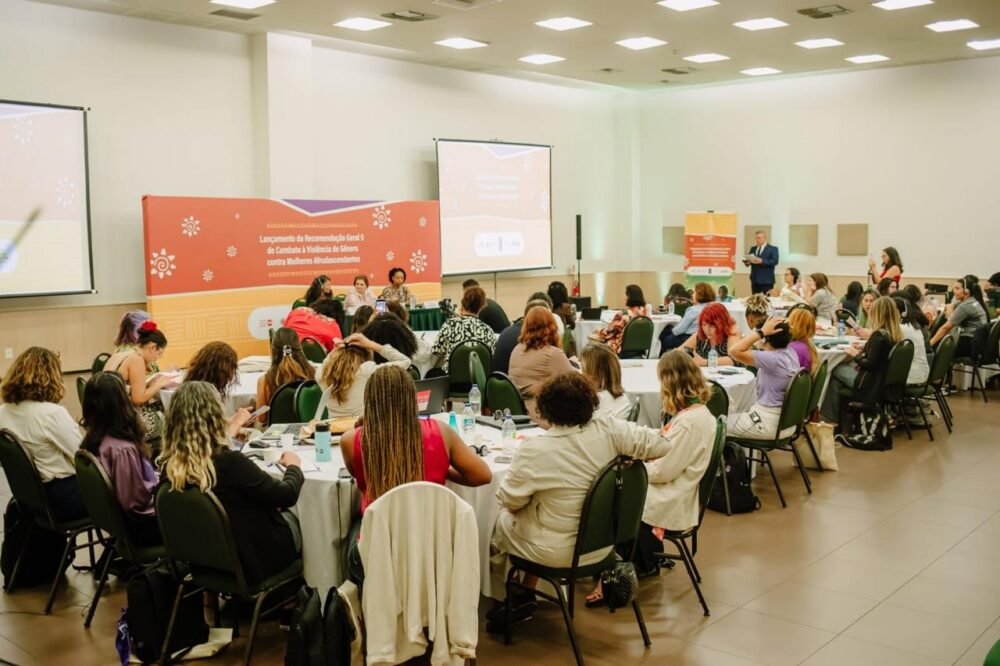
Within this framework, one of the key actions was the launch of the “Inter-American Model Law to Prevent, Punish, and Eradicate Digital Violence against Women for Reasons of Gender,” an instrument that seeks to contribute to the harmonization of legal frameworks in Latin America, offering guidelines for States to recognize and address this problem comprehensively. Continuing our work and advocacy on the protection of journalists and the prevention of technology-enhanced gender-based violence directed against them, we presented our SOS Guidelines at the latest monthly meeting of the global CAOV network.
Many lessons learned, much to continue building
Our participation, contributions, and input in international forums help us continue connecting with other organizations in the region and the world, enriching our knowledge and influencing global discussions, and positioning Paraguay on the map of digital rights.
By sharing with other organizations, in dialogues and exchanges, we realize that there is a shared interest and a willingness to continue building agreements that allow us to inhabit digital spaces in a more just, inclusive, and equitable way.
Our commitment in every initiative is focused on people, local realities, and the needs of vulnerable communities. We close this year with the pride of having worked once again to make technology a tool that serves people.
 TEDIC’s agenda in Paraguay: August to December
  Defending those who defend us